
-
-
Students mustStudent must submit this questionnaire to complete it
-
Students mustMark as done
-
Students mustMark as done
-
Students mustView
Glossary from "Co ...
Students mustMark as doneWelcome to the < ...
Show More-


This Psychological Counselling introductory course provides a basic foundation of key skills for effective counseling. All parts of this training are free, including registration, learning, testing, and a certificate of completion. This course is intended for primary-care physicians, nurses, and allied health professionals in training and in practice.
This Psychological Counseling course is based on the Counselling Relationship (CR) manual, it was developed in partnership with the PREMIUM program funded by the Wellcome Trust, in association with the London School of Hygiene & Tropical Medicine, Sangath organization, and the Government of Goa's Directorate of Health Services. The course was developed by Arpita Anand, Sona Dimidjian and Richard Velleman with additional contributions from Angela Leocata, Sydney Church, Luanna Fernandes, Ajay Kumar, Medha Upadhye and Dielle Dsouza.
For a publication on this course’s efficacy, see “Building Public Health Capacity through Online Global Learning,” (2018), Open Praxis, to see more research related to NextGenU.org’s educational model, check out NextGenU.org’s publication page. Subscribe to our newsletter to be notified of future updates, new courses, and to be part of our community.
There are 17 modules which provide:
- An introduction to counseling and an effective counseling relationship
- The skills required to build a good counseling relationship, to prepare for a counseling session, and guidelines for sessions and home visits
- An overview of how to assess and manage suicide risk and how to involve family and friends
Approximate time for completion of this course is 6 hours at an average reading rate of 144 words/minute.
At the end of each lesson, there is a practice quiz. At the end of the course, after you’ve completed each lesson, quiz, and activity, you’ll have access to a final exam, and a chance to assess the training. Once you’ve passed that last test, you will be able to download a certificate of completion from NextGenU.org and our course’s co-sponsoring organizations (listed above). We keep all of your personal information confidential, never sell any of your information, and only use anonymized data for research purposes, and we are also happy to report your testing information and share your work with anyone (your school, employer, etc.) at your request. We hope that you will find this a rewarding learning experience, and we count on your feedback to help us improve this training for future students.
Engaging with this Course:
You may browse this course for free to learn for your personal enrichment; there are no requirements.
To obtain a certificate
- Show in the registration fields that you have the appropriate prerequisites to be certified. This course requires the learner to have already obtained a college-level degree.
- Complete all the reading requirements.
- Complete all quizzes and pass with a 70% with unlimited attempts..
- Successfully complete the final exam with a minimum of 70% and a maximum of 3 attempts.
- Complete the self and course evaluation forms.
To obtain credit
- Complete all requirements listed above for the certificate.
- Your learning institution or workplace should approve the partner-university-sponsored NextGenU.org course for educational credit, as they would for their learner taking a course anywhere.
- NextGenU.org is happy to provide your institution with:
- a link to and description of the course training, so they can see all its components, including the cosponsoring universities and other professional organization cosponsors
- your grade on the final exam
- your work products (e.g. peer and mentored activities), and any other required or optional shared materials that you produce and authorize to share with them
- your evaluations - course, and self-assessments.
- a copy of your certificate of completion, with the co-sponsoring universities and other organizations listed
To obtain a degree, NextGenU.org co-sponsors degree programs with institutional partners. To obtain a degree co-sponsored with NextGenU.org, registrants must be enrolled in a degree program as a student of a NextGenU.org institutional partner. If you think that your institution might be interested in offering a degree with NextGenU.org contact us.
We hope that you will find this a rewarding learning experience, and we count on your assessment and feedback to help us improve this training for future students.
Next Steps
- Complete the registration form.
- Begin the course with Module 1: Introduction To Counselling. In each lesson, read the description, complete all required readings and any required activity, and take the corresponding quizzes.
This course meets nationally approved standards of education developed for the addiction/substance use disorders counseling profession. This course's participants are assured that the continuing education (CE) credits provided will be accepted toward national credentialing by the NAADAC Certification Commission for Addiction Professionals (NCC AP), as well as by many of the individual state licensing/certification bodies in the addiction and other helping professions.
-
 Learning objectives:
- What is counselling?
- How counselling is different from a friendly chat.
-
 Congratulations on completing Module 1 on an Introduction to Counselling! You now know what counselling is and how it is different from a friendly chat.
In this module, you will learn about an effective counselling relationship, the key skills to develop one and the different styles of counselling.
-
Students mustView
Watch the video lecture to learn the key skills to be a good counsellor
-
Students mustView
Watch the role play video that demonstrates warmth and empathy towards the patient
-
Students mustMark as done
Written transcript of the role play video
199.4 KB
-
 Congratulations on completing Module 2 on An Effective Counselling Relationship! You now know what an effective relationship involves and some of the key skills to build one.
In this module, we will learn a few more skills to develop an effective counselling relationship. It involves understanding the role of genuineness in counselling and identifying the key skills for it.
-
Students mustView
Watch the video lecture to learn more about the skill of genuineness
-

Congratulations on completing Module 3 on Genuineness! You now understand its role in an effective counselling relationship and how to identify its key skills.
In this module, you will learn how to identify and understand the various counselling approaches.
Watch the video lecture in the activities section below to understand the two different styles of counselling approaches.
SUMMARY
An effective counselling relationship includes:
- Counsellor and patient working as a team
- Goals, activities and possible solutions are planned together
- The counsellor encourages the patient to actively take part in the treatment process
- The patient feels valued and understood by the counsellor
- The patient realises there are decisions he/she can make and is encouraged to take charge of his/her life
- Warmth, empathy and genuineness are very important qualities for effective counselling
- Other important skills include:
- Demonstrating acceptance
- Listening, and showing we are listening actively, and engaging with the patient
- Reflecting the verbal and emotional content of what has been said
- Allowing silences
- Providing affirmations or endorsing the patient’s understanding of their problem
- Summarising by expressing briefly and simply the difficulty the patient has described
- Asking for feedback
- Providing reassurance and hope
- The two different styles of counselling are Active & Discussion-based
-
Students mustView
Watch the video lecture to learn about the two different types of counselling approaches
-
Students mustView
Watch the role play video demonstration collaboration and affirmation
-
Students mustMark as done
Written transcript of the role play video
204.8 KB -
Students mustView
Watch the role play video to learn how to summarise a session and offer feedback to the patient
-
Students mustMark as done
Written transcript of the role play video
201.1 KB -
-
-
 Congratulations on completing Module 4 on Counselling Approaches! You now know about active and discussion-based counselling approaches and how to identify them.
In this module you will learn how to prepare for a counselling session, how to greet the patient and introduce yourself.
-
Students mustView
Watch the video lecture to learn what to do before a counselling session
-
Students mustView
Watch the role play video that demonstrates how to greet a patient
-
Students mustMark as done
Written transcript of the role play video
191.3 KB
-
 Congratulations on completing Module 5 on preparing for a counselling session! You now know how to prepare for a session, how to greet the patient and introduce yourself.
In this module you will learn how to talk about confidentiality, its importance and necessity.
Patients can be concerned that you will tell other people – such as family, friends, neighbours or employers – what has been discussed during counselling sessions. They need to be sure that the details will not be shared with anyone.
However, sometimes, patients will reveal information that is related to their own safety or that of other people, or breaking the law. For example, a school bus driver may have an alcohol problem and reveal that he is often drunk while on the job, or a patient might say that he/she is going to attempt suicide by having sleeping tablets hidden at home.
The basic rule in such situations is that issues like these must always be discussed within supervision. If it is urgent, speak to your supervisor on the phone. If the supervisor agrees that the situation must be shared with a family member (or significant other), it is ideal to get agreement from the patient first.
Note: A significant other (SO) can be any person in the patient’s life who plays an important role in his/her emotional health and is ready to participate in the treatment to help get over the patient’s problems.
When talking to patients about confidentiality, you must discuss the following:
- Patients should always know that you work as part of a study team and the work is supervised. So you may need to discuss what the patient has told you with your supervisors.
- There may be situations related to the safety of the patient or others. In such situations, we will discuss with the patient about speaking to other people concerned with the issue.
- Counsellors may be required by law to tell information to a court.
-
 Congratulations on completing Module 6 on Confidentiality! You now understand the importance and necessity of confidentiality in the counselling relationship.
In this module you will learn the need for recording the counselling sessions and how it can help.
Tape recording sessions
Using a digital recorder during sessions is important for supervision and to reflect upon to improve counselling skills. While the patient’s consent or permission for this is taken by the health assistant, it is important to ask whether you can switch the recorder on before every session. If the patient is not comfortable even though they are told they cannot be identified on the tape, or is still uneasy, do not force him/her, and turn off the recorder.
Make sure recordings are of good quality by keeping the recorder mid-way between you and the patient; holding the session in a quiet place; shutting doors and windows; asking other people nearby to speak softly; and pausing the recording until a disturbance – such as someone entering the room or a telephone ringing – has passed.
-
 Congratulations on completing Module 7 on Recording Counselling Sessions! You now understand the scope and necessity to record the sessions.
In this module you will learn why home visits may be necessary and how to conduct them.
Home visits
If patients are unable to attend sessions in the clinic, you can conduct them in the patient’s home or some other place where they are happy for the session to take place, if the patient is willing.
Watch the video lecture in the activities section below to learn the guidelines for home visits.
-
Students mustView
Watch the video lecture to learn how to conduct sessions at the patient's home
-
 Congratulations on completing Module 8 on Home Visits! You now understand the usefulness, scope and conditions for home visits in counselling.
In this module you will learn why and how to use the telephone during counselling sessions.
Telephone Counselling
Not all patients have a personal phone, but if they do, it is important to get permission to call him/her in your first session itself.
Watch the video lectures in the activities section below to learn how the telephone can be used in counselling, the advantages and disadvantages, and how to conduct a session on the telephone.
SUMMARY
- Prepare yourself for the counselling session with a checklist of things you will need before the patient arrives
- Greet the patient warmly and introduce yourself
- Tell the patient that confidentiality will be maintained
- Discuss the options of home sessions, clinic sessions and telephone sessions and identify the most convenient one
- Follow the guidelines suggested for home visits
- The telephone can help check in with patients between sessions and after treatment ends, to remind patients of appointments and conduct sessions
-
Students mustView
Watch the video lecture on how telephones can be used in counselling, the advantages and disadvantages
-
Students mustView
Watch the video lecture to learn how to conduct a counselling session over the telphone
-
 Congratulations on completing Module 9 on Telephone Counselling! You now know the usefulness, advantages and disadvantages of using the telephone in counselling, and how to conduct a session with it.
In this module you will learn how to conduct a suicide risk assessment, how to identify risk and protective factors, and plan a course of action.
-
Students mustView
Watch the video lecture to learn the false beliefs and facts about suicide and the steps for risk assessment
-
Students mustView
Watch the video lecture to learn about suicide risk factors and protective factors
-
Students mustView
Watch the video lecture to learn how to conduct an assessment of suicide risk
-
Students mustView
Watch the video lecture to learn how to assess suicide and plan what action to take
-
 Congratulations on completing Module 10 on Managing Suicide Risk! You now know how to conduct a suicide risk assessment, identify risk and protective factors, to assess suicide risk and plan action.
In this module you will learn how to manage patients with high suicide risk, and what steps to take in such situations.
Suicide risk is one of the situations where we are not required to maintain confidentiality. Watch the video lecture in the activities section below to learn step-by-step how to manage patients who have a high suicide risk.
-
Students mustView
Watch the video lecture to learn how to manage patients who have a high suicide risk
-
 Congratulations on completing Module 11 on Managing Patients with High Suicide Risk! You now know the various steps to be taken after identifying a patient with a high risk of suicide.
In this module you will learn how to counsel a patient who is at risk of suicide.
-
Students mustView
Watch the video lecture to learn what to do when counselling a patient at a risk of suicide
-
Students mustView
Watch the video lecture to learn what should be documented.
-
 Congratulations on completing Module 12 on Counselling Patients at Risk of Suicide! You now understand the counselling process for a person at risk of suicide and how to record it.
In this module you will learn the various kinds of personal crises - or emergencies - that might affect a patient, what steps can be taken to manage a patient dealing with these and how to help a patient in grief.
-
Students mustView
Watch the video lecture to find out more about dealing with personal crises
-
Students mustView
Watch the video lecture to learn how to help a patient deal with a personal crisis
-
Students mustView
Watch the video lecture to learn how to help a patient who has lost a loved one
-
 Congratulations on completing Module 13 on Managing a Patient with Personal Crises! You now know the various kinds of personal crises that might affect a patient, the steps to be taken to manage the patient, and how to help a patient in grief.
In this module you will learn about domestic violence, how to bring up the topic with patients and how to help a victim.
-
Students mustView
Watch the video lecture to learn about domestic violence
-
Students mustView
Watch the video lecture to learn how to help a victim of domestic violence
-
Students mustView
Watch the video lecture to learn how to help a patient who is violent
-
 Congratulations on completing Module 13 on Managing Domestic Violence! You now know how to ask a patient about domestic violence, how to help a patient who is a victim and how to stop a patient from being violent.
In this module you will learn about including a patient’s significant other (SO) in the counselling process, the challenges and how to solve them
-
Students mustView
Watch the video lecture to learn how to involve a signficant other
-
Students mustView
Watch the video lecture to learn how to deal with challenges involving the SO
-
 Congratulations on completing Module 15 on Involving a Significant Other! You now know how to involve a significant other (SO) in the counselling process, the challenges and how to overcome them.
In this module you will learn how to become a more effective counsellor through supervision.
-
-
Students mustView
Watch the video lecture to understand how peer group supervision takes place
-
Students mustView
Watch the video lecture to learn more about individual supervision
-
 Congratulations on completing Module 16 on Becoming A More Effective Counsellor! You now know what supervision is all about, how to go about peer group supervision and individual supervision, and how and when to refer patients to supervisors.
In this module you will learn about ending treatment, keeping in touch with patients after the sessions have been completed, keeping records, maintaining boundaries with patients and dealing with burn-out.
-
Students mustView
Watch the video lecture to learn how to end the counselling treatment well
-
Module 17: Lesson 4: Keeping Records
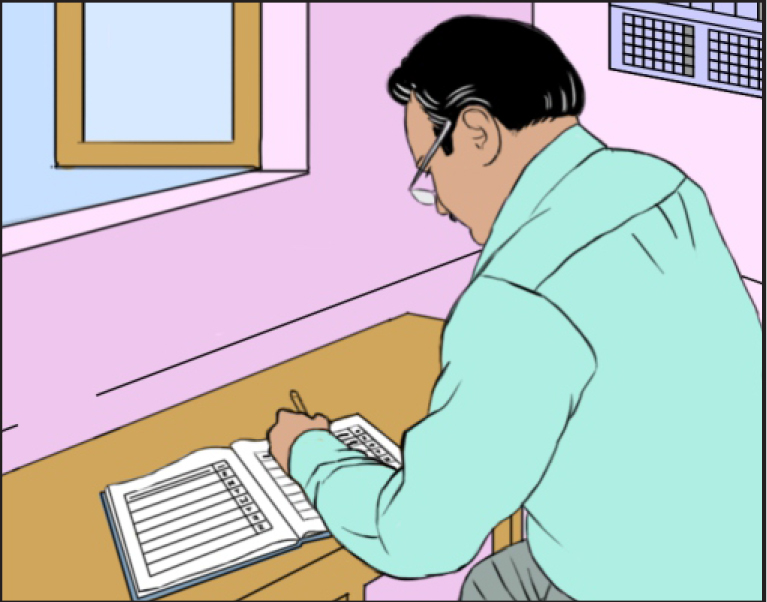
Use the Clinical Case Record for depression and alcohol problems to record necessary information. Documentation helps to keep track of the clinical process for each patient in the programme and make supervision effective.
The records you need to fill in at each session are:
- Clinical record form for depression and alcohol problems
- Patient registers for depression and alcohol problems
- Appointment diary
- End of treatment form for depression or alcohol problems, when the patient is discharged
Remember to fill in records as soon as the session is over and definitely by the end of the day; store the records in a safe and secure place; and go over them before your session with the patient.
-
Students mustView
Watch the video lecture to learn about burn-out and how to deal with it
-
Module 17: Confirmation of Completion Quiz
You must complete all activities and readings before you can move to the next module. Confirm that you have complete the readings and activities, then submit your answer. Then click on the continue button to procees to the next module.
-
 In this section, you can provide feedback about this course to help us make NextGenU.org better. Once evaluations are completed, you will be able to download your certificate of completion.
-
Course Evaluation Questionnaire
-
Self Evaluation Questionnaire
-
Survey - Required before you can print your certificate Questionnaire
-
Self-assessment Quiz
-
-
