Section: Module 4: Common Emergency Procedures | Didactic Emergency Medicine | NextGenU.org
-
Competencies covered in this module:
- Perform the procedures listed in the Data supplement S2 of the Emergency Medicine Clerkship Curriculum. In addition to proper technique, the focus should be given to recognizing the indications, contraindications, and complications associated with each. The student should be able to discuss aftercare and reasons to return for further evaluation with the patient.
-
-
Students mustMark as done
-
Students mustViewMake a submissionReceive a grade
Ask your supervisor to review the materials related to the insertion of an intravenous catheter along with any institutional specific policies and procedures with you and guide you in the practice of establishing intravenous access.
Click on the submit button and write one sentence that indicates you have performed this activity. If for some reason you cannot perform the activity, please indicate that and the reason why you were unable to perform the activity. Your mentor will grade your activity pass/fail. -
Quiz: Module 4: Lesson 1: IV Access
To access the quiz, click on the name of the quiz provided above. On the following screen, click the attempt quiz button to respond to the questions.
TO PASS THIS QUIZ YOU MUST OBTAIN A SCORE OF 1/1.
-
Students mustViewStart discussions: 1
Have you ever had a patient become frustrated with an unsuccessful attempt to insert an IV? Describe this experience. Do not use any identifying information.
-
Students mustMark as done
Review only the sections regarding intraosseous access.
-
Students mustMark as done
-
Students mustMark as done
-
Quiz: Module 4: Lesson 1: Intraosseous Access
To access the quiz, click on the name of the quiz provided above. On the following screen, click the attempt quiz button to respond to the questions.
TO PASS THIS QUIZ YOU MUST OBTAIN A SCORE OF 2/3.
-
-
-
Quiz: Module 4: Lesson 1: Central Line Insertion
To access the quiz, click on the name of the quiz provided above. On the following screen, click the attempt quiz button to respond to the questions.
TO PASS THIS QUIZ YOU MUST OBTAIN A SCORE OF 2/2.
-
Students mustViewMake a submissionReceive a grade
Ask your supervisor to review the materials related to the insertion of a central venous catheter along with any institutional specific policies and procedures with you and guide you in the practice of the insertion of a central venous line.
Click on the submit button and write one sentence that indicates you have performed this activity. If for some reason you cannot perform the activity, please indicate that and the reason why you were unable to perform the activity. Your mentor will grade your activity on a pass/fail basis.
-
Students mustViewStart discussions: 1
If you had to give three pieces of advice to a student about central line insertion, what would you say?
-
-
Quiz: Module 4: Lesson 2: Airway Establishment and Control
To access the quiz, click on the name of the quiz provided above. On the following screen, click the attempt quiz button to respond to the questions.
TO PASS THIS QUIZ YOU MUST OBTAIN A SCORE OF 1/1.
-
Students mustViewStart discussions: 1
What are three key pieces of advice that you wish the general public would know about the Heimlich maneuver?
-
-
Quiz: Module 4: Lesson 2: Basic Airway Management
To access the quiz, click on the name of the quiz provided above. On the following screen, click the attempt quiz button to respond to the questions.
TO PASS THIS QUIZ YOU MUST OBTAIN A SCORE OF1/1.
-
Students mustViewStart discussions: 1
Name three possible negative consequences the patient may face if airway management fails to precede all other treatments.
-
Students mustViewMake a submissionReceive a grade
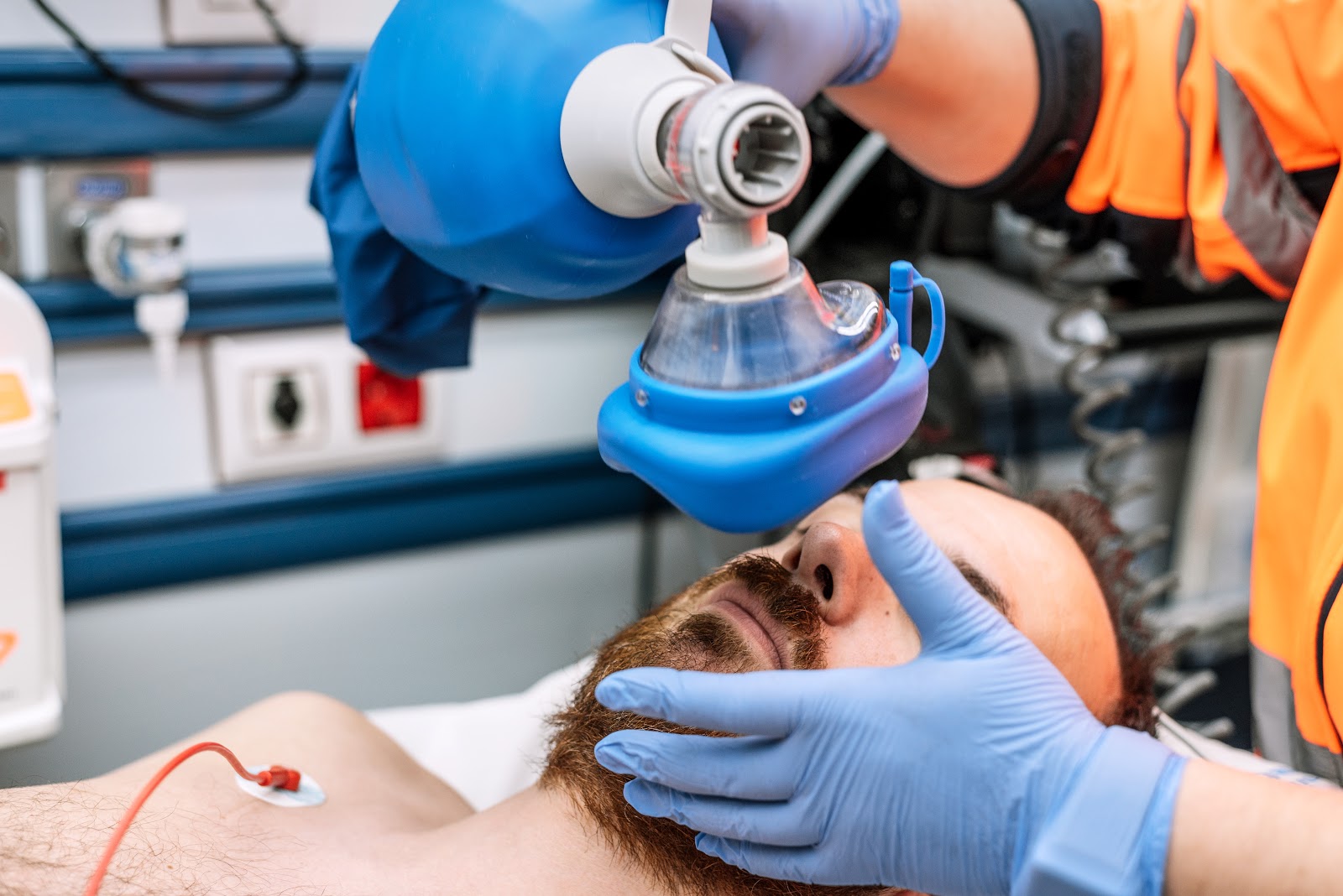
Ask your supervisor to review the institutional specific policies and procedures for bag-mask ventilation with you along with the proper positioning of the patient. Ask him/ her to guide you in the practice of ventilating a patient using this method and practice this skill until you are comfortable.
Click on the submit button and write one sentence that indicates you have performed this activity. If for some reason you cannot perform the activity, please indicate that and the reason why you were unable to perform the activity. Your mentor will grade your activity on a pass/fail basis.
-
-
-
-
Quiz: Module 4: Lesson 2: Airway Management
To access the quiz, click on the name of the quiz provided above. On the following screen, click the attempt quiz button to respond to the questions.
TO PASS THIS QUIZ YOU MUST OBTAIN A SCORE OF 2/3.
-
Students mustMark as done
Ask your supervisor to review the materials related to the insertion of airway adjuncts along with any institutional specific policies and procedures with you and guide you in the practice of the insertion of airway adjuncts.
Click on the submit button and write one sentence that indicates you have performed this activity. If for some reason you cannot perform the activity, please indicate that and the reason why you were unable to perform the activity. Your mentor will grade your activity on a pass/fail basis.
-
-
Quiz: Module 4: Lesson 2: Advanced Airway Management
To access the quiz, click on the name of the quiz provided above. On the following screen, click the attempt quiz button to respond to the questions.
TO PASS THIS QUIZ YOU MUST OBTAIN A SCORE OF 2/3.
-
Students mustViewStart discussions: 1
Describe the correct head and neck position for airway management, and why this position is important.
-
-
-
Students mustView
Go through this entire module
-
Quiz: Module 4: Lesson 3: Cardiac Monitoring
To access the quiz, click on the name of the quiz provided above. On the following screen, click the attempt quiz button to respond to the questions.
TO PASS THIS QUIZ YOU MUST OBTAIN A SCORE OF 3/4.
-
Students mustMark as done
Ask your supervisor review and demonstrate the application of a 12 lead cardiac monitor to obtain an EKG with you, including institutional policy and procedure. Ask him/ her to guide you in the application of the monitor.
Click on the submit button and write one sentence that indicates you have performed this activity. If for some reason you cannot perform the activity, please indicate that and the reason why you were unable to perform the activity. Your mentor will grade your activity on a pass/fail basis.
-
Students mustViewStart discussions: 1
Describe two ways in which supraventricular tachycardia can be distinguished from ventricular tachycardia.
-
Students mustViewStart discussions: 1
What are the biggest challenges or difficulties you've had in learning to interpret ECGs?
-
Students mustView
Review section on AEDs
-
Students mustViewMake a submissionReceive a grade
Ask your supervisor to review and demonstrate the application and use of an AED with you, including institutional policy and procedure. Ask him/ her to guide you in the application and use of an AED.
Click on the submit button and write one sentence that indicates you have performed this activity. If for some reason you cannot perform the activity, please indicate that and the reason why you were unable to perform the activity. Your mentor will grade your activity on a pass/fail basis.
-
Students mustViewStart discussions: 1
How common are AEDs outside of your hospital (e.g., are they commonly available in airports, casinos, or in private residences)?
-
-
-
Students mustView
Review the section on defibrillation
-
Students mustViewMake a submissionReceive a grade
Ask your mentor to review the operation of the defibrillator available at your institution with you along with along any relevant institutional specific policies and procedures. Ask him/ her to guide you in the use of the defibrillator.
Click on the submit button and write one sentence that indicates you have performed this activity. If for some reason you cannot perform the activity, please indicate that and the reason why you were unable to perform the activity. Your mentor will grade your activity on a pass/fail basis.
-
Quiz: Module 4: Lesson 3: Defibrillator
To access the quiz, click on the name of the quiz provided above. On the following screen, click the attempt quiz button to respond to the questions.
TO PASS THIS QUIZ YOU MUST OBTAIN A SCORE OF 1/1.
-
Students mustView
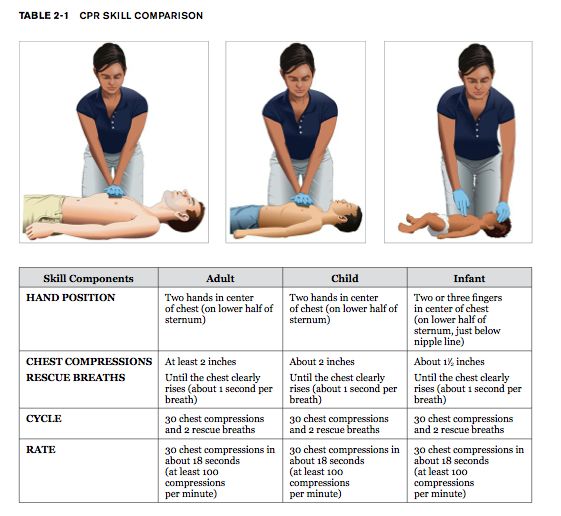
Read the webpage to learn how to perform chest compressions.
For supplemental learning, view the image.
-
Quiz: Module 4: Lesson 3: CPR
To access the quiz, click on the name of the quiz provided above. On the following screen, click the attempt quiz button to respond to the questions.
TO PASS THIS QUIZ YOU MUST OBTAIN A SCORE OF 1/1.
-
Students mustMark as done
Ask your supervisor to review, demonstrate and guide you in the performance of chest compressions.
Click on the submit button and write one sentence that indicates you have performed this activity. If for some reason you cannot perform the activity, please indicate that and the reason why you were unable to perform the activity. Your mentor will grade your activity on a pass/fail basis.
-
Students mustViewStart discussions: 1
Have you ever had to perform CPR in a situation outside of your ED or other medical setting? If so, describe this experience without using any identifying information.
-
-
Quiz: Module 4: Lesson 4
To access the quiz, click on the name of the quiz provided above. On the following screen, click the attempt quiz button to respond to the questions.
TO PASS THIS QUIZ YOU MUST OBTAIN A SCORE OF 1/1.
-
Students mustViewStart discussions: 1
What can you do to relieve a patient's discomfort when inserting a nasogastric tube?
-
-
Students mustViewMake a submissionReceive a grade
Ask your supervisor to review the materials related to the insertion of urinary catheters along with any institutional specific policies and procedures with you and guide you in the practice of the insertion of a urinary catheter.
Click on the submit button and write one sentence that indicates you have performed this activity. If for some reason you cannot perform the activity, please indicate that and the reason why you were unable to perform the activity. Your mentor will grade your activity on a pass/fail basis.
-
Quiz: Module 4: Lesson 5
To access the quiz, click on the name of the quiz provided above. On the following screen, click the attempt quiz button to respond to the questions.
TO PASS THIS QUIZ YOU MUST OBTAIN A SCORE OF 1/1.
-
Students mustViewStart discussions: 1
What can the physician do to reduce some of the risks associated with catheterization?
-
-
-
Quiz: Module 4: Lesson 6: Dislocations
To access the quiz, click on the name of the quiz provided above. On the following screen, click the attempt quiz button to respond to the questions.
TO PASS THIS QUIZ YOU MUST OBTAIN A SCORE OF 2/3.
-
-
Students mustViewMake a submissionReceive a grade
Ask your supervisor to review and demonstrate casting/splinting principles with you, including institutional policies and procedures. Ask him/ her to guide you in the application of a splint.
Click on the submit button and write one sentence that indicates you have performed this activity. If for some reason you cannot perform the activity, please indicate that and the reason why you were unable to perform the activity. Your mentor will grade your activity on a pass/fail basis.
-
Students mustViewStart discussions: 1
What are some of the greatest challenges about applying a cast on young children?
-
-
Quiz: Module 4: Lesson 7
To access the quiz, click on the name of the quiz provided above. On the following screen, click the attempt quiz button to respond to the questions.
TO PASS THIS QUIZ YOU MUST OBTAIN A SCORE OF 3/4.
-
-
Quiz: Module 4: Lesson 8: Trauma
To access the quiz, click on the name of the quiz provided above. On the following screen, click the attempt quiz button to respond to the questions.
TO PASS THIS QUIZ YOU MUST OBTAIN A SCORE OF 2/3.
-
Students mustViewStart discussions: 1
Describe why the pelvis is an important area to assess during a primary survey in trauma.
-
Students mustView
Read the entire article
-
Students mustViewMake a submissionReceive a grade
Ask your supervisor to demonstrate and guide you through proper C-spine immobilization, including institutional policy and procedure.
Click on the submit button and write one sentence that indicates you have performed this activity. If for some reason you cannot perform the activity, please indicate that and the reason why you were unable to perform the activity. Your mentor will grade your activity on a pass/fail basis.
-
Students mustViewStart discussions: 1
There is a misconception that applying a cervical collar protects the patient's entire spinal cord. Explain where this misconception comes from, and whether it persists in your ED today.
-
-
Quiz: Module 4: Lesson 8: Abdominal Trauma
To access the quiz, click on the name of the quiz provided above. On the following screen, click the attempt quiz button to respond to the questions.
TO PASS THIS QUIZ YOU MUST OBTAIN A SCORE OF 2/3.
-
Students mustViewStart discussions: 1
Is ultrasound available in your ED?
If so, in what ways does it help you to evaluate abdominal trauma?
If not, how does it hinder your ability to evaluate abdominal trauma?
-
Students mustView
Read this section only
-
Quiz: Module 4: Lesson 9: Preparation
To access the quiz, click on the name of the quiz provided above. On the following screen, click the attempt quiz button to respond to the questions.
TO PASS THIS QUIZ YOU MUST OBTAIN A SCORE OF 1/1.
-
Students mustViewStart discussions: 1
How common is tetanus prophylaxis in your country/region? What is the impact of tetanus in your area of the world?
-
Students mustView
Read the section on local anesthetics and local infiltration
-
Quiz: Module 4: Lesson 9: Anesthesia
To access the quiz, click on the name of the quiz provided above. On the following screen, click the attempt quiz button to respond to the questions.
TO PASS THIS QUIZ YOU MUST OBTAIN A SCORE OF 2/3.
-
Students mustViewMake a submissionReceive a grade
Ask your supervisor to review, demonstrate and guide you in the performance of local anesthetic infiltration administration, including institutional policy and procedure.
Click on the submit button and write one sentence that indicates you have performed this activity. If for some reason you cannot perform the activity, please indicate that and the reason why you were unable to perform the activity. Your mentor will grade your activity on a pass/fail basis.
-
Students mustViewStart discussions: 1
What are some of the greatest challenges in learning how to properly perform local anesthetic infiltration?
-
Students mustView
Read this section only
-
Students mustView
Read the section Investigating for Possible Foreign Body
-
Quiz: Module 4: Lesson 9: Wound Management
To access the quiz, click on the name of the quiz provided above. On the following screen, click the attempt quiz button to respond to the questions.
TO PASS THIS QUIZ YOU MUST OBTAIN A SCORE OF 2/3.
-
Students mustViewStart discussions: 1
Describe sterile technique, and what could happen if the physician fails to follow sterile technique.
-
Students mustViewStart discussions: 1
What are some of the risks associated with not examining a wound due to a foreign body within 24 hrs?
-
Students mustView
Go through the rest of this module, reading the text and watching the videos. Note: Parts of this module were already read ("Wound considerations" and "Wound antisepsis and sterile technique").
-
-
Students mustViewMake a submissionReceive a grade
Ask your supervisor to review, demonstrate and guide you in the practice of suture placement, including institutional policy and procedure.
Click on the submit button and write one sentence that indicates you have performed this activity. If for some reason you cannot perform the activity, please indicate that and the reason why you were unable to perform the activity. Your mentor will grade your activity on a pass/fail basis.
-
Students mustViewStart discussions: 1
How can a co-existing illness like diabetes affect healing times?