
• In order to be able to complete the activities and quizzes in this course, and receive a certification of completion, or a badge, you must create an account and enroll in the course. You only need to create an account once, after which you can enroll in as many courses as you like. Click here to create an account. For instructions on how to create an account and enroll, please look at the following video:      


  •  

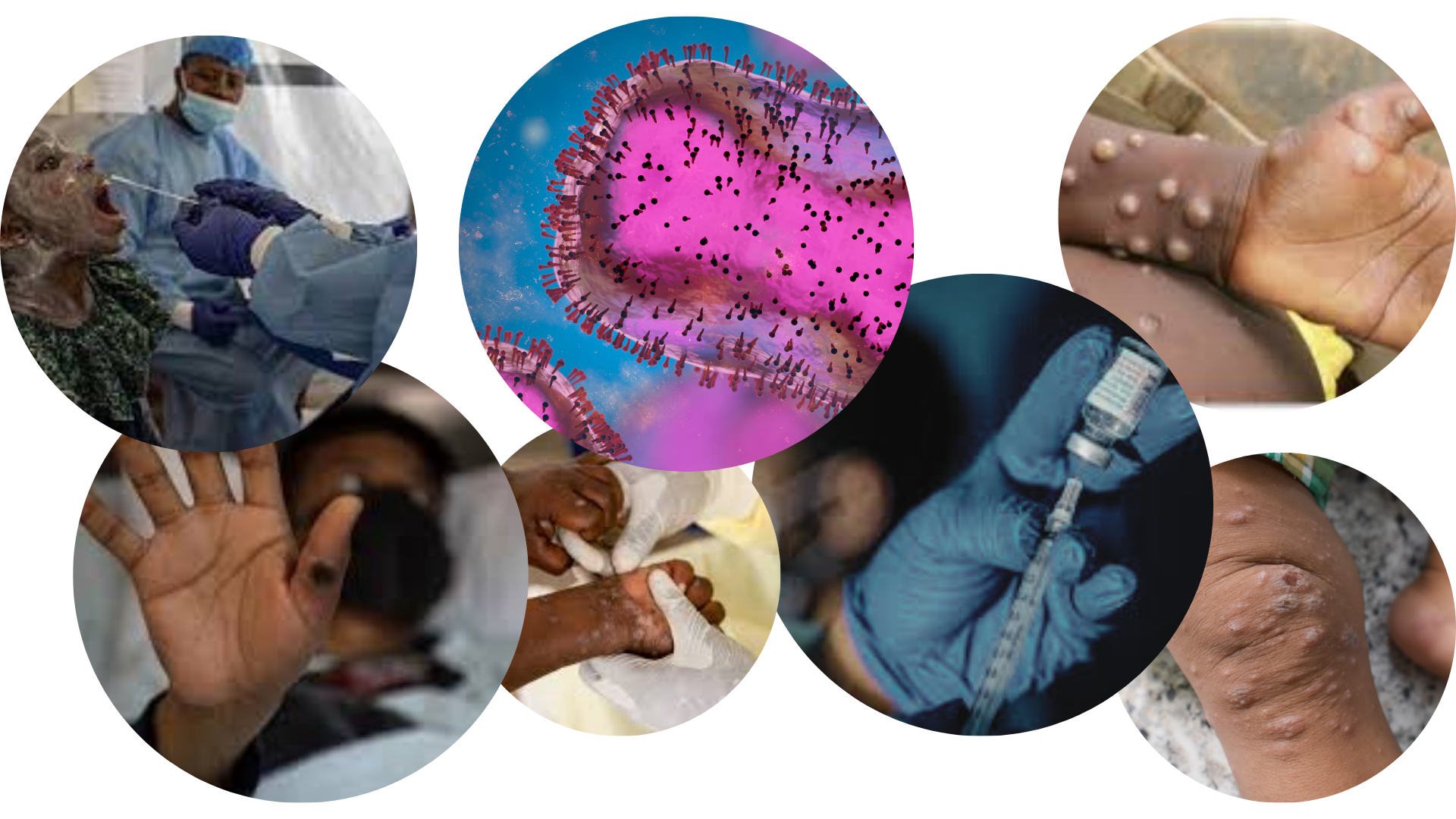
    Mpox is a viral zoonotic disease that poses significant public health challenges. Recent outbreaks have highlighted the importance of strengthening healthcare workers' capacity to respond effectively. This course is designed for healthcare professionals, frontline responders, and public health practitioners seeking to enhance their knowledge of Mpox prevention, control, and patient care.

    Throughout the course, participants will gain a comprehensive understanding of Mpox, including its causative agent, modes of transmission, and epidemiological patterns. Drawing from publicly available guidelines from WHO, UNICEF, IFRC, and other trusted sources, this course offers evidence-based strategies for diagnosis, treatment, and infection prevention and control (IPC) measures. Special attention is given to mental health support for healthcare workers and effective communication strategies to engage communities and mitigate stigma.

    The course also covers the importance of vaccination, the role of surveillance in controlling outbreaks, and targeted interventions to protect vulnerable populations, including children, pregnant women, and individuals with compromised immunity. Real-world case studies and practical scenarios help participants apply learned concepts to real-life situations.

    The course follows a modular structure, with each module containing bite-sized lessons (15–20 minutes each) that facilitate easy learning. Interactive activities and scenario-based exercises are incorporated to enhance engagement and retention. There are no graded assessments—participants can explore and revisit activities as often as needed to deepen their understanding.

    By the end of this course, learners will be equipped to:

    • Recognize Mpox symptoms and transmission risks

    • Implement IPC measures and healthcare protocols

    • Support community awareness and patient care

    • Apply stress management techniques to support their own mental health and well-being

    This course empowers healthcare workers with the skills needed to protect themselves, their patients, and their communities from Mpox, fostering safer and more resilient healthcare environments.

    To learn more about the efficacy of online learning and online learning at NextGenU.org please see “A Novel Integration of Online and Flipped Classroom Instructional Models in Public Health Higher Education,” (2014), BMC Medical Education“Building Public Health Capacity through Online Global Learning,” (2018), Open Praxis, or on NextGenU.org’s publication page.
    There are five modules to complete, which include:

    Module 1: Introduction to Mpox

    Module 2: Infection and Prevention Control

    Module 3: Screening and Evaluation

    Module 4: Caring for Mpox Patients

    Module 5: Scientific and Societal Responses to Mpox

    The completion time for this course is estimated at 1 hour 30 minutes, comprising 45 minutes of learning resources and 45 minutes of microlearning content. The course requires the completion of three microlessons.

    After completing the microlessons, you'll gain access to a final exam at the end of the course. This exam features a detailed scenario that integrates all the concepts learned.

    Once you’ve passed the final exam, you will receive a certificate from NextGenU.org and our course’s co-sponsoring organizations. We keep your personal information confidential, never sell any of your information, and only use anonymized data for research purposes. Also, we are happy to report your testing information and share your work with anyone (your school, employer, etc.) at your request.

    Engaging with this Course:

    You can enroll in this course or browse this course for free for personal enrichment; there are no requirements.

    To PASS and Obtain a Certificate, a learner must successfully complete:

    • All the reading requirements

    • All quizzes and pass with 80% with unlimited attempts

    • All activities

    • The final exam, with a pass grade of 80% required 

    • The self and course evaluation forms

    NextGenU.org is happy to provide your institution with

    • A link to and description of the course training so that they can see all its components, including the cosponsoring universities and other professional organization cosponsors;

    • Your grade on the final exam;

    • Your work products (e.g., case study activities), and any other required or optional shared materials that you produce and authorize to share with them; 

    • Your evaluations -- course and self-assessments;

    • A copy of your certificate, along with the co-sponsoring universities and other organizations listed.

    Next Steps

    1. Take the short knowledge pre-test. It allows us to assess various aspects of the course itself.
    2. Complete the registration form.
    3. Begin the course with Module 1: Introduction to Mpox
    4. In each lesson, read the description, complete all required readings and any required activity, and take the corresponding quizzes.

    Disclaimer: This content is designed to enhance your study; we cannot guarantee that the successful completion of these materials will enable you to work in your place of residence as regulations vary by location. If you plan to practice using your new knowledge, to ensure safety and compliance with your local laws, you must successfully complete a program of study approved by the government and relevant local regulatory agencies in your place of practice. 

    NextGenU.org does not directly confer academic degrees or guarantee that learning institutions will accept NextGenU.org coursework for credit.


  • 💬 Welcome to the Discussion Forum

    This forum is a space for health professionals like you to connect, reflect, and share your experiences in responding to mpox outbreaks. Whether you're in clinical care, public health, research, or community response, your insights are valuable.

    Use this space to:

    • Share practical experiences from your work 
    • Discuss challenges and solutions in outbreak response
    • Exchange resources or tools that have helped in your practice
    • Connect with peers in similar roles or regions

    We encourage respectful and thoughtful discussion. Please keep in mind the following netiquette guidelines:

    Be respectful and professional – Treat others as you would in a collaborative workplace.
    Keep it relevant – Focus on topics related to mpox and public health practice.
    Protect confidentiality – Do not share patient-identifying information or sensitive data.
    Be constructive – Offer feedback and ideas that contribute positively to the discussion.
    Acknowledge contributions – Thank others or build on their ideas to foster dialogue.

    Let’s learn from one another and strengthen our collective response to mpox.
    Feel free to start a new topic or join an ongoing conversation!

    Click here to start this forum

  • Each module is designed to guide your learning in a structured and flexible way. You’ll start with required readings to build your foundational knowledge, followed by mandatory quizzes to assess your understanding.

    To help reinforce and deepen your learning, you’ll also have access to optional supplementary materials, including flashcards, interactive practice sessions, short videos, and research summaries—feel free to explore these at your own pace and according to your learning needs.


  • Objectives covered in this module:
    • Define mpox and its causative agent
    • Describe basic aspects of the mpox virus, including its structure, classification and clades.
    • Describe basic epidemiology, pathophysiology, and transmission of mpox
    • Describe basic diagnosis and treatment of mpox (including maternal and perinatal approaches)
    • Define initial measures for preparing healthcare professionals and facilities to respond to mpox
    • Define the risk of spread of mpox in healthcare settings
    • Define the core elements of community mitigation against mpox

    Approximate time required for the readings for this module (at 144 words/minute): 45 minutes.

  • Objectives covered in this module:
    • Remember conceptual information about the various stressors related to mpox
    • Apply procedural aspects of stress coping mechanisms.
    • Recall the principles of mpox surveillance
    • Describe public health measures to prevent mpox outbreaks
    • Define the current use of the smallpox vaccine to prevent mpox
    • Understand conceptual aspects of vaccine development and effectiveness.
    • Understand the importance of targeted vaccinations to potential contacts of mpox
    • Describe the importance of universal precautions in dealing with  mpox
    • Define the correct donning and doffing procedures of personal protective equipment in dealing with mpox
    • Define the role of environmental cleaning and disinfection of mpox, including waste management

    Approximate time required for the readings for this module (at 144 words/minute): 1 hour and 15 minutes.

  • Objectives covered in this module:
    • Recall transmission routes of mpox
    • Describe the risks of contracting mpox in a in laboratory, domestic and healthcare settings
    • Identify patients at increased risk of mpox infections
    • Recall the case definitions of mpox
    • Recall diagnostic methods for mpox, including lab testing (basics on PCR testing, electron microscopy and covering limited resource settings)
    • Recall symptoms that may appear and should be assessed in evaluation
    • Define differential diagnoses with regard to mpox
    • Recall the principles of contact tracing with respect to mpox

    Approximate time required for the readings for this module (at 144 words/minute): 45 minutes.

    Click here to start this module

  • Objectives covered in this module:
    • Identify key components of a comprehensive mpox management plan, including isolation and cohorting guidelines.
    • Describe available treatment options, their pros and cons, and referral pathways for escalation.
    • Manage special populations: pediatric cases, immunocompromised individuals (e.g., HIV), and pregnant women.
    • Recognize clinical signs of critical mpox disease, understand ICU admission/discharge procedures, and recall mortality risk factors.
    • Explain mental health impacts of quarantine on exposed health workers and outline support strategies.
    • Describe persistent post-recovery symptoms and long-term follow-up considerations.
    • Apply case-study scenarios to determine appropriate patient-care actions.
    • Define quality-assurance measures: monitoring outcomes, documentation, and continuous protocol review.

    Approximate time required for the readings for this module (at 144 words/minute): 1 hour and 20 minutes.

    Click here to start this module

  • Objectives covered in this module: 
    • Describe conceptual aspects of medical research designs and its interpretation for daily practice
    • Describe the role of scientific medical research with specific regard to mpox
    • Define the global experience and impact of previous mpox outbreaks
    • Understand the impacts of mpox on healthcare systems
    • Describe public health responses to mpox

    Approximate time required for the readings for this module (at 144 words/minute): 1 hour.

    Click here to start this module

  • To take the final exam, you must complete all quizzes and complete all the required activities. 

    To access the exam, click on the name of the exam provided above. On the following screen, click the Attempt Quiz button to respond to the questions.

  • In this section, you can provide feedback about this course to help us make NextGenU.org better. Once evaluations are completed, you will be able to download your certificate of completion.