-
Introduction
-
Students mustStudent must submit this questionnaire to complete it
-
Students mustViewReceive a grade
Show More-

DISCLAIMER: This content is designed to enhance the study of nursing. This content is generic and is not designed to take into account the specific objectives, needs, and/or circumstances of any particular region or country. To become a nurse, learners must successfully complete a program of study approved by the government or state-regulatory agency in their place of residence. We cannot guarantee that the successful completion of these materials will enable you to practice in your place of residence. Make sure that you are in compliance with the scope of practice of your regulatory body before attempting to put into use or practice any of the knowledge gained.Course Overview
Welcome to the Medical Terminology course. This course is designed to equip nursing students with the foundational knowledge and skills necessary to understand, interpret, and accurately use medical terminology in academic and clinical settings. Through interactive learning sessions, students will explore word origins, prefixes, suffixes, combining forms, anatomical terminology, body systems, and documentation language. Students will develop the ability to communicate clearly and safely within the healthcare team and apply medical terminology effectively in patient care situations. This course is integral to nursing education, supporting accurate clinical communication, safe documentation, and improved understanding of healthcare language used in nursing practice.

Course Development
The Medical Terminology course is a competency-based course developed in partnership with Nurses International (N.I.) and NextGenU.org (NGU). Competencies were developed in collaboration with leading experts in nursing education and practice. The course objectives are aligned with The Essentials: Core Competencies for Professional Nursing Education. It utilizes resources from accredited organizations, universities, international guidelines, OpenStax.org, Pressbooks, and peer-reviewed open access nursing and healthcare educational materials. The Moodle Learning Management System (LMS) supports a flexible and interactive learning environment.
The course was written by the Nurses International faculty and designed in conjunction with the NextGenU.org design team.
The Nurses International core faculty writers and reviewers: Kathleen Capone MS, RN, CNE, EdD.Course Structure
The course includes eight comprehensive units:
- Introduction to Medical Terminology
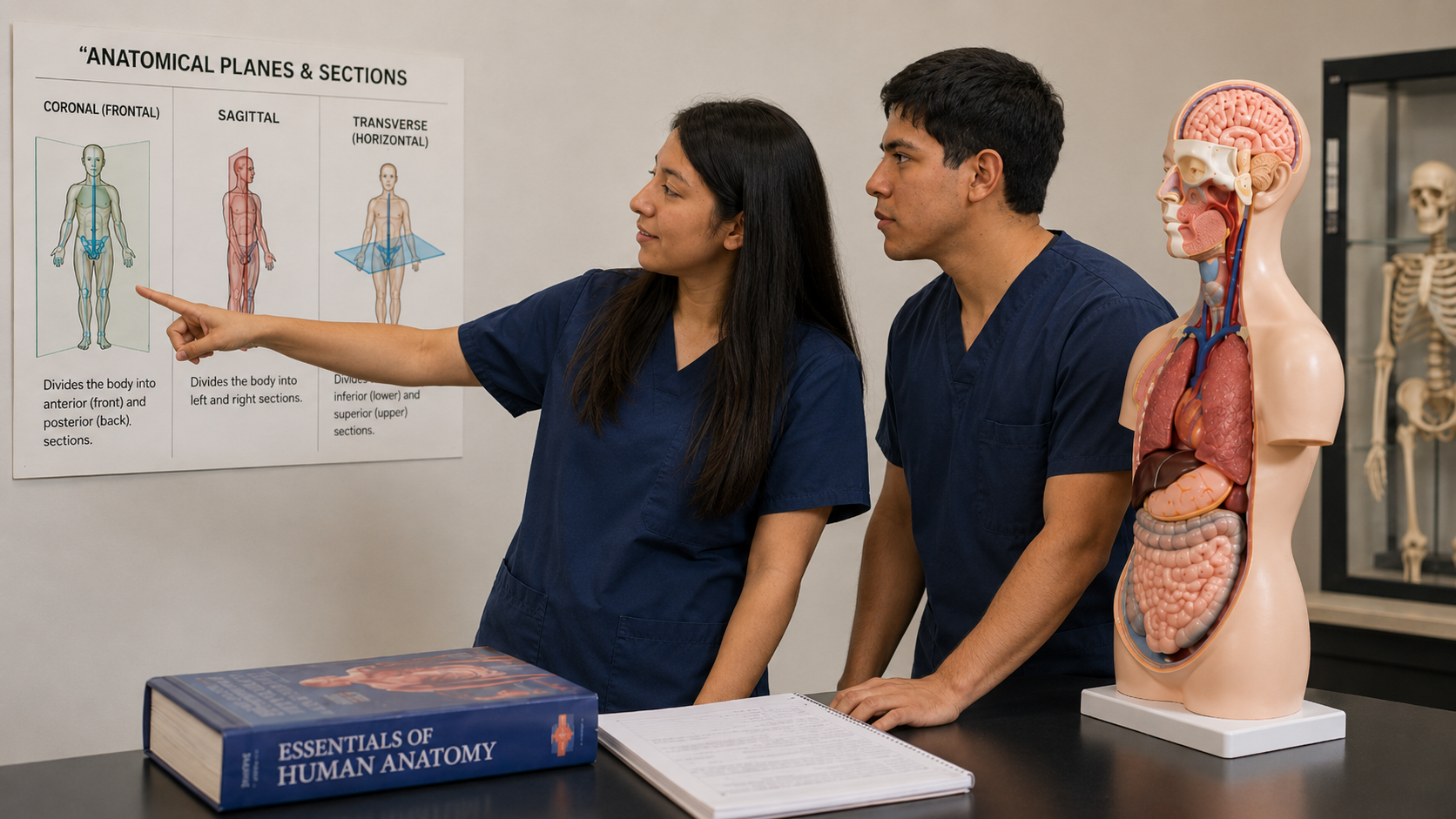
- Anatomical Terminology and the Human Body
- Word Elements and Term Construction
- Integumentary and Musculoskeletal Systems
- Cardiovascular, Blood, and Respiratory Systems
- Digestive, Urinary, and Endocrine Systems
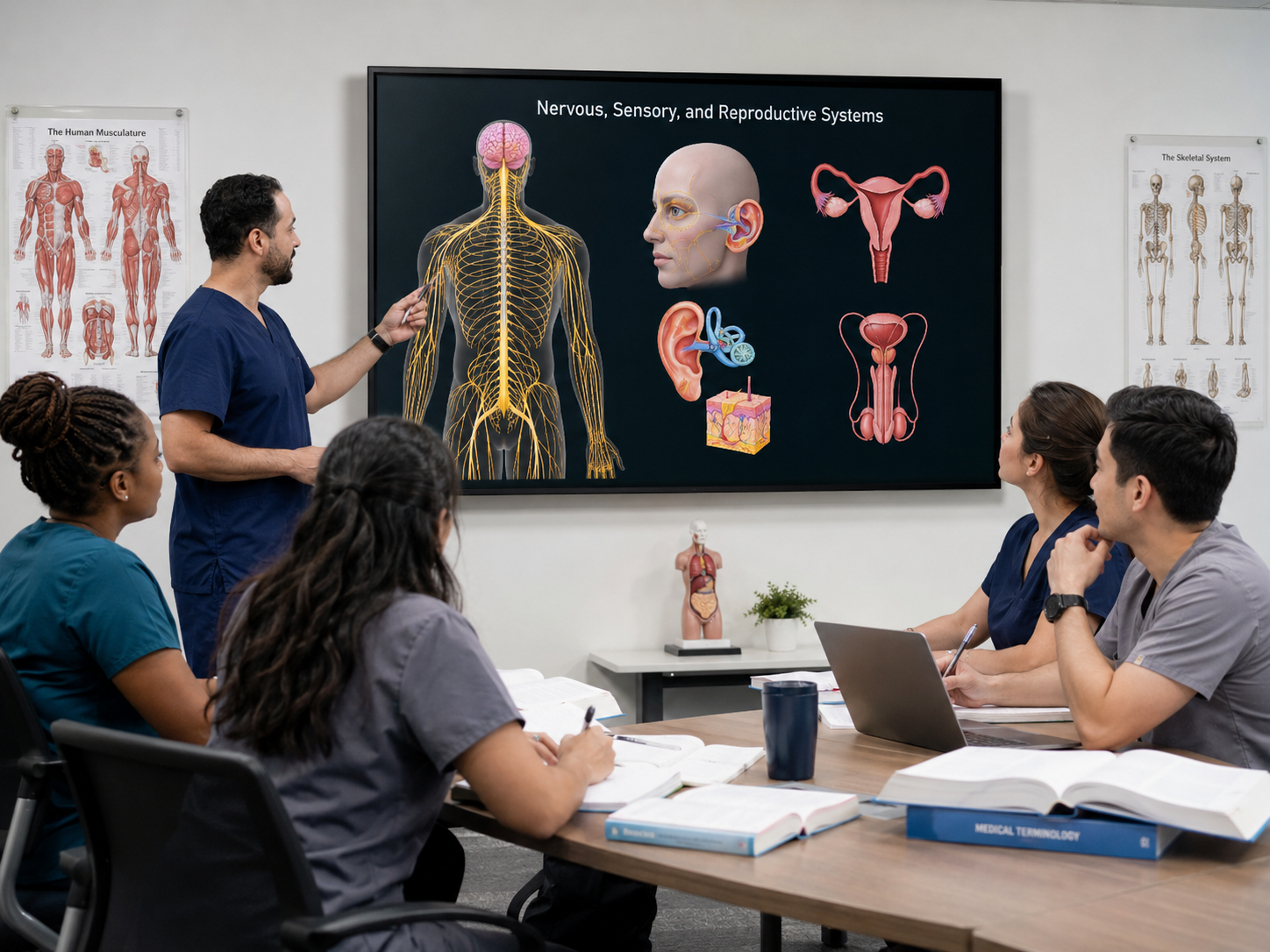
- Nervous, Sensory, and Reproductive Systems
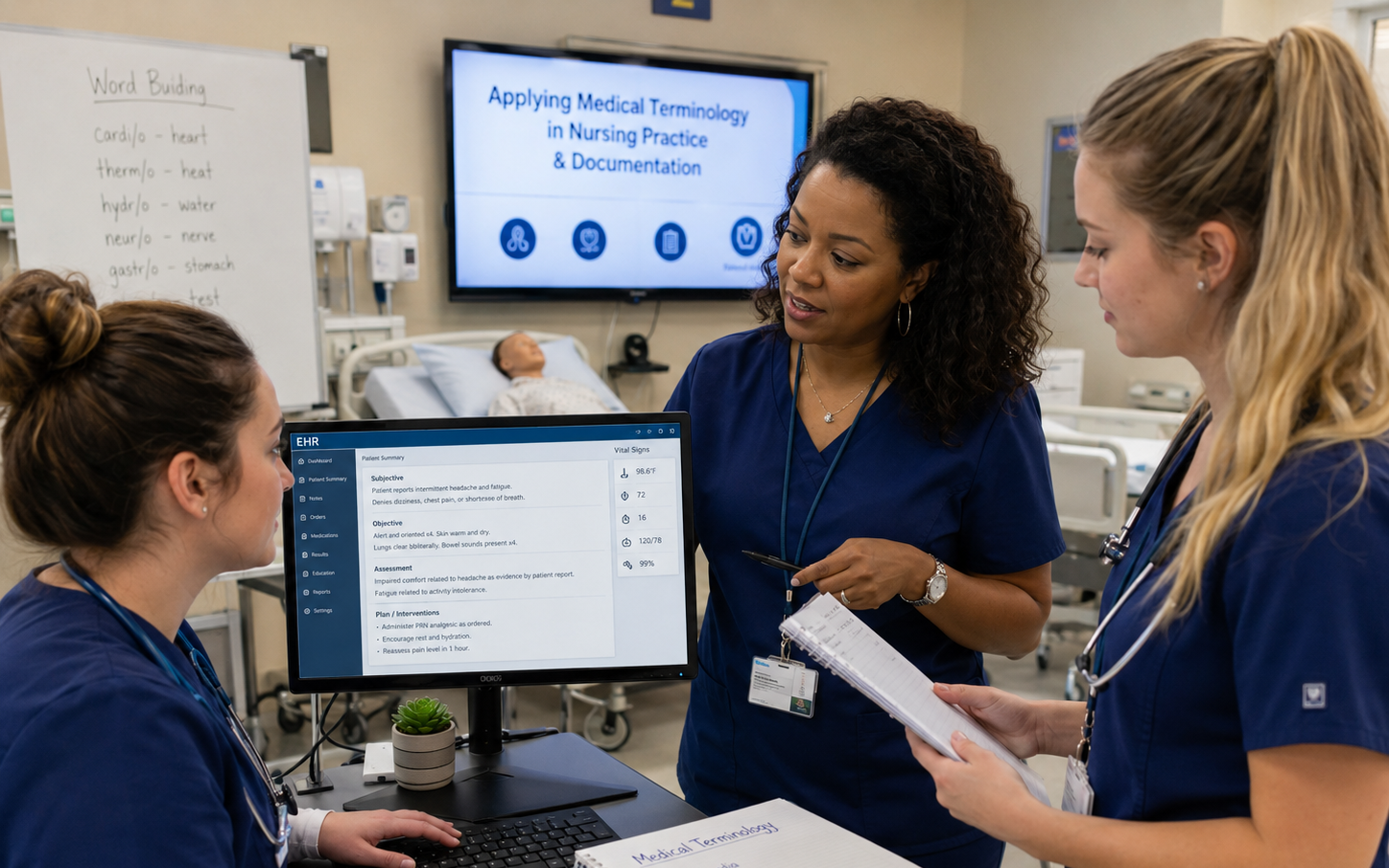
- Application in Nursing Practice and Documentation
Each unit comprises:
- Reading content embedded within the microlearning lessons
- Interactive learning activities
- Terminology practice and application exercises
- Clinical examples and nursing scenarios
- Knowledge checks integrated throughout the lessons
- Review activities to reinforce learning
- Lesson summaries provided as supplementary revision resources
Assessment
Learners are expected to complete all interactive learning sessions and embedded learning activities throughout the course.
The estimated completion time is 9 hours.
A non-graded practice exam is provided at the end of the course material so that learners can use this to help them prepare for the final exam.
A comprehensive final exam consisting of 30 questions is administered at the end of the course.
A grade of 80% is required to pass the final exam. If not achieved, learners may self-remediate and attempt a second exam of comparable content.If unsuccessful on the second exam, the course must be retaken in full and passed to achieve a certificate of completion.
A certificate of completion is available for download upon successful course completion.
To obtain a certificate, learners must complete:
- All interactive learning sessions
- All required embedded learning activities
- The practice exam
- The final exam with a minimum of 80% (maximum 2 attempts)
- Self and course evaluation forms
Prerequisites
No prerequisites are required
Information for Institutions
NextGenU.org is happy to provide your institution with:
- A link to and a description of the course training
- Your grade on the final exam
- Your work products and any other shared materials you authorize
- Your evaluations course and self-assessments
- A copy of your certificate of completion
Obtaining a Degree
NextGenU.org co-sponsors degree programs with institutional partners. To obtain a full degree co-sponsored with NextGenU.org, registrants must be enrolled in a degree program as a student of a NextGenU.org institutional partner. If you think your institution might be interested in offering a degree with NextGenU.org, please feel free to contact us.
We hope that you will find this a rewarding learning experience, and we welcome your assessment and feedback.
For Nurse Educators
The course teacher resources include a study guide that includes a syllabus, recommended teaching strategies and a skills directory. Nurse educators may contact info@nursesinternational.org with queries/permission to access faculty resources for this course.
Technical Support
For any technical difficulties or course access questions please contact support@nextgenu.org for assistance.
Disclaimer
This content is designed to enhance your study; we cannot guarantee that the successful completion of these materials will enable you to work in your place of residence as regulations vary by location. If you plan to practice using your new knowledge, to ensure safety and compliance with your local laws, you must complete a program of study approved by the government and relevant local regulatory agencies in your place of practice.
NextGenU.org does not directly confer academic degrees or guarantee that learning institutions will accept NextGenU.org coursework for credit.
-
-
Students mustViewComplete the activity
To access the microlesson:
Step 1: Click on the link to the Microlesson above.
Step 2: Select "Enter"; the microlesson will open in a new window
Step 3: Click on the arrow at the bottom of the screen to begin the microlesson.
If you need to exit the microlesson before it is completed, either click on "Exit Course" on the top right of the screen, or simply close the window. Your progress should be saved automatically.
-
Students mustView
-
Students mustViewComplete the activity
To access the microlesson:
Step 1: Click on the link to the Microlesson above.
Step 2: Select "Enter"; the microlesson will open in a new window
Step 3: Click on the arrow at the bottom of the screen to begin the microlesson.
If you need to exit the microlesson before it is completed, either click on "Exit Course" on the top right of the screen, or simply close the window. Your progress should be saved automatically.
-
Students mustView
-
Students mustViewComplete the activity
To access the microlesson:
Step 1: Click on the link to the Microlesson above.
Step 2: Select "Enter"; the microlesson will open in a new window
Step 3: Click on the arrow at the bottom of the screen to begin the microlesson.
If you need to exit the microlesson before it is completed, either click on "Exit Course" on the top right of the screen, or simply close the window. Your progress should be saved automatically.
-
Students mustViewComplete the activity
To access the microlesson:
Step 1: Click on the link to the Microlesson above.
Step 2: Select "Enter"; the microlesson will open in a new window
Step 3: Click on the arrow at the bottom of the screen to begin the microlesson.
If you need to exit the microlesson before it is completed, either click on "Exit Course" on the top right of the screen, or simply close the window. Your progress should be saved automatically.
-
Students mustView
-
-
Students mustViewComplete the activity
To access the microlesson:
Step 1: Click on the link to the Microlesson above.
Step 2: Select "Enter"; the microlesson will open in a new window
Step 3: Click on the arrow at the bottom of the screen to begin the microlesson.
If you need to exit the microlesson before it is completed, either click on "Exit Course" on the top right of the screen, or simply close the window. Your progress should be saved automatically.
-
Students mustView
-
Students mustViewComplete the activity
To access the microlesson:
Step 1: Click on the link to the Microlesson above.
Step 2: Select "Enter"; the microlesson will open in a new window
Step 3: Click on the arrow at the bottom of the screen to begin the microlesson.
If you need to exit the microlesson before it is completed, either click on "Exit Course" on the top right of the screen, or simply close the window. Your progress should be saved automatically.
-
Students mustView
-
Students mustViewComplete the activity
To access the microlesson:
Step 1: Click on the link to the Microlesson above.
Step 2: Select "Enter"; the microlesson will open in a new window
Step 3: Click on the arrow at the bottom of the screen to begin the microlesson.
If you need to exit the microlesson before it is completed, either click on "Exit Course" on the top right of the screen, or simply close the window. Your progress should be saved automatically.
-
Students mustView
-
Students mustViewComplete the activity
To access the microlesson:
Step 1: Click on the link to the Microlesson above.
Step 2: Select "Enter"; the microlesson will open in a new window
Step 3: Click on the arrow at the bottom of the screen to begin the microlesson.
If you need to exit the microlesson before it is completed, either click on "Exit Course" on the top right of the screen, or simply close the window. Your progress should be saved automatically.
-
Students mustView
-
-
Students mustViewComplete the activity
To access the microlesson:
Step 1: Click on the link to the Microlesson above.
Step 2: Select "Enter"; the microlesson will open in a new window
Step 3: Click on the arrow at the bottom of the screen to begin the microlesson.
If you need to exit the microlesson before it is completed, either click on "Exit Course" on the top right of the screen, or simply close the window. Your progress should be saved automatically.
-
Students mustView
-
Students mustViewComplete the activity
To access the microlesson:
Step 1: Click on the link to the Microlesson above.
Step 2: Select "Enter"; the microlesson will open in a new window
Step 3: Click on the arrow at the bottom of the screen to begin the microlesson.
If you need to exit the microlesson before it is completed, either click on "Exit Course" on the top right of the screen, or simply close the window. Your progress should be saved automatically.
-
Students mustView
-
Students mustViewComplete the activity
To access the microlesson:
Step 1: Click on the link to the Microlesson above.
Step 2: Select "Enter"; the microlesson will open in a new window
Step 3: Click on the arrow at the bottom of the screen to begin the microlesson.
If you need to exit the microlesson before it is completed, either click on "Exit Course" on the top right of the screen, or simply close the window. Your progress should be saved automatically.
-
Students mustView
-
Students mustViewComplete the activity
To access the microlesson:
Step 1: Click on the link to the Microlesson above.
Step 2: Select "Enter"; the microlesson will open in a new window
Step 3: Click on the arrow at the bottom of the screen to begin the microlesson.
If you need to exit the microlesson before it is completed, either click on "Exit Course" on the top right of the screen, or simply close the window. Your progress should be saved automatically.
-
Students mustView
-
-
Students mustViewComplete the activity
To access the microlesson:
Step 1: Click on the link to the Microlesson above.
Step 2: Select "Enter"; the microlesson will open in a new window
Step 3: Click on the arrow at the bottom of the screen to begin the microlesson.
If you need to exit the microlesson before it is completed, either click on "Exit Course" on the top right of the screen, or simply close the window. Your progress should be saved automatically.
-
Students mustView
-
Students mustViewComplete the activity
To access the microlesson:
Step 1: Click on the link to the Microlesson above.
Step 2: Select "Enter"; the microlesson will open in a new window
Step 3: Click on the arrow at the bottom of the screen to begin the microlesson.
If you need to exit the microlesson before it is completed, either click on "Exit Course" on the top right of the screen, or simply close the window. Your progress should be saved automatically.
-
Students mustView
-
-
Students mustViewComplete the activity
To access the microlesson:
Step 1: Click on the link to the Microlesson above.
Step 2: Select "Enter"; the microlesson will open in a new window
Step 3: Click on the arrow at the bottom of the screen to begin the microlesson.
If you need to exit the microlesson before it is completed, either click on "Exit Course" on the top right of the screen, or simply close the window. Your progress should be saved automatically.
-
Students mustView
-
Students mustViewComplete the activity
To access the microlesson:
Step 1: Click on the link to the Microlesson above.
Step 2: Select "Enter"; the microlesson will open in a new window
Step 3: Click on the arrow at the bottom of the screen to begin the microlesson.
If you need to exit the microlesson before it is completed, either click on "Exit Course" on the top right of the screen, or simply close the window. Your progress should be saved automatically.
-
Students mustView
-
Students mustViewComplete the activity
To access the microlesson:
Step 1: Click on the link to the Microlesson above.
Step 2: Select "Enter"; the microlesson will open in a new window
Step 3: Click on the arrow at the bottom of the screen to begin the microlesson.
If you need to exit the microlesson before it is completed, either click on "Exit Course" on the top right of the screen, or simply close the window. Your progress should be saved automatically.
-
Students mustView
-
-
Students mustViewComplete the activity
To access the microlesson:
Step 1: Click on the link to the Microlesson above.
Step 2: Select "Enter"; the microlesson will open in a new window
Step 3: Click on the arrow at the bottom of the screen to begin the microlesson.
If you need to exit the microlesson before it is completed, either click on "Exit Course" on the top right of the screen, or simply close the window. Your progress should be saved automatically.
-
Students mustView
-
Students mustViewComplete the activity
To access the microlesson:
Step 1: Click on the link to the Microlesson above.
Step 2: Select "Enter"; the microlesson will open in a new window
Step 3: Click on the arrow at the bottom of the screen to begin the microlesson.
If you need to exit the microlesson before it is completed, either click on "Exit Course" on the top right of the screen, or simply close the window. Your progress should be saved automatically.
-
Students mustView
-
Students mustViewComplete the activity
To access the microlesson:
Step 1: Click on the link to the Microlesson above.
Step 2: Select "Enter"; the microlesson will open in a new window
Step 3: Click on the arrow at the bottom of the screen to begin the microlesson.
If you need to exit the microlesson before it is completed, either click on "Exit Course" on the top right of the screen, or simply close the window. Your progress should be saved automatically.
-
Students mustView
-
-
Students mustViewComplete the activity
To access the microlesson:
Step 1: Click on the link to the Microlesson above.
Step 2: Select "Enter"; the microlesson will open in a new window
Step 3: Click on the arrow at the bottom of the screen to begin the microlesson.
If you need to exit the microlesson before it is completed, either click on "Exit Course" on the top right of the screen, or simply close the window. Your progress should be saved automatically.
-
Students mustView
-
Students mustViewComplete the activity
To access the microlesson:
Step 1: Click on the link to the Microlesson above.
Step 2: Select "Enter"; the microlesson will open in a new window
Step 3: Click on the arrow at the bottom of the screen to begin the microlesson.
If you need to exit the microlesson before it is completed, either click on "Exit Course" on the top right of the screen, or simply close the window. Your progress should be saved automatically.
-
Students mustView
-
Students mustViewComplete the activity
To access the microlesson:
Step 1: Click on the link to the Microlesson above.
Step 2: Select "Enter"; the microlesson will open in a new window
Step 3: Click on the arrow at the bottom of the screen to begin the microlesson.
If you need to exit the microlesson before it is completed, either click on "Exit Course" on the top right of the screen, or simply close the window. Your progress should be saved automatically.
-
Students mustView
-
Students mustViewComplete the activity
To access the microlesson:
Step 1: Click on the link to the Microlesson above.
Step 2: Select "Enter"; the microlesson will open in a new window
Step 3: Click on the arrow at the bottom of the screen to begin the microlesson.
If you need to exit the microlesson before it is completed, either click on "Exit Course" on the top right of the screen, or simply close the window. Your progress should be saved automatically.
-
Students mustView
-
-
Students mustViewComplete the activity
To access the microlesson:
Step 1: Click on the link to the Microlesson above.
Step 2: Select "Enter"; the microlesson will open in a new window
Step 3: Click on the arrow at the bottom of the screen to begin the microlesson.
If you need to exit the microlesson before it is completed, either click on "Exit Course" on the top right of the screen, or simply close the window. Your progress should be saved automatically.
-
Students mustView
-
Students mustViewComplete the activity
To access the microlesson:
Step 1: Click on the link to the Microlesson above.
Step 2: Select "Enter"; the microlesson will open in a new window
Step 3: Click on the arrow at the bottom of the screen to begin the microlesson.
If you need to exit the microlesson before it is completed, either click on "Exit Course" on the top right of the screen, or simply close the window. Your progress should be saved automatically.
-
Students mustView
-
Students mustViewComplete the activity
To access the microlesson:
Step 1: Click on the link to the Microlesson above.
Step 2: Select "Enter"; the microlesson will open in a new window
Step 3: Click on the arrow at the bottom of the screen to begin the microlesson.
If you need to exit the microlesson before it is completed, either click on "Exit Course" on the top right of the screen, or simply close the window. Your progress should be saved automatically.
-
Students mustView
-

To take the final exam, you must complete all the required activities. The final exam consists of 30 questions, and you will have 60 minutes to complete it. When the time is over, you will have two minutes to submit your attempt before it expires, and your progress is discarded. You will not be able to answer additional questions in the grace period.
To access the exam, click on the name of the exam provided above. On the following screen, click the attempt quiz button to respond to the questions.
-
Final Exam 1 Quiz
-
Final Exam 2 Quiz
-
-
 In this section, you can provide feedback about this course to help us make NextGenU.org better. Once evaluations are completed, you will be able to download your certificate of completion.
-
Course Evaluation Questionnaire
-
Self Evaluation Questionnaire
-
-