-
-
Students mustStudent must submit this questionnaire to complete it
-
Students mustViewReceive a grade
-
Students mustMark as done
Show More-
In order to be able to complete the activities and quizzes in this course, and receive a certification of completion, or a badge, you must create an account and enroll in the course. You only need to create an account once, after which you can enroll in as many courses as you like. Click here to create an account. For instructions on how to create an account and enroll, please look at the following video:
-

Community Protection for Outbreak Readiness and Response is designed to strengthen the capacity of community health workers, volunteers, and frontline community actors to support preparedness and response during outbreaks, with a focus on Bundibugyo Virus Disease (BVD) and other Ebola diseases.
Community health workers play a key role in connecting communities with the formal health system. They help identify risks, share trusted information, support referrals, promote prevention practices, and contribute to early detection and coordinated response.
This course is intended for Community Health Workers (CHWs), Relais Communautaires (RECOs), Community-Based Surveillance volunteers, Community Animal Health Workers, first aid responders, civil society organization staff and volunteers, and other community stakeholders involved in outbreak readiness and response.
By the end of this course, learners will be able to:
- Describe basic information about BVD and other Ebola diseases
- Identify populations at risk during outbreaks
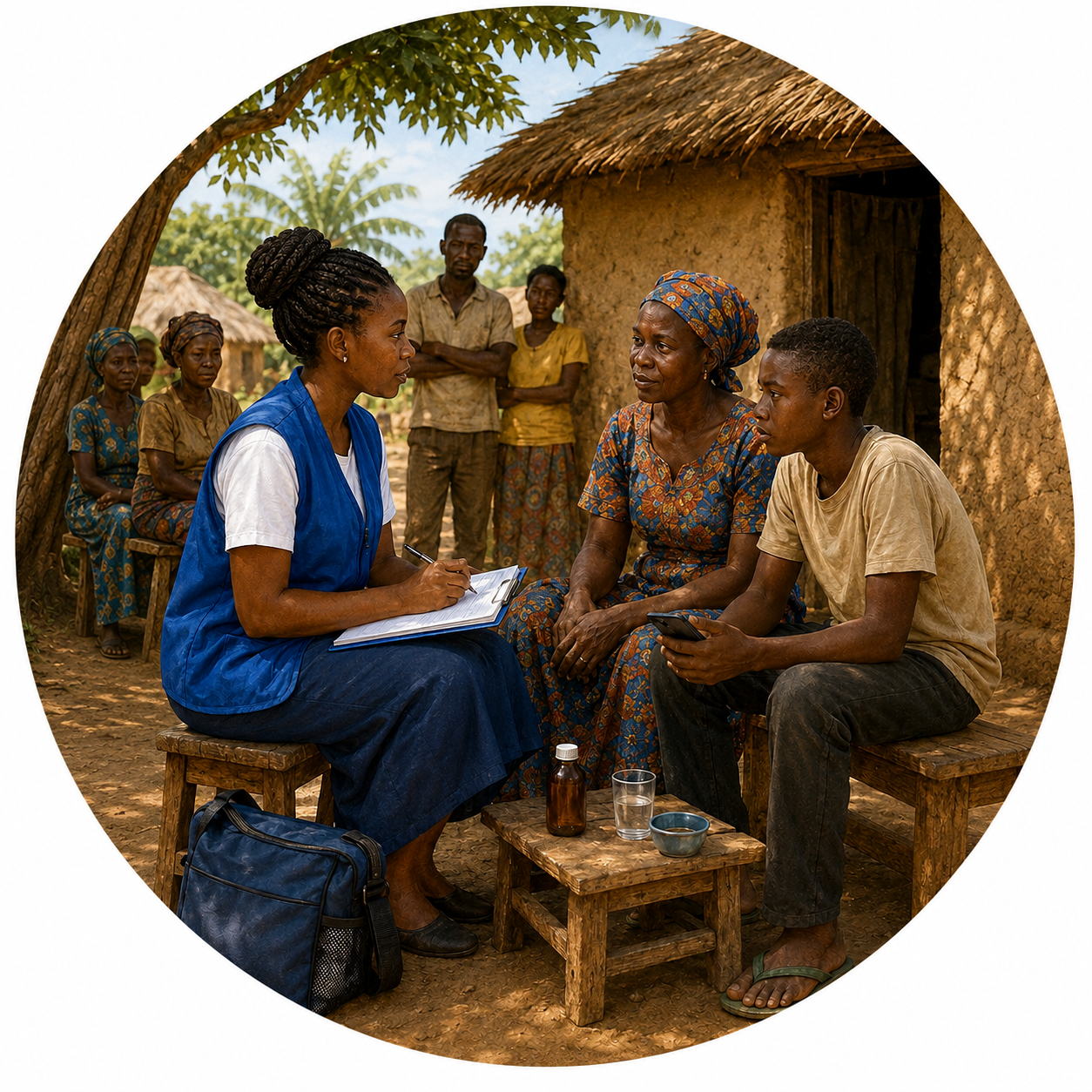
- Support Community-Based Surveillance
- Communicate accurate information and engage communities
- Support individuals and families along the care pathway
- Promote community infection prevention and control practices
- Apply basic mental health and psychosocial support skills
- Participate in community coordination during outbreaks
Course Modules
There are eight modules to complete:
- Module 1: Introduction to BVD and Other Ebola Diseases
- Module 2: Who Is at Risk?
- Module 3: Community-Based Surveillance
- Module 4: Introduction to RCCE-IM
- Module 5: Supporting Individuals from Home to Health Facility to Community
- Module 6: Community IPC and Safe and Dignified Burials
- Module 7: MHPSS in the Community
- Module 8: Community Coordination
Learners may enroll in or browse this course for free. To pass and obtain a certificate, learners must complete all required readings, quizzes, activities, the final assessment, and the self and course evaluation forms.
Upon successful completion, learners will receive a certificate from NextGenU.org and the course’s co-sponsoring organizations, where applicable.
Next Steps
- Take the short knowledge pre-test.
- Complete the registration form.
- Begin with Module 1: Introduction to BVD and Other Ebola Diseases.
- Complete each lesson’s readings, activities, and quizzes.
Disclaimer: This course is designed to support learning and community-level outbreak preparedness. Completion does not guarantee authorization to work or practice, as regulations vary by location. Learners should follow local laws and regulatory requirements in their place of practice.
-
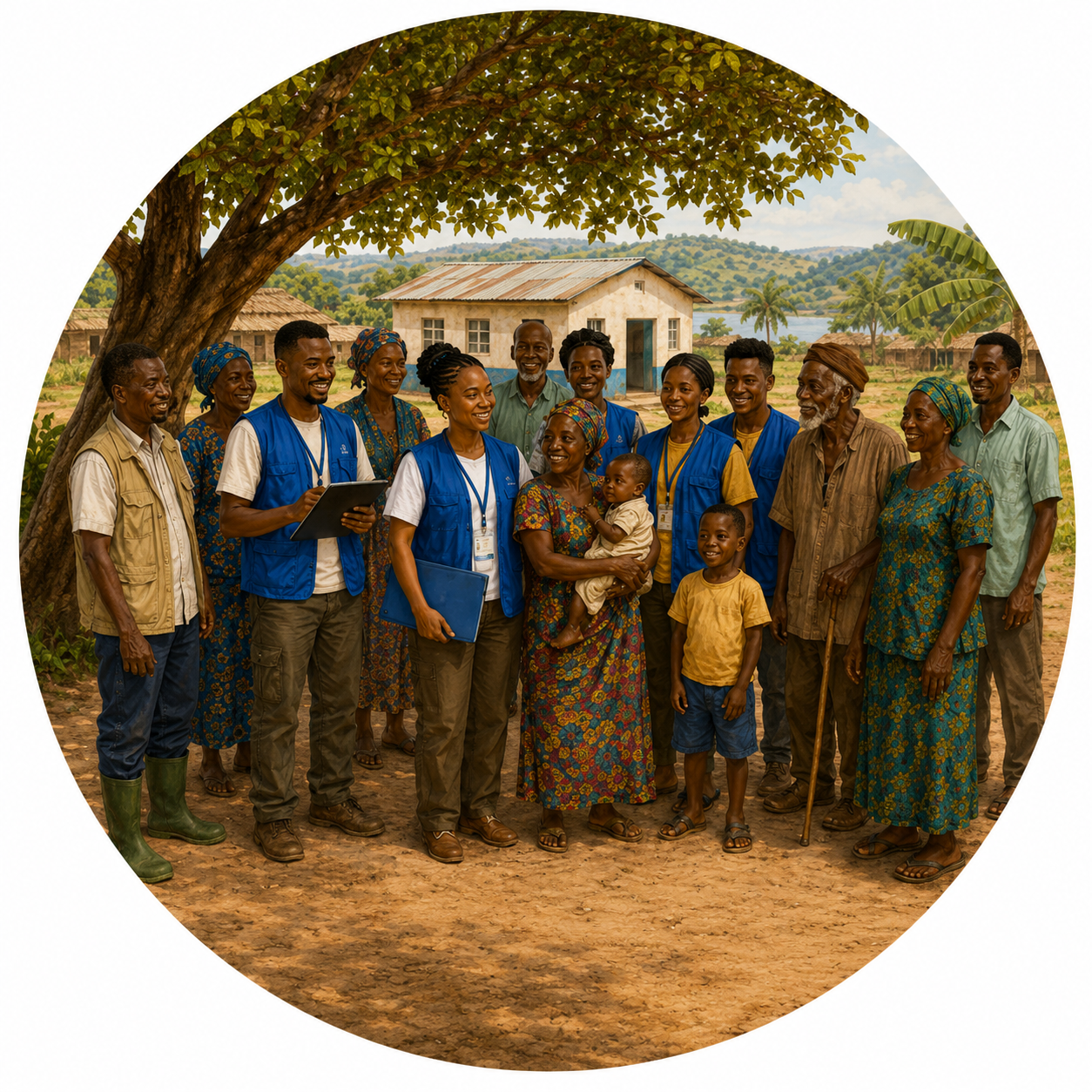
In this course, Community Health Workers (CHWs) are central to community preparedness and response for Bundibugyo Virus Disease (BVD) and other Ebola diseases.
Community Health Workers (CHWs) are trusted members of the community who support health promotion, health education, immunization, primary health care, WASH, community surveillance, first aid, referral, and communication between communities and the formal health system.
During an outbreak, CHWs play a key role in the response chain: detect, notify, respond, and coordinate. They help identify alerts in the community, report suspected cases, share accurate health information, support families and vulnerable groups, and connect people with health services.
This course strengthens CHW knowledge and skills across essential areas, including community-based surveillance, risk communication and community engagement, infection prevention and control, psychosocial support, care pathway support, and community coordination.
Overall, the course prepares CHWs to act as frontline community actors who help protect their communities, build trust, support early detection, and contribute to a safer and more coordinated outbreak response.
-
This module introduces Bundibugyo Virus Disease and explains how it relates to other Ebola diseases, including basic information on symptoms, transmission, prevention, and outbreak control.
Learning Objectives
- By the end of this module, participants should be able to describe basic information on Bundibugyo virus disease (BVD), including its cause, modes of transmission, signs and symptoms, and prevention measures.
Module Contents:
- What is BVD
- Symptoms and incubation
- How BVD spreads
- What communities can do
- CHWs in the community
Approximate time required for the readings for this module (at 144 words/minute): 44 minutes.
-
Students mustMark as doneClick on the link to access the summary of this module's content. You are encouraged to read the summary notes before you begin the microlesson. Refer back to them alongside your journey.4.4 MB
-
Students mustMark as done
Click on the link to play and watch the video for this module. You are encouraged to watch the video before you begin the microlesson and you can refer back to it alongside your journey.
-
Students mustMark as done
To access the microlesson:
Step 1: Click on the link to the Microlesson above.
Step 2: Select "Enter"; the microlesson will open in a new window
Step 3: Click on the arrow at the bottom of the screen to begin the microlesson.
If you need to exit the microlesson before it is completed, either click on "Exit Course" on the top right of the screen, or simply close the window. Your progress should be saved automatically.
Within the Microlesson, there will be a series of questions and activities throughout the lesson. These questions and activities are designed to help you learn and are not meant to be evaluations. -
Module 1 Quiz
To access the quiz, click on the name of the quiz provided above. On the following screen, click the "Preview quiz now" button to respond to the questions.
-
This module focuses on the people and communities most at risk during a BVD outbreak, including those exposed through caregiving, health work, burial practices, outbreak response, or contact with wildlife.
Learning Objectives
- By the end of this module, participants should be able to identify the populations most at risk for BVD and other Ebola diseases, and describe the risk factors, behaviours, and circumstances associated with infection and transmission.
Module Contents
- Importance of knowing the population at risk
- Who is at risk of getting infected with the BVD virus
- Population at risk in your country and province
Approximate time required for the readings for this module (at 144 words/minute): 41 minutes.
-
Students mustMark as done
Click on the link to access the summary of this module's content. You are encouraged to read the summary notes before you begin the microlesson. Refer back to them alongside your journey.
2.2 MB -
Students mustMark as done
Click on the link to play and watch the video for this module. You are encouraged to watch the video before you begin the microlesson and you can refer back to it alongside your journey.
-
Students mustMark as done
To access the microlesson:
Step 1: Click on the link to the Microlesson above.
Step 2: Select "Enter"; the microlesson will open in a new window
Step 3: Click on the arrow at the bottom of the screen to begin the microlesson.
If you need to exit the microlesson before it is completed, either click on "Exit Course" on the top right of the screen, or simply close the window. Your progress should be saved automatically.
Within the Microlesson, there will be a series of questions and activities throughout the lesson. These questions and activities are designed to help you learn and are not meant to be evaluations. -
Module 2 Quiz
To access the quiz, click on the name of the quiz provided above. On the following screen, click the "Preview quiz now" button to respond to the questions.
-
This module explains how community health workers can support early detection and reporting of possible BVD cases and other public health concerns within the community.
Learning Objectives
By the end of this module, participants will be able to:
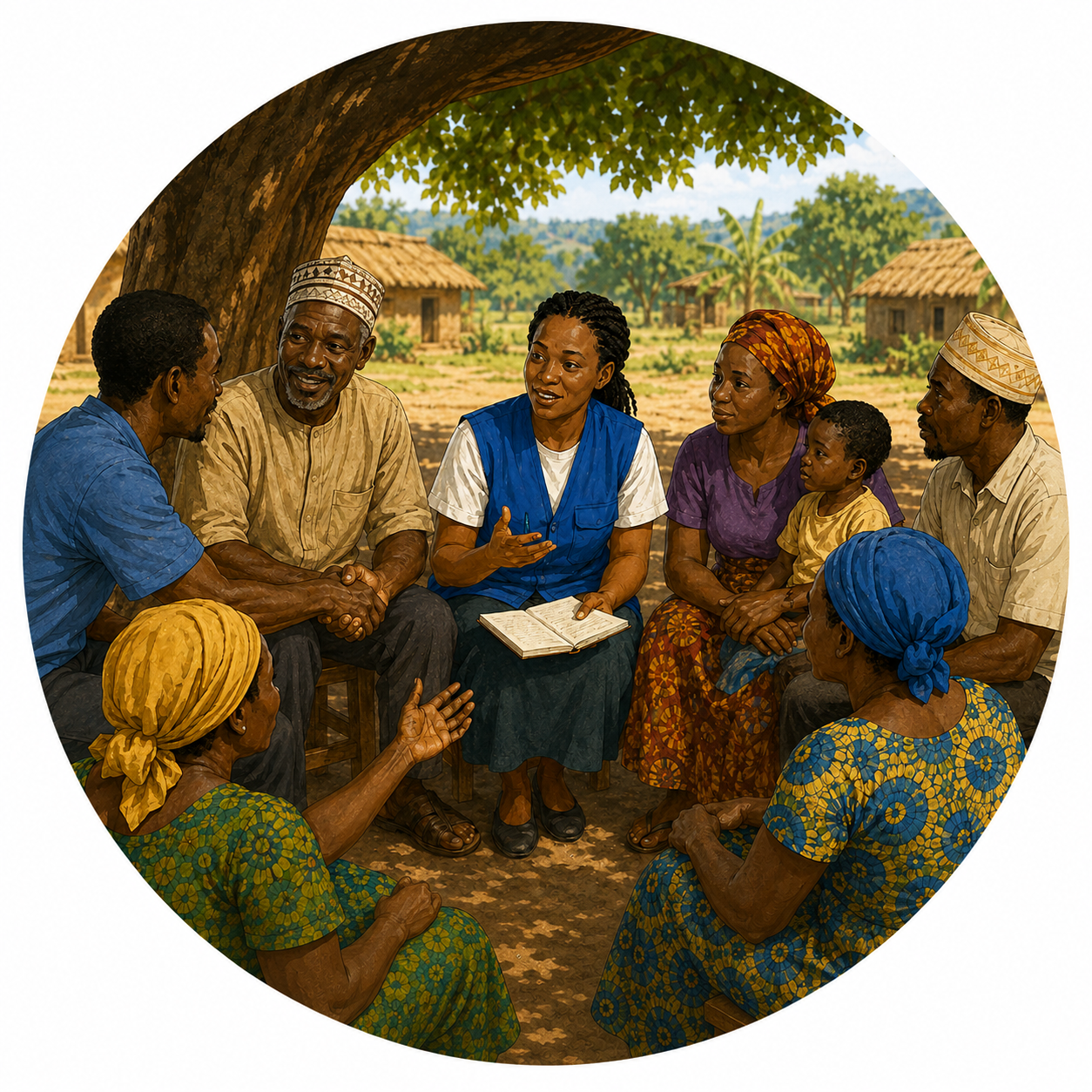
- Explain the importance and functions of Community Relays (RECOs)/CHW in detecting, reporting, and responding to BVD, Ebola, and other outbreaks at the community level;
- Describe how and where to report alerts and events;
- Explain the roles of CHWs in detecting, reporting, and responding to outbreaks; and
- Use CBS tools in the community, or use the mobile application for detection of events.
Module Contents
- What is community-based surveillance
- Applying community case definitions
- Values and roles of CHWs in CBS
- How to detect unusual events of public health concern and notify local authorities
- Activity 1: Case studies
- Timeliness in reporting
- Activity 2: Detecting alerts and sending SMS
- Community response: Active case finding and contact tracing
Approximate time required for the readings for this module (at 144 words/minute): 49 minutes.
-
Students mustMark as done
Click on the link to access the summary of this module's content. You are encouraged to read the summary notes before you begin the microlesson. Refer back to them alongside your journey.
1.8 MB -
Students mustMark as done
Click on the link to play and watch the video for this module. You are encouraged to watch the video before you begin the microlesson and you can refer back to it alongside your journey.
-
Students mustMark as done
To access the microlesson:
Step 1: Click on the link to the Microlesson above.
Step 2: Select "Enter"; the microlesson will open in a new window
Step 3: Click on the arrow at the bottom of the screen to begin the microlesson.
If you need to exit the microlesson before it is completed, either click on "Exit Course" on the top right of the screen, or simply close the window. Your progress should be saved automatically.
Within the Microlesson, there will be a series of questions and activities throughout the lesson. These questions and activities are designed to help you learn and are not meant to be evaluations. -
Module 3 Quiz
To access the quiz, click on the name of the quiz provided above. On the following screen, click the "Preview quiz now" button to respond to the questions.
-
This module highlights the role of community health workers in sharing accurate information, building trust, listening to community concerns, addressing rumours, and reducing stigma.
Learning Objectives
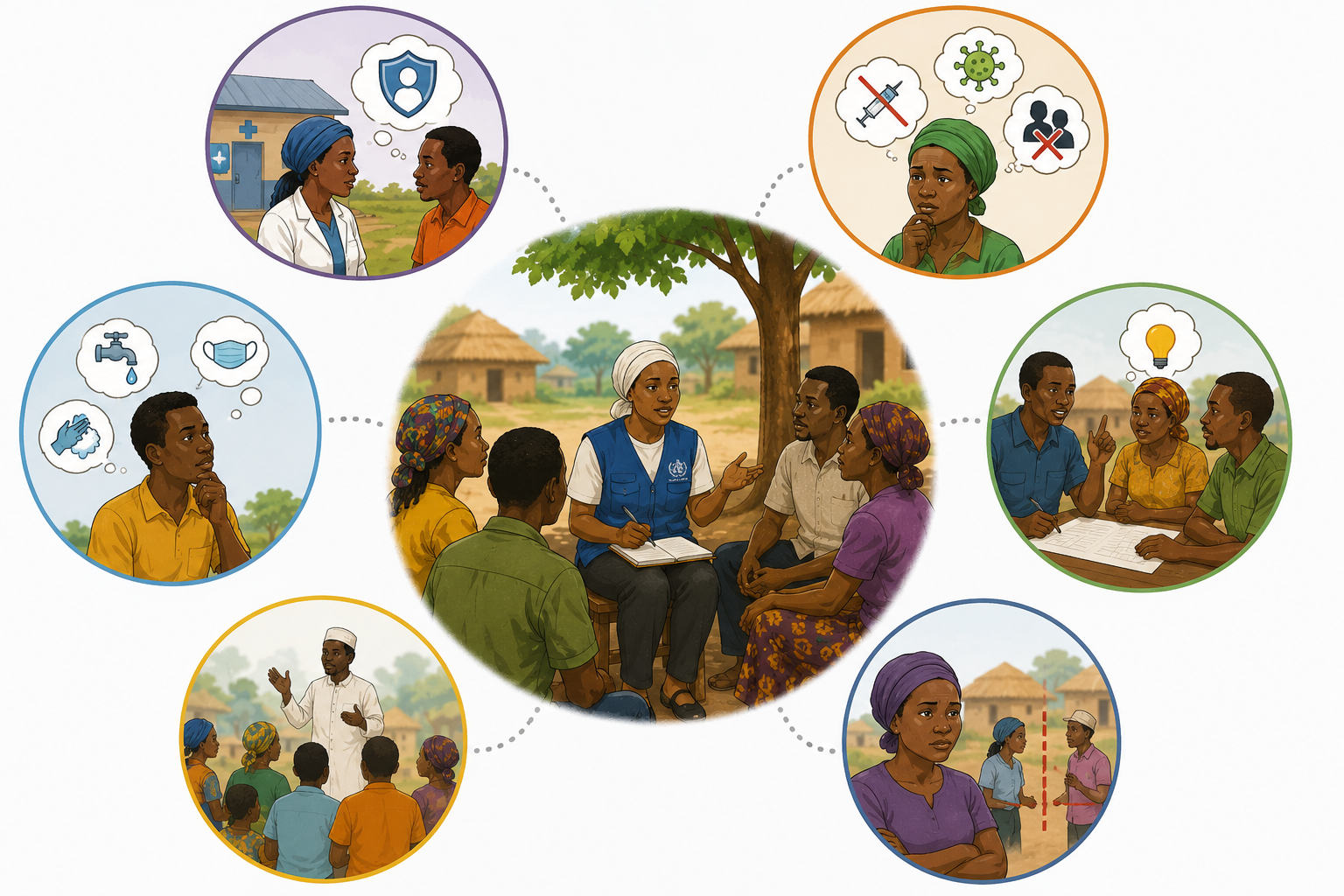
By the end of this module, participants will be able to: This module highlights the role of community health workers in sharing accurate information, building trust, listening to community concerns, addressing rumours, and reducing stigma.
- Explain what Risk Communication and Community Engagement (RCCE) involves
- Work towards stopping rumours and infodemics in the community
- Describe the importance of building trust with communities
- Explain how to avoid stigma and discrimination during disease outbreaks such as BVD
- Identify community social listening and feedback mechanisms
- Explain the role of RECOs in bridging information from health providers to communities.
Module Contents
- Roles of CHWs to communicate risk, engage communities, and provide accurate information
- How to manage infodemics and rumours in the community
- How to build trust in the community
- Identifying and avoiding stigma
- Community feedback and social listening
- RCCE Messages for Bundibugyo Virus Disease (BVD): A Reference for RECOs
Approximate time required for the readings for this module (at 144 words/minute): 52 minutes.-
Students mustMark as done
Click on the link to access the summary of this module's content. You are encouraged to read the summary notes before you begin the microlesson. Refer back to them alongside your journey.
1.3 MB -
Students mustMark as done
Click on the link to play and watch the video for this module. You are encouraged to watch the video before you begin the microlesson and you can refer back to it alongside your journey.
-
Students mustMark as done
To access the microlesson:
Step 1: Click on the link to the Microlesson above.
Step 2: Select "Enter"; the microlesson will open in a new window
Step 3: Click on the arrow at the bottom of the screen to begin the microlesson.
If you need to exit the microlesson before it is completed, either click on "Exit Course" on the top right of the screen, or simply close the window. Your progress should be saved automatically.
Within the Microlesson, there will be a series of questions and activities throughout the lesson. These questions and activities are designed to help you learn and are not meant to be evaluations. -
Module 4 Quiz
To access the quiz, click on the name of the quiz provided above. On the following screen, click the "Preview quiz now" button to respond to the questions.
-
This module follows the patient journey from home to the health facility and back to the community, emphasizing respectful, compassionate, and practical support for patients and families.
Learning Objectives
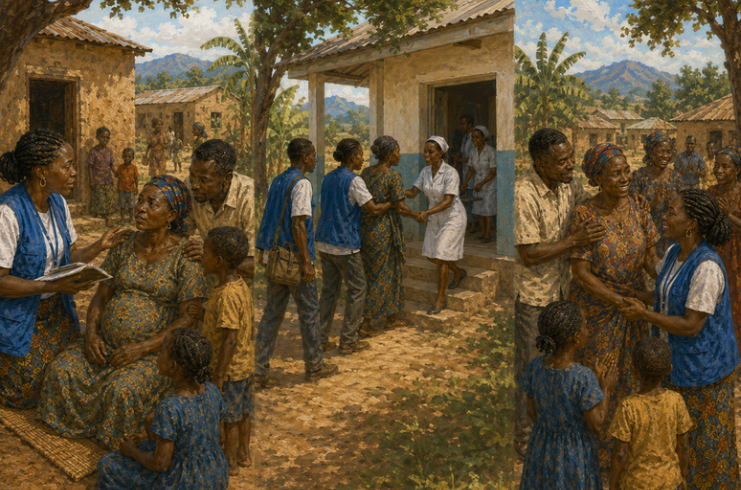
By the end of this module, participants will be able to:
- Enumerate the principles for humane patient care that CHWs must know;
- Describe the patient's experience from home to the health facility and back to the community (the care pathway)
- Identify the roles and activities of CHWs, families, and community members throughout the care pathway.
Module Contents
- Principles for humane care
- The care pathway: from home to health facility and back to the community:
- Preparing the patient and family while waiting for transportation
- Evacuation procedures
- Activities to support individuals in the health facility
- Preparations before discharge
- Preparing and supporting the family in scenarios of death
- Reintegrating into the community
3. Special considerations for vulnerable populations
4. Activity: The Care Pathway Walk-Through
Approximate time required for the readings for this module (at 144 words/minute): 45 minutes.-
Students mustMark as done
Click on the link to access the summary of this module's content. You are encouraged to read the summary notes before you begin the microlesson. Refer back to them alongside your journey.
1.1 MB -
Students mustMark as done
Click on the link to play and watch the video for this module. You are encouraged to watch the video before you begin the microlesson and you can refer back to it alongside your journey.
-
Students mustMark as done
To access the microlesson:
Step 1: Click on the link to the Microlesson above.
Step 2: Select "Enter"; the microlesson will open in a new window
Step 3: Click on the arrow at the bottom of the screen to begin the microlesson.
If you need to exit the microlesson before it is completed, either click on "Exit Course" on the top right of the screen, or simply close the window. Your progress should be saved automatically.
Within the Microlesson, there will be a series of questions and activities throughout the lesson. These questions and activities are designed to help you learn and are not meant to be evaluations. -
Module 5 Quiz
To access the quiz, click on the name of the quiz provided above. On the following screen, click the "Preview quiz now" button to respond to the questions.
-
This module introduces key community infection prevention and control practices, including hand hygiene, safe household practices, and the importance of safe and dignified burials.
Learning Objectives
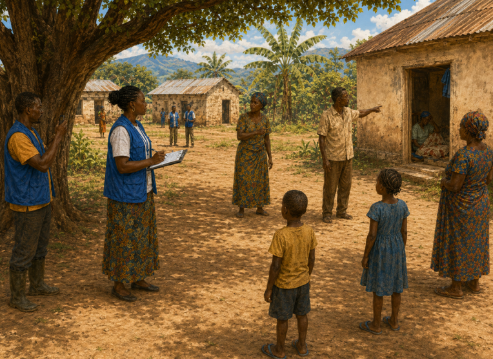
By the end of this module, participants will be able to:
- List personal tips to protect themselves and others; and
- Demonstrate and apply key IPC skills, including handwashing, general household cleaning, and safe and dignified burial practices.
Module Contents
- Personal tips to protect yourself and others:
- Handwashing
- Reminders for general cleaning
- Evacuation of patients and cleaning of linens
Approximate time required for the readings for this module (at 144 words/minute): 43 minutes.-
Students mustMark as done
Click on the link to access the summary of this module's content. You are encouraged to read the summary notes before you begin the microlesson. Refer back to them alongside your journey.
2.7 MB -
Students mustMark as doneClick on the link to play and watch the video for this module. You are encouraged to watch the video before you begin the microlesson and you can refer back to it alongside your journey.
-
Students mustMark as done
To access the microlesson:
Step 1: Click on the link to the Microlesson above.
Step 2: Select "Enter"; the microlesson will open in a new window
Step 3: Click on the arrow at the bottom of the screen to begin the microlesson.
If you need to exit the microlesson before it is completed, either click on "Exit Course" on the top right of the screen, or simply close the window. Your progress should be saved automatically.
Within the Microlesson, there will be a series of questions and activities throughout the lesson. These questions and activities are designed to help you learn and are not meant to be evaluations. -
Module 6 Quiz
To access the quiz, click on the name of the quiz provided above. On the following screen, click the "Preview quiz now" button to respond to the questions.
-
Module 7: Community-Based Mental Health and Psychosocial Support (MHPSS) for Persons Affected by BVD
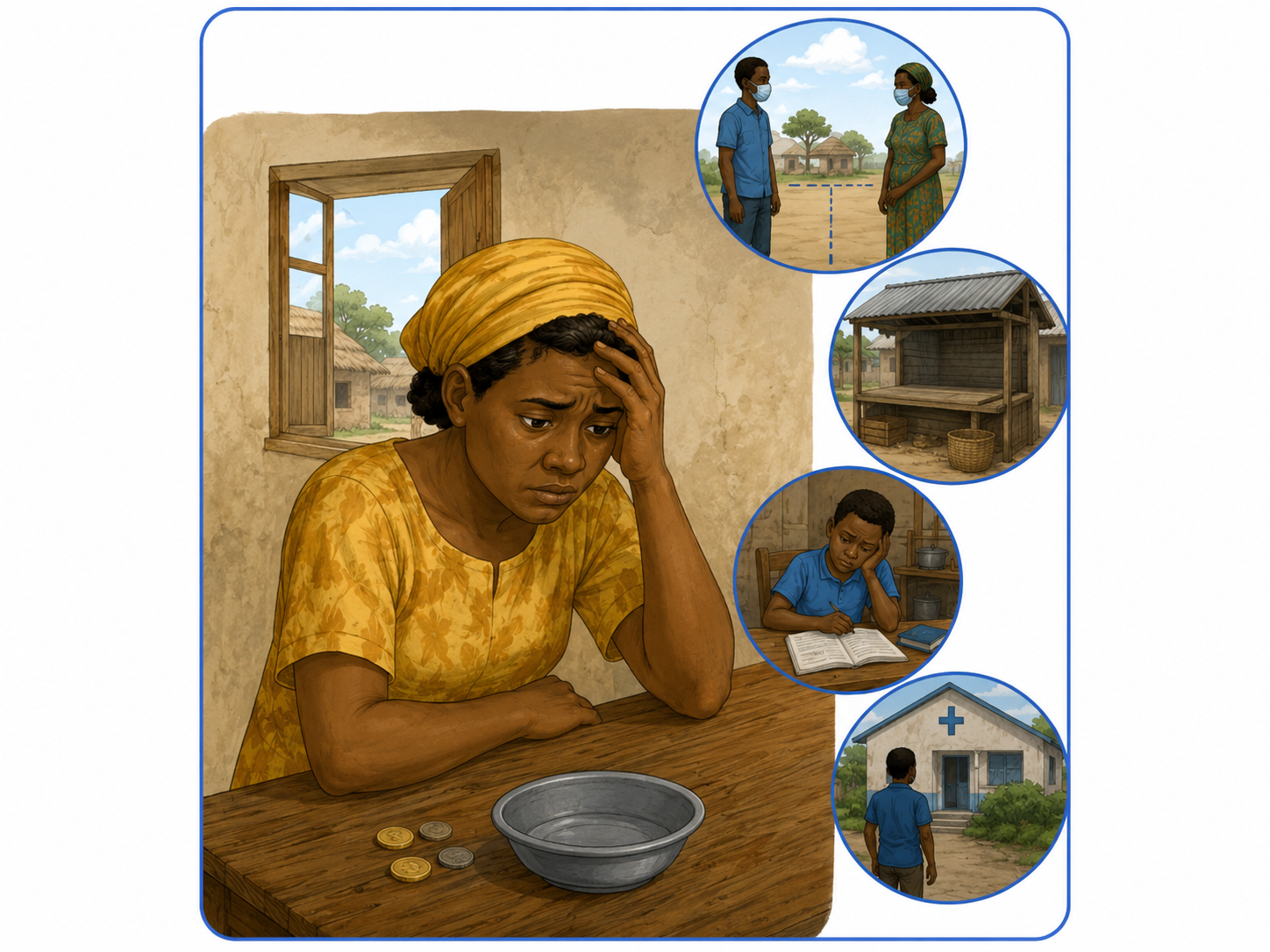 This module focuses on the emotional, social, and psychological effects of outbreaks and how community health workers can provide basic support and care for themselves and others.
Learning Objectives
By the end of this module, participants will be able to:
- Explain the impact of infectious disease outbreaks, including BVD and Ebola, on mental, social, and emotional well-being
- Identify groups of people with additional mental health and psychosocial support (MHPSS) needs during a BVD or Ebola outbreak
- Explain MHPSS tools that can be used in emergency settings; and
- Follow self-care practices during a BVD or Ebola response.
Module Contents
- Impact of BVD on well-being
- Supporting well-being during isolation — cases or individuals with symptoms
- Those needing inclusion considerations in BVD response
- Self-awareness and self-care: your well-being
- Activity 1: Sharing Stressors and Coping Strategies
- Assignment: Buddy Check (Optional)
Approximate time required for the readings for this module (at 144 words/minute): 45 minutes.
-
Students mustMark as done
Click on the link to access the summary of this module's content. You are encouraged to read the summary notes before you begin the microlesson. Refer back to them alongside your journey.
1.3 MB -
Students mustMark as done
Click on the link to play and watch the video for this module. You are encouraged to watch the video before you begin the microlesson and you can refer back to it alongside your journey.
-
Students mustMark as done
To access the microlesson:
Step 1: Click on the link to the Microlesson above.
Step 2: Select "Enter"; the microlesson will open in a new window
Step 3: Click on the arrow at the bottom of the screen to begin the microlesson.
If you need to exit the microlesson before it is completed, either click on "Exit Course" on the top right of the screen, or simply close the window. Your progress should be saved automatically.
Within the Microlesson, there will be a series of questions and activities throughout the lesson. These questions and activities are designed to help you learn and are not meant to be evaluations. -
Module 7 Quiz
To access the quiz, click on the name of the quiz provided above. On the following screen, click the "Preview quiz now" button to respond to the questions.
-
This module explains how community health workers, local leaders, health services, and other stakeholders can work together to support a coordinated outbreak response.
Learning Objectives
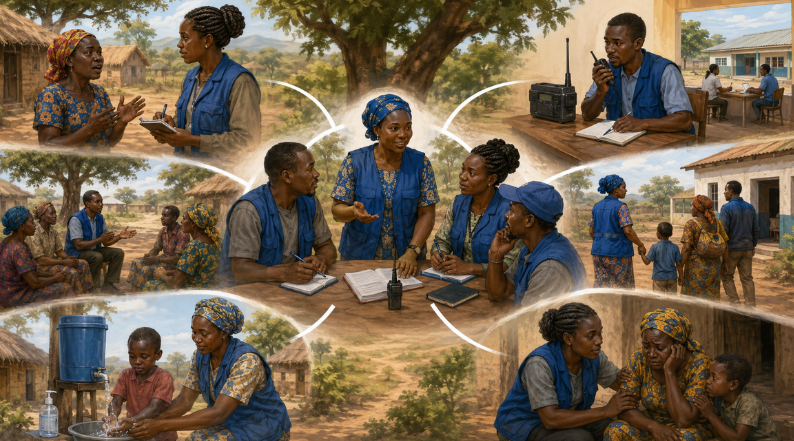 By the end of this module, participants will be able to:
- Understand the coordination role of community health workers, including CHWs and ACSAs, in community-based BVD response
- Map key stakeholders to be part of community-based BVD response coordination
- Familiarize themselves with coordination functions and roles to be played by CHWs and ACSAs.
Module Contents
- Coordination structure and mechanism of BVD response and the role of community health workers
- Coordination functions of community-based BVD response
- Key stakeholders important for coordination of community-based BVD response
- Activity: Community mapping
- Activity 2: Community Stakeholder Mapping Table
Approximate time required for the readings for this module (at 144 words/minute): 39 minutes.
-
Students mustMark as done
Click on the link to access the summary of this module's content. You are encouraged to read the summary notes before you begin the microlesson. Refer back to them alongside your journey.
2.0 MB -
Students mustMark as done
Click on the link to play and watch the video for this module. You are encouraged to watch the video before you begin the microlesson and you can refer back to it alongside your journey.
-
Students mustMark as done
To access the microlesson:
Step 1: Click on the link to the Microlesson above.
Step 2: Select "Enter"; the microlesson will open in a new window
Step 3: Click on the arrow at the bottom of the screen to begin the microlesson.
If you need to exit the microlesson before it is completed, either click on "Exit Course" on the top right of the screen, or simply close the window. Your progress should be saved automatically.
Within the Microlesson, there will be a series of questions and activities throughout the lesson. These questions and activities are designed to help you learn and are not meant to be evaluations. -
Module 8 Quiz
To access the quiz, click on the name of the quiz provided above. On the following screen, click the "Preview quiz now" button to respond to the questions.
-

To take the final exam, you must complete all quizzes and complete all the required activities. The final exam consists of 16 questions, and you will have 16 minutes to complete it. When the time is over, you will have two minutes to submit your attempt before it expires, and your progress is discarded. You will not be able to answer additional questions in the grace period.
To access the exam, click on the name of the exam provided below. On the following screen, click the attempt quiz button to respond to the questions.
-
Final Exam Quiz
-
-
 In this section, you can provide feedback about this course to help us make NextGenU.org better. Once evaluations are completed, you will be able to download your certificate of completion.
-
Course Evaluation Questionnaire
-
Self Evaluation Questionnaire
-
-