

Section: Module 12: Medication | Depression Counseling | NextGenU.org
-
 Congratulations on completing Module 11 on Dealing With Tobacco Use! You now know the relationship between tobacco use and depression and how to help the patient deal with it.
In this module, you will learn how medicines work in helping to deal with depression, when they are used and what your role is with a patient who has been prescribed medication.
-
Module 12: Lesson 3: Counsellor's Role
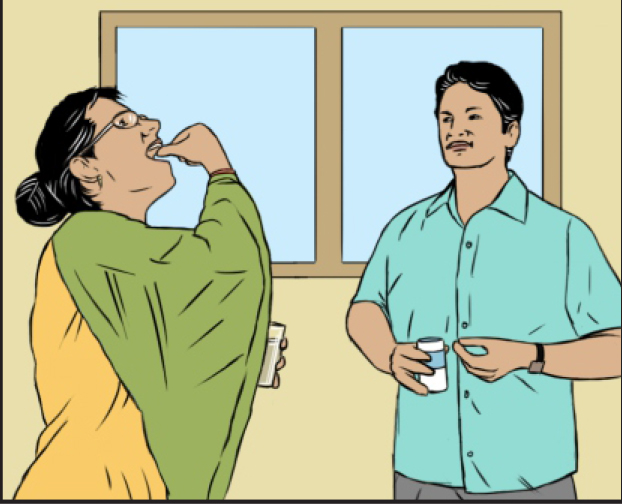 Explain the following points to the patient:
- Antidepressants are widely used and have benefitted many by helping to reduce symptoms and improve overall health
- They are not addictive
- They may produce side effects, but these are not common, mild and short-term
- They may take up to two weeks to begin showing positive effects
- It is important to take them regularly for maximum benefit
- It is important to take them as prescribed by the doctor, even if one feels an improvement. Stopping the medicines before the suggested time frame can cause the problems to return
- Taking them regularly is an important activation target. Explore possible barriers and solutions
- Report any unusual or severe side effects to the supervisor, who can discuss them with the doctor. Always encourage the patient to talk to his/her doctor about any questions about the medication or side effects
Refer the patient to the patient bookletto help them understand better.
-
Module 12: Confirmation of Completion Quiz
You must complete all activities and readings before you can move to the next module. Confirm that you have complete the readings and activities, then submit your answer. Please mark this activity as complete.
-
Students mustViewReceive a grade
This is the end of the Healthy Activity Program course. Achieve 80 per cent correct answers to receive your certificate. You have three attempts.