Section: Module 17: Keeping In Touch With Patients | Psychological Counseling | NextGenU.org

  • 15Congratulations on completing Module 16 on Becoming A More Effective Counsellor! You now know what supervision is all about, how to go about peer group supervision and individual supervision, and how and when to refer patients to supervisors.

    In this module you will learn about ending treatment, keeping in touch with patients after the sessions have been completed, keeping records, maintaining boundaries with patients and dealing with burn-out.

    • Module 17: Lesson 1: Keeping in Touch and Encouraging Treatment Completion

      Treatment involves the patient:

      • Attending sessions regularly as scheduled
      • Performing tasks or exercises between sessions as planned with the counsellor

      Problems that come up due to non-completion of treatment are not enough improvement and a risk of relapse. Patients are most likely to complete the treatment if it is within easy reach, acceptable or easy-to-follow and effective.

      To ensure patients receive the complete treatment:

      • Choose a setting/format, or mix of them, that the patient is comfortable with
      • Opt for home visits as the preferred mode of treatment delivery if consent is given
      • Fix appointments to suit the patient’s convenience and be flexible, if he/she is not willing for home visits
      • Use other locations for sessions that are convenient
      • Arrange visits when the patient is due to visit the PHC to meet the doctor
      • Maintain a diary to schedule appointments
      • Maintain a patient register
      • Remind the patient before home visits or appointments and reschedule when necessary
      • Send a text message if the patient does not answer the phone
      • Visit the patient at home if he/she has given consent if unavailable on the phone
      • Involve the SO to come with the patient to sessions, take care of people the patient cares for (such as children and old parents) or remind patients of appointments
      • Continue the treatment after a long break
    • Module 17: Lesson 2:  Barriers to Treatment Completion and Solutions

       
      Barriers To Treatment Completion Possible Solutions
      Practical barriers  
      Lack of time: Patients are daily wage earners and do not have the time to come back to meet the counsellor, or have caregiving responsibilities and cannot leave home

      Offer home visits as the preferred option and fix a time convenient for the patient.

      Explain that an appointment is possible in the afternoon too and he/she can come at a convenient time before the clinic closes. Plan follow-up sessions according to the patient’s convenience.

      Conduct telephone sessions.
      The patient forgets the date of the appointment

      Write the date clearly in the appointment card and relevant section of the patient booklet. Tell the patient to come on another convenient date if they cannot make it for some reason.

      Call before the appointment date to remind the patient.
      Cultural/psychological barriers  
      The patient feels their health concerns and social problems are not being taken care of

      Ask about the other physical health problems the patient is suffering from to make the patient feel you are concerned about all health aspects.

      Be sensitive to his/her social problems, listen to them, advise him/her about what to do, write referral letters and follow up to improve engagement
      Patients drop out when they start feeling better During the first session, clearly explain the importance of following through with treatments even after the patient starts feeling better.
      Patients do not feel they have a ‘mental health problem’ NEVER use the term ‘mental’ because it is linked with shame and fear. Use ‘stress or tension related’ as it is something the patients can identify with easily and do not feel shame attached to.

    • Module 17: Lesson 3:  Ending Treatment

      Watch the video lecture in the activities section below to learn how counselling ends.

      Required Learning Resources
    • Watch the video lecture to learn how to end the counselling treatment well

    • Module 17: Lesson 4: Keeping Records

      Keeping records

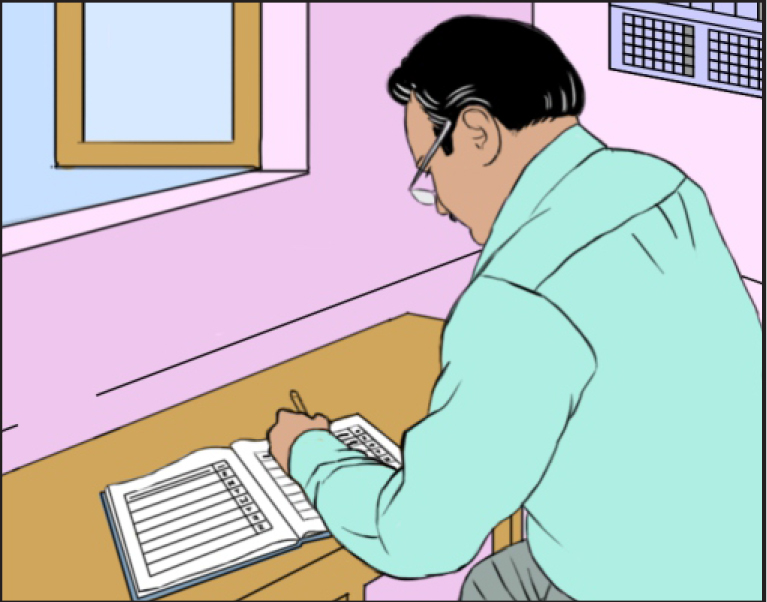
      Use the Clinical Case Record for depression and alcohol problems to record necessary information. Documentation helps to keep track of the clinical process for each patient in the programme and make supervision effective.

      The records you need to fill in at each session are:

      Remember to fill in records as soon as the session is over and definitely by the end of the day; store the records in a safe and secure place; and go over them before your session with the patient.

    • Module 17: Lesson 5: Maintaining Boundaries

      Boundaries are limits within which the counselling relationship functions. It is your responsibility to maintain them.

      Why do we need boundaries in counselling?

      In a counselling relationship, there is a risk that the relationship may go beyond the professional one. Boundaries define counselling as a professional relationship between the counsellor and patient that is different from a conversation with a friend or family member. They help to ensure the safety of the counsellor and patient.

      Types of boundaries to maintain:

      • Sessions in places other than the clinic or planned home visit: Focus on discussing items on the agenda. Discuss how the patient would like you to respond if you meet the patient by accident in public.
      • Receiving telephone calls: Give the patient your official number and clearly state the best times to call. But assure the patient that he/she may call in case of an emergency or personal crisis.
      • Physical contact: In general, use other ways of showing care such as bending forward and softening one’s speaking tone.
      • Exchanging gifts: Explain to the patient that because of the professional nature of the relationship, it is standard practice and applies to all patients that it is not appropriate to accept gifts. Ask your supervisor if you are uncertain about receiving a gift.
      • Time-related boundaries: Setting time limits helps keep sessions in focus and allows for maximum results.
      • Dealing with personal questions: The patient has the right to know all information related to the professional qualities of the counsellor such as training and experience. But any personal questions can be managed by explaining that they are not relevant.
      • Counselling patients of the opposite sex: During home visits, take along a member of the same sex as the patient, such as the health assistant. You can make sure there are other members of the family at home when you plan the visit.
    • Module 17: Lesson 6: Dealing with Burn-out

      Watch the video lecture in the activities section below to learn what burn-out is and how to deal with it.

      SUMMARY

      • Regular supervision by a clinical supervisor or peers, individually or in a group, will support you and ensure good quality counselling
      • Sometimes it is necessary to refer patients to supervisors, especially those with high suicide risk or who don’t improve with counselling. Patients in difficult social situations can be referred to community agencies
      • Ensuring that patients complete treatment helps receive the best results of counselling. Telephone counselling, with prior consent, can be considered for those who are unable to follow up for subsequent sessions at home or in the clinic
      • Documentation helps keep track of the clinical process and makes supervision effective
      • Maintaining boundaries helps ensure that the professional nature of the relationship is maintained
      • Be aware of the risk of burn out and take precautions to prevent it
      Required Learning Resources
    • Watch the video lecture to learn about burn-out and how to deal with it

    • quiz icon
      Module 17: Confirmation of Completion Quiz

      You must complete all activities and readings before you can move to the next module. Confirm that you have complete the readings and activities, then submit your answer. Then click on the continue button to procees to the next module. 

      Not available unless: The activity Course Registration is marked complete