

Section: Module 5: Disaster planning and Management (Optional) | Environmental Health | NextGenU.org
-
Instructional goals covered in this module:
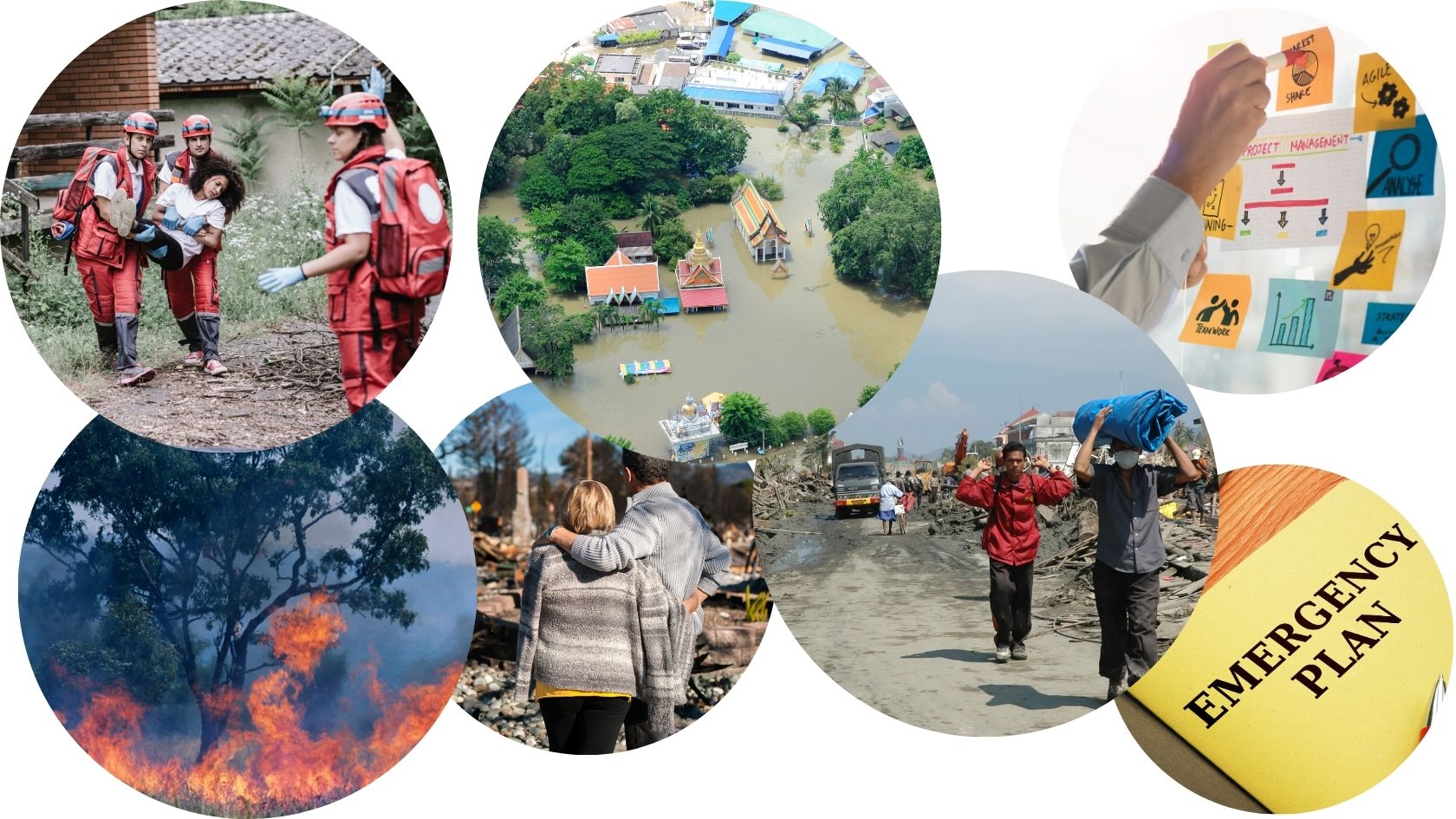
- Describe the role of public health in disaster in disaster management.
- Utilize mapping in mitigation planning and response operation.
This module's content is not covered by the ASPPH environmental health competencies or the CEPH competency addressed in this course. However, this module contains essential knowledge required for students preparing for the American Board of Preventive Medicine certification exam. We also recommend this module to other motivated students interested in learning more about disasters in environmental health.
-
Students mustViewLook for your region in the list and read the common natural disasters registered. Then, read for common natural disasters in at least the other five regions of your interest.
-
Students mustViewRead from the beginning of the page to the end under the heading "Effects of Hazards."
-
Students mustViewRead the entire paper.
-
-
Read from the heading "Disaster Impact" on page 6 to the end of page 12.
-
Read the entire page.
-
Students mustViewRead from the heading "Introduction" on page 3 to the end of page 6.
-
Students mustViewRead the content under the heading "Vulnerability to Hazards and Disasters" to the heading "This Course."
-
Students mustViewRead the entire article.
-
Students mustViewRead the entire page.
-
Students mustViewRead the content under the headings "Abstract" and "Conclusions."
-
Quiz: Module 5: Lesson 1
To access the quiz, click on the name of the quiz provided above. On the following screen, click the attempt quiz button to view the case studies and respond to the questions.
TO PASS THIS QUIZ, YOU MUST OBTAIN A SCORE OF 26/32
-
Click on the following links in the left menu and read its content(The links appear below the main text in mobile):
- Hurricanes and COVID-19
- Earthquakes
- Extreme Heat
- Floods
- Hurricanes
- Landslides & Mudslides
- Lightning
- Tornadoes
- Tsunamis
- Volcanoes
- Wildfires
- Winter Weather
-
-
Read from the heading "Executive Summary" to the end of page 6
-
Read the entire page.
-
Read the entire page.
-
Quiz: Module 5: Lesson 2:
To access the quiz, click on the name of the quiz provided above. On the following screen, click the attempt quiz button to view the case studies and respond to the questions.
TO PASS THIS QUIZ, YOU MUST OBTAIN A SCORE OF 9/11
-
Read the texts about the management of disasters related to climate change. Read the questions and choose the correct answers.
This case study was adapted from the textbook case study that is linked below.
https://www.ipcc.ch/site/assets/uploads/2018/03/SREX-Chap9_FINAL-1.pdf
-
Discussion Post: How relevant are natural and man-made disasters on environmental health? (Completion time: 60 minutes) Forum
In this task, you will discuss the natural and man-made disasters relevant to the field of environmental health in general.
Step 1: Reflect on the content reviewed in this lesson and create a 150-300 piece of writing that includes all the following points:
-
How do disaster materials influence people and ecosystems according to their toxicity?
-
What are the physical, chemical, and microbial characteristics of disaster materials?
-
What is the appropriate way to dispose of materials after a disaster to mitigate environmental health risk?
-
What kind of materials, natural or man-made, present the most risk to human health?
-
All references should follow 7th Edition APA formatting. See the resource on the Himmelfarb Health Sciences Library for instructions: APA citation resource (references are excluded from word counts).
Step 2: To share your work, click on the button at the bottom of the screen labeled 'Add a new discussion topic.' and include the title "Discussion: How relevant are natural and man-made disasters on environmental health?" in the subject line.
Step 3: To complete the activity, you will also need to comment on at least one other post made by your peers in a respectful and professional manner. Be sure that your post engages your peers' discussion by including a reflection upon learning, sharing insight into the effect of toxic materials in people and ecosystems health, providing specific examples of materials of higher risks, or asking insightful questions. If a peer comments on your posting, please reply back. To post a reply, click on the particular discussion, then click on 'reply'.
OPTIONAL Step 4: Interact (10 minutes)
If you would like to, you can reply to your peers' posts in a respectful and professional manner. Ensure that your post engages your peers' ideas by including a reflection on their comments, sharing ideas of other potential difficulties and parties involved, or asking thought-provoking questions. If a peer comments on your posting, please reply. To post a reply, click “Reply” on a particular discussion, write your feedback and then click on “Post to forum.”
-
-
-
-
Students mustView
Read the section "Effective Emergency Response".
-
Students mustView
Read the sections "What is the role of mental health professionals in a disaster situation?" and "What is the efficacy of the psychological interventions?".
-
Students mustView
Watch the entire video. (60 minutes)
-
Activity: Discussion Forum
In this learning activity, you will discuss the impact of environmental disasters on overall psychological issues, including substance use disorders and mental health conditions.
Instructions:
Step 1: Review [30 minutes]
Review all the required learning resources for this lesson.
Step 2: Respond [105 minutes]
Prepare a 250-500 word piece of writing that explains how environmental disasters may increase or exacerbate the risk for substance use disorders and mental health conditions. Ensure that your response includes the following:
- The impact of environmental disasters on developing a substance use disorder
- The impact of environmental disasters on mental health conditions
- The impact of environmental disasters on drug user/substance use related services
- Reference an example of a natural disaster in which there was a notable increase in substance use disorders
Step 3: Share [10 minutes]
To share your work, click on the “Add a new discussion topic” button under this post and paste your work into the “Message” box. Make sure to reference others’ intellectual property when necessary. All references should follow 7th Edition APA formatting. For further instructions, see the resource on the Himmelfarb Health Sciences Library: APA citation resource (N.B. references are excluded from word counts).
Step 4: Interact [10 minutes]
To complete the activity, you will need to reply to at least two posts made by your peers in a respectful and professional manner. Ensure that your post engages your peers' ideas by including a reflection on their comments, sharing ideas of other potential difficulties and parties involved, or asking thought-provoking questions. If a peer comments on your posting, please reply. To post a reply, click “Reply” on a particular discussion, write your feedback and then click on “Post to forum.”
OPTIONAL Step 5: Interact (10 minutes)
If you would like to, you can reply to your peers' posts in a respectful and professional manner. Ensure that your post engages your peers' ideas by including a reflection on their comments, sharing ideas of other potential difficulties and parties involved, or asking thought-provoking questions. If a peer comments on your posting, please reply. To post a reply, click “Reply” on a particular discussion, write your feedback and then click on “Post to forum.”
-
Quiz: Module 5: Lesson 3
To access the quiz, click on the name of the quiz provided above. On the following screen, click the attempt quiz button to view the case studies and respond to the questions.
TO PASS THIS QUIZ, YOU MUST OBTAIN A SCORE OF 6/8
-
Read the entire page.
-
Read the entire article.