Section: Unit 7 - NURSING SKILL FUNCTIONS | Fundamentals of Nursing | NextGenU.org
-
Unit Objectives:

- Explain the safe method of medication administration.
- Explain the nurse's role in safe intravenous therapy.
- Explore the role of the nurse in perioperative care.
- Identify the essential elements of reporting and documentation.
- Explain the 6 vital signs and related assessment techniques.
- Explain the procedures for types of specimen collection.
-
Students mustView
Read the content under sections 6.2, 6.3, 6.4. (38 minutes)
Clinical Procedures for Safer Patient Care
-
Students mustView
Read the section “Definition / Introduction.” (7 minutes)
StatPearls
-
-
Students mustView
Read the section “Introduction to “Ratio and proportion method.” (7 minutes)
StatPearls
-
Students mustViewWatch the entire video. (87 minutes)
-
Students mustViewStart discussions: 1
Medication Administration Pediatric Client
In this activity, you will read the case study and write your thoughts/reflections in response to the questions asked on the template provided below. You will share your responses with your peers and you will provide feedback on your peers' reflections.
Objectives:
After completing this case study, the student should be able to:
- Identify the key principles of medication administration for a pediatric client
- Interpret important physical parameters and lab values for a pediatric client receiving dextrose for hypoglycemia
- Provide education to the client and family concerning proper medication administration and monitoring
- Reflect on nursing interventions and actions taken to administer medications, monitor for effectiveness, and provide client education
Step 1: Read carefully the case study presented below. It is a good idea to read it a few times to familiarize yourself with the details. [45 minutes]
Case Presentation
Elena is a 12-year-old female client recently diagnosed with Type I Diabetes. Her mother brought her to the emergency room because Elena “did not seem well this morning. She was very irritable, dizzy, lethargic and perspiring heavily.” Her mother gave her the daily injection of long-acting insulin in the morning. Shortly afterward, Elena complained of a severe sore throat and feeling very shaky, which alarmed her mother. Elena seemed unable to concentrate when answering questions, so her mother answered most of the questions posed by the nurses in the emergency room. Elena’s mother was visibly upset and tearful and was blaming herself for Elena’s condition. Elena’s mother appeared overwhelmed, noting that adjusting to Elena’s new diagnosis was complicated and confusing. Elena did not make eye contact with her mother or the nurses in the emergency room. She admitted that she had a binge-eating and consumption episode of chocolates and Lipovitan energy drink last night to keep her awake as she needed to study for a Math test. She eventually asked if she could lay down and rest. The noise and activity in the hospital emergency room upset Elena, and she began to cry quietly. Elena stated that she was concerned about missing a math test she had studied for all night. Being a good student, she feared having to make up work because of not attending school today.
Medical History
Elena was diagnosed with Type I Diabetes 10 months ago. Prior to that, she is also diagnosed with binge-eating disorder. She was taught about her diagnosis, medications, diabetic diet, physical activity, and potential complications by her community health nurse. She has no other medical diagnoses. (Although her mother says that Elena seemed slightly depressed with all the new medications and treatments and she worries that it makes her feel different from her friends.)
Physical Assessment Findings
Elena’s vital signs are as follows:
Elena’s Vital Signs
Normal Values
Blood pressure: 140/90 mmHg
120/80 mmHg
Heart rate: 110 BPM
60-80 BPM
Respiratory rate: 24 br/minute
12-20 br/min
The oral temperature: 38.2 °C/101 °F
35.7-36.9 °C/ 96.3-98.4 °F
O2 saturation: 95% on room air
94-100 %
Elena’s electrocardiogram shows sinus tachycardia with a regular rate. Her lungs are clear to auscultation bilaterally. Her throat is red with some white patches. She has a dry cough. The rest of the exam is unremarkable. Her weight is 50 kg. She is 65 cm in height.
Laboratory and Diagnostic Testing and Results
Recent lab values reveal the following information with normal values included:
Elena’s Lab Results
Normal Values
A random blood glucose level: 110 mg/dL
70-100 mg/dL
White blood cell count: 12,000 k/uL
5,000- 10, 000 k/uL
Throat culture: pending
Medical orders
The provider’s orders include an intravenous line placement with a bolus of 50% dextrose slow injection followed by a maintenance of D5NS IV infusion at 50 cc/her.
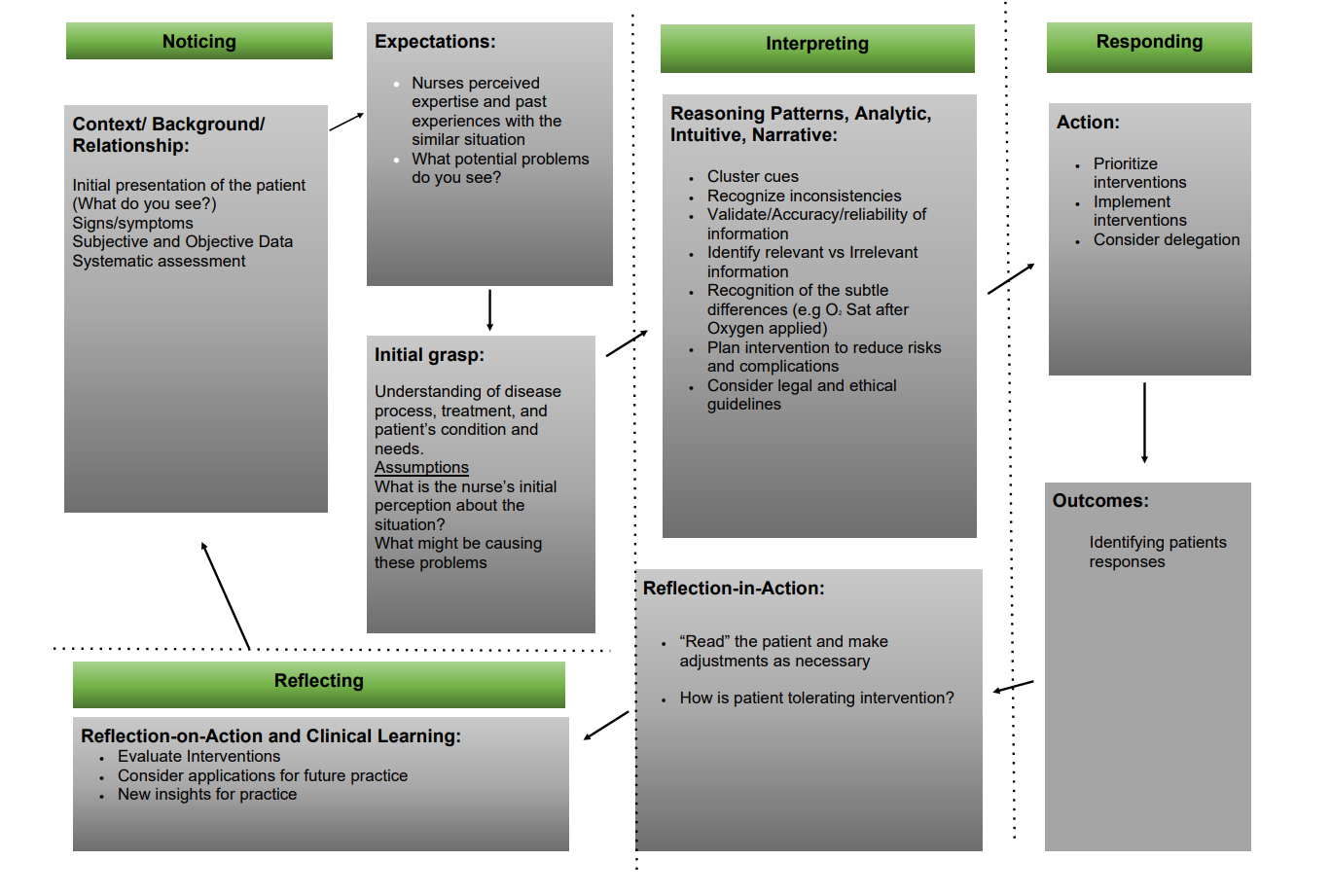
Step 2: Read and answer each of the questions below. Organize your thoughts/reflections and write them on this template. You may need to move the boxes around to accommodate your text. [180 minutes]
See the instructional template below for guidance:
Noticing
- Describe what you think about your client’s current presentation today.
- How does the client appear clinically to you? Provide specific examples.
- How does the client appear socially to you? Provide specific examples.
- How does the client appear psychologically to you? Provide specific examples.
- What is the prescribed treatment for hypoglycemia?
- What do you notice about Elena’s mother’s coping and involvement in her daughter’s care?
Interpreting
- Are there any clinical, social or psychological factors that need to be addressed?
- Identify the client's educational needs, readiness to learn, preferences, barriers to treatment, and expectations.
- Review the findings from the client’s assessment and laboratory data that are out of the normal range. How do you interpret these findings?
Responding
- Describe the interventions to be taken by the nurse in this type of situation.
- What interventions will you do first and why?
- Identify the ‘5 rights and 3 checks’ of proper medication administration.
- Explain the reason for asking clients about allergies before administering medications.
- How will you evaluate whether your interventions are effective?
- What medication education is essential to provide to Elena and her mother?
- Develop an educational plan to help Elena and her mother understand diabetes self-care management.
Reflection
Reflection in-practice:
- What are some of the initial thoughts you had about your client’s condition?
- Did your thoughts change as you learned more about this condition or test results?
- What is it that you think you want for this client?
- Describe the stresses you believe clients experience when they are diagnosed with Type 1 Diabetes.
Reflection on-practice
- What might you do in your future practice to prepare for this type of situation?
- Describe three ways that you can increase your knowledge/skills/attitudes about caring for a client who needs diabetes management.
- Describe some of the stresses you believe nurses might experience as they care for clients who have chronic care needs.
- In reflection, would you have done anything differently in this situation?
- Write a paragraph with no more than 200 words that discuss what it may be like to be the nurse, the client, and the mother in this scenario? Please type your answer to this question outside of the template but on the same document provided in Step 2.
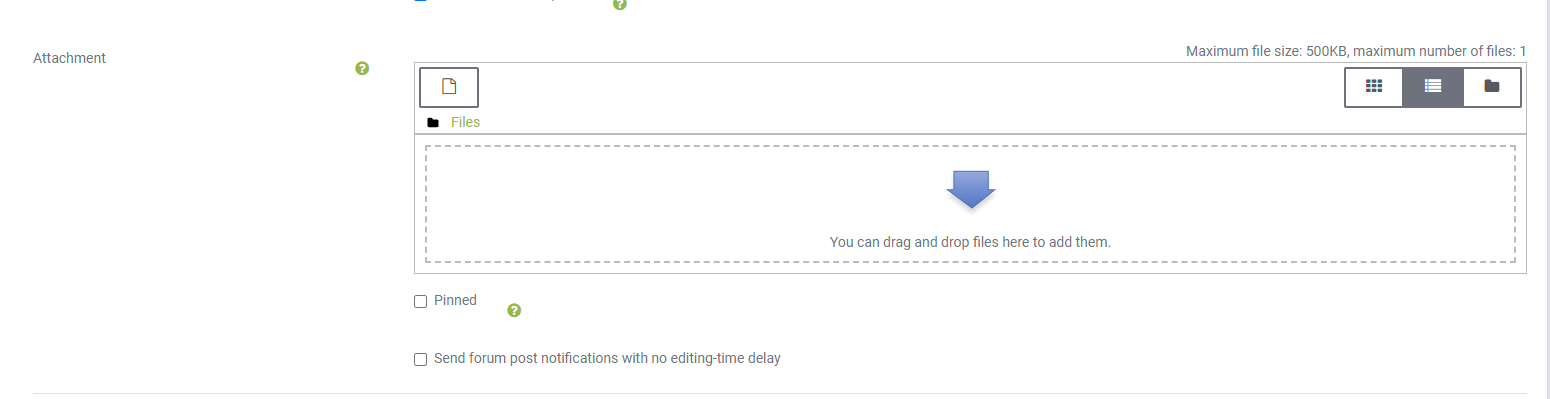
Step 3: To share your work, click on the “Add a new discussion topic” button at the bottom of this post, then click on the “Advanced” button as shown in the picture below. [10 minutes]
Drag and drop your completed template inside the “Attachment” as shown in the picture below and click on “Post” after you have uploaded your completed template.
Make sure to reference others’ intellectual property when necessary. All references should follow 7th Edition APA formatting. For further instructions, see the resource on the Himmelfarb Health Sciences Library: APA citation resource (References are excluded from word counts).
Step 4: To complete this activity, you will need to reply to at least one post made by your peers respectfully and professionally. Be sure that your post engages your peers' ideas by providing feedback on their comments, sharing ideas of other potential problems/solutions, or asking thought-provoking questions. If a peer comments on your posting, please reply. To post a reply, click “Reply” on a particular discussion list below, write your feedback and then click on “Post to forum.” [10 minutes]
OPTIONAL Step 5: Interact (10 minutes)
If you would like to, you can reply to your peers' posts in a respectful and professional manner. Ensure that your post engages your peers' ideas by including a reflection on their comments, sharing ideas of other potential difficulties and parties involved, or asking thought-provoking questions. If a peer comments on your posting, please reply. To post a reply, click “Reply” on a particular discussion, write your feedback and then click on “Post to forum.”
-
Students mustViewStart discussions: 1
-
Students mustView
-
Students mustMark as done
-
Students mustMark as done
-
Students mustMark as done
-
Students mustMark as done
-
Students mustMark as done
-
Students mustMark as done
-
Students mustMark as done
-
Students mustMark as done
-
Students mustMark as done
-
Students mustMark as done
-
Students mustMark as done
-
Students mustMark as done
-
Students mustMark as done
-
Students mustMark as done
-
Students mustMark as done
-
Students mustMark as done
-
Students mustMark as done
-
Students mustMark as done
-
Students mustMark as done
-
Students mustMark as done
-
Quiz: Medication Administration Pediatric Client
To access the quiz, click on the name of the quiz provided above. On the following screen, click the attempt quiz button to view the case studies and respond to the questions.
TO PASS THIS QUIZ YOU MUST OBTAIN A SCORE OF 80%.
-
Quiz: Unit 7.1
To access the quiz, click on the name of the quiz provided above. On the following screen, click the attempt quiz button to view the case studies and respond to the questions.
TO PASS THIS QUIZ YOU MUST OBTAIN A SCORE OF 80%.
-
Students mustView
Read the content under sections 8.2 and 8.3. (48 minutes)
Clinical Procedures for Safer Patient Care
-
-
Students mustView
Read the entire article. (10 minutes)
George Brown College -
Students mustView
Read the section Technique. (4 minutes)
StatPearls
-
Students mustView
-
Students mustMark as done
-
Students mustMark as done
-
Students mustMark as done
-
Students mustMark as done
-
Students mustMark as done
-
Students mustMark as done
-
Students mustMark as done
-
Quiz: Unit 7.2
To access the quiz, click on the name of the quiz provided above. On the following screen, click the attempt quiz button to view the case studies and respond to the questions.
TO PASS THIS QUIZ YOU MUST OBTAIN A SCORE OF 80%.
-
Students mustMark as done
Read the content under "Integrated care across the full patient pathway before, during and after surgery." (1 minute)
Center for Perioperative Care, UK -
Students mustMark as done
Read paragraph under the section "Perioperative care." (2 minutes)
Journal of Perioperative and Critical Intensive Care Nursing -
Students mustMark as done
Read the content under the headings "Pre-op assessment" and "Pre-op education." (5 minutes)
Australian Government, Cancer Australia -
Students mustMark as done
Read the section on "Assessment." (2 minutes).
Clinics on Colon and Rectal Surgery Journal -
Students mustMark as done
Read the content under section "Preoperative evaluation and identification of population at risk." (5 minutes)
Therapeutics and Clinical Risks Management Journal -
Students mustMark as done
Read the entire article. (3 minutes)
University of Iowa Health Care -
Students mustMark as done
Read the entire article. (2 minutes).
Australian Government, Cancer Australia -
Students mustMark as done
Read the contents under the headings "Anaesthetic Nurse", "Circulating Nurse", "Instrument Nurse", "Post Anaesthesia Care Unit nurse", and "Pre admission and day surgery nurse." (9 minutes)
Australian College of Perioperative Nurses -
Students mustMark as done
Read the entire article. (14 minutes).
Nursing Times, EMAP Publishing Limited -
Students mustMark as done
Read the entire article. (10 minutes)
Nursing Times, EMAP Publishing Limited -
Students mustMark as done
Read content under the sections "Prejudice and misconceptions that limit postoperative pain treatment in opioid-tolerant patients," "Postoperative pain" and "Perioperative management of opioid abusers." (7 minutes).
Therapeutics and Clinical Risks Management Journal -
Students mustMark as done
Read the content under the heading "Possible side effects of cancer surgery." (6 minutes)
American Cancer Society -
Students mustMark as done
Read the entire article. (4 minutes)
Government of Alberta, MyHealthAlberta.ca -
Students mustView
-
Quiz: Unit 7.3
To access the quiz, click on the name of the quiz provided above. On the following screen, click the attempt quiz button to view the case studies and respond to the questions.
TO PASS THIS QUIZ YOU MUST OBTAIN A SCORE OF 80%.
-
Students mustMark as done
Read the entire section (7 minutes)
Open Resources for Nursing (Open RN)
-
Students mustMark as done
Read the entire section (9 Minutes)
Open Resources for Nursing (Open RN)
-
Students mustView
-
Quiz: Unit 7.4
To access the quiz, click on the name of the quiz provided above. On the following screen, click the attempt quiz button to view the case studies and respond to the questions.
TO PASS THIS QUIZ YOU MUST OBTAIN A SCORE OF 80%.
-
Students mustMark as done
Read: The entire section “Vital Signs.” (21 minutes)
Open Resources for Nursing (Open RN)
-
Students mustMark as done
Read the content under "Blood Pressure Assessment." (5 minutes)
Open Resources for Nursing (Open RN)
-
Students mustMark as done
Read the content under "Pain Assessment Method." (9 Minutes)
Open Resources for Nursing (Open RN)
-
Students mustMark as done
Read the entire article. (18 minutes)
StatPearls [Internet].
-
Students mustView
-
Students mustMark as done
-
Students mustMark as done
-
Students mustMark as done
-
Students mustMark as done
-
Students mustMark as done
-
Students mustMark as done
-
Students mustMark as done
-
Students mustMark as done
-
Students mustMark as done
-
Students mustMark as done
-
Students mustMark as done
-
Students mustMark as done
-
Quiz: Unit 7.5
To access the quiz, click on the name of the quiz provided above. On the following screen, click the attempt quiz button to view the case studies and respond to the questions.
TO PASS THIS QUIZ YOU MUST OBTAIN A SCORE OF 80%.
-
-
Students mustView
Read the entire article. (8 minutes)
John Hopkins Medicine
-
Students mustView
Read the content under "Test Overview, Why It Is Done, How To Prepare, How It Is Done." (3 minutes)
University of Michigan Health, 2020
-
Students mustView
Read the content under "Test overview and how it is done." (4 minutes)
University of Michigan Health (2020).
-
Students mustView
Read the content under the sections "What Are Blood Tests?" "Blood Tests Types," "What To Expect With Blood Tests," "What Are the Risks of Blood Tests?" and "What Do Blood Tests Show?" (10 minutes)
National Heart, Lungs and Blood Institute
-
Students mustView
Read the entire article. (12 minutes)
National Health Service (2019)
-
Students mustView
Read the content under the section "How should I collect and store a urine sample?: Storing Urine sample." (3 minutes)
National Health Service (2019)
-
Students mustView
Read the content under the sections "Specimen collection: good-practice principles", "Professional issues", "Collecting tissue/body fluids: precautions to take", "Equipment", "Consent", "Request form", "Sample label", "Transporting specimen." (4 minutes)
Nursing Times
-
Students mustView
Read the entire article. (2 minutes)
Carteret Health Care
-
Students mustView
Read the entire article. (9 minutes)
NCBI
-
Students mustView
-
Students mustMark as done
-
Students mustMark as done
-
Students mustMark as done
-
Students mustMark as done
-
Students mustMark as done
-
Students mustMark as done
-
Students mustMark as done
-
Students mustMark as done
-
Students mustMark as done
-
Students mustMark as done
-
Students mustMark as done
-
Students mustMark as done
-
Students mustMark as done
-
Quiz: Unit 7.6
To access the quiz, click on the name of the quiz provided above. On the following screen, click the attempt quiz button to view the case studies and respond to the questions.
TO PASS THIS QUIZ YOU MUST OBTAIN A SCORE OF 80%.
-
Unit 7 Exam Quiz
To access the quiz, click on the name of the quiz provided above. On the following screen, click the "Preview quiz now" button to respond to the questions.