

Section: Module 9: Self Care: Caring for Self to Care for Others | Humanism in Health and Healthcare | NextGenU.org
-
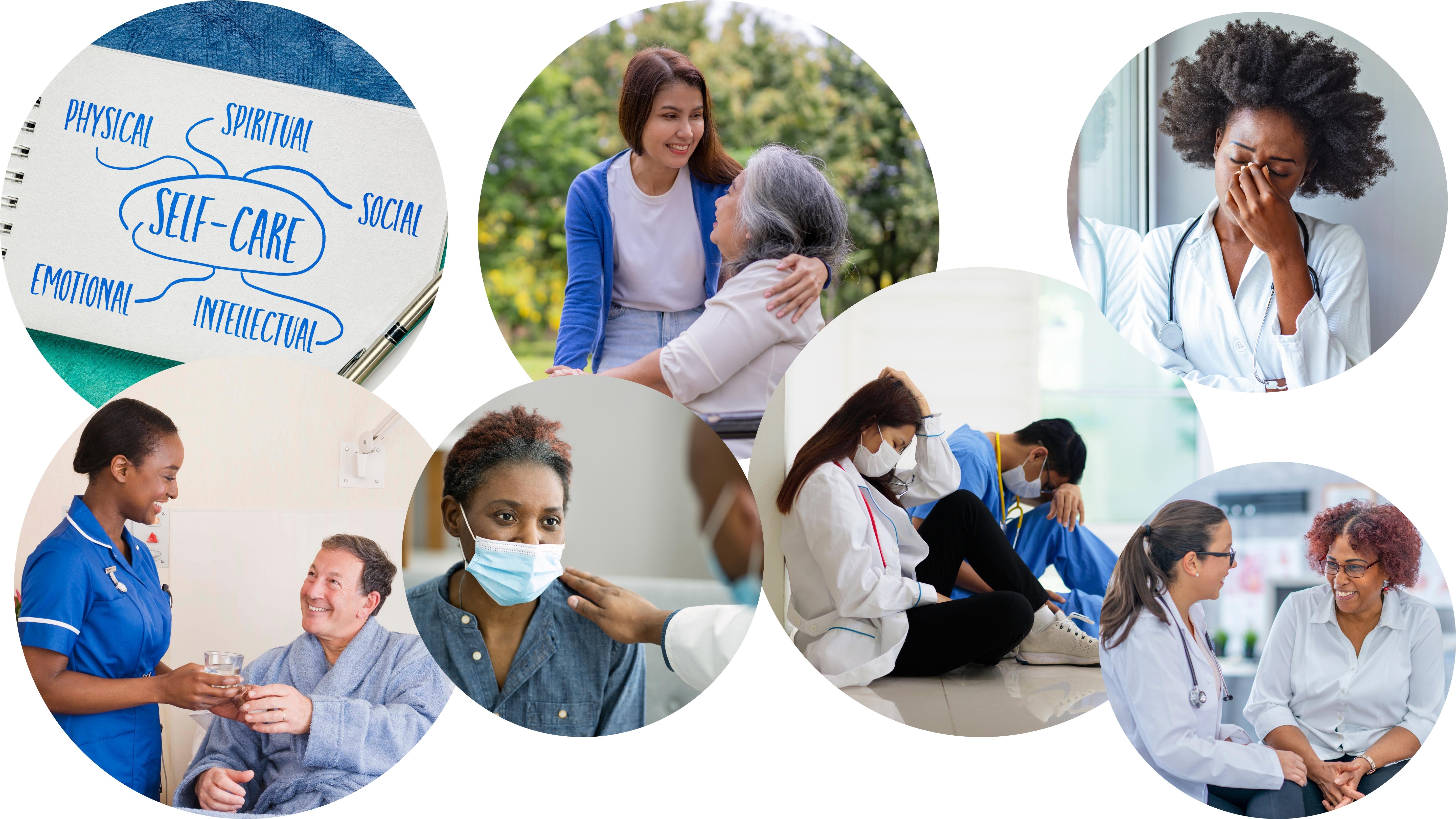 Competencies covered in this module:
Knowledge for Practice (AAMC)
Demonstrate knowledge of established and evolving biomedical, clinical, epidemiological, and social-behavioral sciences, as well as the application of this knowledge to patient care. (AAMC 2)
Apply principles of social-behavioral sciences to the provision of patient care, including assessment of the impact of psychosocial and cultural influences on health, disease, care seeking, care compliance, and barriers to and attitudes toward care. (AAMC 2.5)Personal and Professional Development (AAMC)
- Demonstrate the qualities required to sustain lifelong personal and professional growth. (AAMC 8)
- Develop the ability to use self-awareness of knowledge, skills, and emotional limitations to engage in appropriate help-seeking behaviors. (AAMC 8.1)
- Demonstrate healthy coping mechanisms to respond to stress. (AAMC 8.2)
Professionalism: Professional and Personal Self-Care (AACOM)
- Ensure that his/her mental, physical, or health condition does not have a negative impact on patient care or welfare. (AACOM V. 8b)
- Identify personal sources of stress, and apply appropriate interventions. (AACOM V. 8f)
(AACN)
- Recognize the relationship between personal health, self-renewal, and the ability to deliver sustained quality care. (AACN 14)
-
Students mustView
Read the entire article. (29 minutes)
Dove Press journal: Local and Regional Anesthesia - 2020
-
Read the entire article. (20 minutes)
Cureus - 2018
-
Students mustView
Read the entire article - 13 minutes
The Joint Commission - 2019
-
Students mustView
Read the entire article - 20 minutes
Behavioural Sciences Journal - 2018
-
Read the entire article. (29 minutes)
BMC Health Serv - 2021
-
Students mustView
Read the entire article. (10 minutes)
Springer - 2018
-
Students mustView
Read the content under the headings " Background and Purpose", "Discussion", "Implications,". (14 minutes)
SAGE Journals- Canadian Journal of Nursing Research - 2021
-
Read the entire article. (16 minutes)
Australian Medical Journal - 2016