

Section: Module 11. Marginalization (Choose at least 5 lessons to complete from those available, based on your interests and educational and professional needs.) | Humanism in Health and Healthcare | NextGenU.org
-
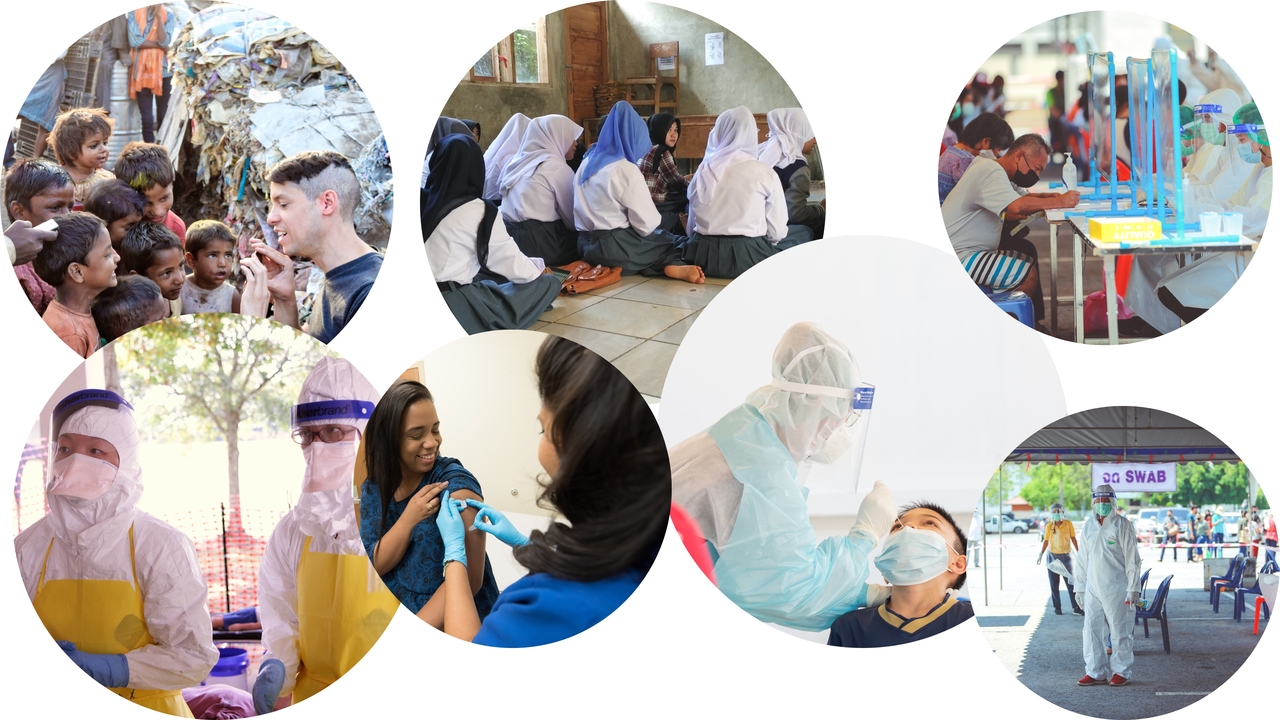 Competencies covered in this module:
Knowledge for Practice (AAMC)
-
Demonstrate knowledge of established and evolving biomedical, clinical, epidemiological, and social-behavioral sciences, as well as the application of this knowledge to patient care. (AAMC 2)
-
Apply principles of epidemiological sciences to the identification of health problems, risk factors, treatment strategies, resources, and disease prevention/health promotion efforts for patients and populations. (AAMC 2.4)
-
Apply principles of social-behavioral sciences to provision of patient care, including assessment of the impact of psychosocial and cultural influences on health, disease, care seeking, care compliance, and barriers to and attitudes toward care. (AAMC 2.5)
Professionalism (AAMC)
-
Demonstrate a commitment to carrying out professional responsibilities and an adherence to ethical principles. (AAMC 5)
-
Demonstrate accountability to patients, society, and the profession. (AAMC 5.4)
-
Demonstrate sensitivity and responsiveness to a diverse patient population, including but not limited to diversity in gender, age, culture, race, religion, disabilities, and sexual orientation. (AAMC 5.5)
Patient Care (AACOM)
-
Demonstrate cultural awareness and sensitivity when communicating with the patient, family, and caregivers. (AACOM III. 5g)
Professionalism: Cultural Competency (AACOM)
-
Demonstrate awareness of and proper attention to issues of culture, religion, age, gender, sexual orientation, and mental and physical disabilities. (AACOM V. 7)
-
Demonstrate how to cope with differences in people in a constructive way. (AACOM V. 7d)
Practice-Based Learning and Improvement (AACOM)
-
Describe and apply systematic methods to improve population health. (AACOM VI. 5)
-
Identify the determinants of populations’ health. (AACOM VI. 5a)
-
Identify sources of disparities in populations’ health and access to care. (AACOM VI. 5b)
-
Identify vulnerable or marginalized populations within those served, and respond appropriately. (AACOM VI. 5c)
Cultural Competencies (AACOM)
-
Demonstrate an understanding of the scope of culture and the elements that form and define it. (AACOM IX. 1)
-
Recognize personal and professional tendencies toward bias and stereotyping and work to counter them. (AACOM IX. 2)
-
Understand the public health implications of cultural competence in health care. (AACOM IX. 3)
-
Demonstrate familiarity with basic religious and cultural beliefs that affect patients’ understanding of the etiology of their illness and/or the efficacy of their treatment. (AACOM IX. 4)
-
Use the cultural profile and history in the treatment of individual patients and record them appropriately in the medical record. (AACOM IX. 10)
-
Use the cultural profile and history with individual patients to assess healthcare needs in the community. (AACOM IX. 11)
Public Health Systems Competencies (AACOM)
-
Assesses and address the determinants of health and illness factors contributing to health promotion and disease prevention. (AACOM X11. 2)
-
Apply basic public health principles, practices, and sciences to the practice of osteopathic medicine.(AACOM X11. 4)
-
Understand and apply knowledge of cultural differences to improve public health among divergent populations. (AACOM X11. 7)
Global Health Competencies (AACOM)
-
Identify and treat individual patients with varying cultural beliefs regarding health, disease, and patient care. (AACOM XIII. 6)
-
Essential VII: Clinical Prevention and Population Health - Assess health/illness beliefs, values, attitudes, and practices of individuals, families, groups, communities, and populations. (AACN 3)
Essential VIII: Professionalism and Professional Values (AACN 6)
-
Reflect on one’s own beliefs and values as they relate to professional practice. (AACN 6)
-
Professionalism: Demonstrate sensitivity and responsiveness to a diverse patient population, including but not limited to diversity in gender, age, culture, race, religion, disabilities, and sexual orientation (AAMC 5.5)
-
Students mustView
Read the contents under the heading "Background, Results, and Discussion". (7 minutes)
BMC Medical Education - 2022
-
Students mustView
Read the content from "Ethical Concerns in Medical Volunteering" until "Evaluating the outcome of medical volunteering on local health" (36 minutes)
Tropical Diseases, Travel Medicine and Vaccines, published by BioMed Central - 2017
-
Students mustView
Read the content under the heading from "Medical Brain Drain as Exploitation of Wealth Disparities" until "Funding and Policy Solutions to Medical Brain Drain" (12 minutes)
AMA Journal of Ethics - 2016
-
Students mustView
Read the following sections "2.1. Social inequality in health" "2.2. Social inequality in stress" "2.3. Social inequality in health behaviours,"'5.2. Different SES indicators may reflect different types of resources and adversities which may tap into different causal explanations of health behaviours" (31 minutes)
Science Direct- Neuroscience & Biobehavioral Reviews - 2021
-
Students mustView
Read the following sections: Abstract, Racism and Health, Racial Residential Segregation, Epidemiological Evidence Linking Segregation to Health, Cultural Racism, Cultural Racism and Health and Discrimination. (23 minutes)
National Library of Medicine: National Centre for Biotechnology Information - 2019
-
Read from the Introduction to Conclusion. (29 minutes)
The Commonwealth Fund - 2021
-
Please read Introduction, Discussion, and Conclusion. (11 minutes)
AHA Journals - 2020
-
In this activity, you will compare and contrast the health status and experiences of two different races and discuss, focused on substance use disorders, how race influences a patient’s health status and experiences.
Step 1. Select (10 minutes)
Select one racial minority in your country or region.
Example: Hispanics in the United States
Step 2. Compare and contrast (30 minutes)
Compare and contrast your selected racial minority with a racial privileged or majority, i.e., “White” Americans, in terms of the following indicators:
-
Health status
-
Health care access and affordable coverage
-
Access to substance use and abuse care and treatment
Step 3. Respond (210 minutes)
Imagine yourself as a contributing writer for a medical journal, tasked to write an article for this month’s theme on Race and Health.
Prepare a 300-700 word article that discusses the following key components:
-
Difference between your selected racial minority and racially privileged group in terms of
-
Health status
-
Health care access and affordable coverage
-
Access to substance use and abuse care and treatment
-
Needs of the racial minority facing health disadvantages
-
Creative approaches to address the problem and promote racial health equity and better access to substance use and abuse care and treatment.
Step 4. Submit (10 minutes)
To submit your audio recording, click on the “Add a new discussion” button under this post and paste your work into the “Message” box. Make sure to reference others’ intellectual property when necessary. All references should follow 7th Edition APA formatting. For further instructions, see the resource on the Himmelfarb Health Sciences Library: APA citation resource (N.B. references are excluded from word counts).
OPTIONAL Step 5: Interact (10 minutes)
If you would like to, you can reply to your peers' posts in a respectful and professional manner. Ensure that your post engages your peers' ideas by including a reflection on their comments, sharing ideas of other potential difficulties and parties involved, or asking thought-provoking questions. If a peer comments on your posting, please reply. To post a reply, click “Reply” on a particular discussion, write your feedback and then click on “Post to forum.”
-
-
Students mustView
Read the entire article. (9 minutes)
British Journal of General Practice - 2019
-
Students mustView
Read the content under the heading "Background", "Barriers to health care", "Large need for health care and risk factors for illness" and "Discussion". (17 minutes)
BMC Health Services Research - 2021
-
Read the entire article. (4 minutes)
Annual Review of Public Health - 2015
-
Students mustView
Read from the Introduction to Conclusion. (22 minutes)
International Journal for Equity in Health - 2020
-
Read the entire article. (47 minutes)
Informa UK Limited, Taylor & Francis Group - 2015
-
Students mustView
Read the report. (28 minutes)
National LGBT Health Education Center, A project of the Fenway Institute - 2016
-
Read the Introduction and Discussion. (23 minutes)
International Journal of Environmental Research and Public Health - 2021
-
Students mustView
Read the entire article. (12 minutes)
ACP Internist and American College of Physicians - 2017
-
Students mustView
Read the content under the headings "Incarceration and Health in the United States" Assessing the Needs of All Persons and Populations Equally", "Recognize and Rectify Historical Health System Injustices, Advocate for the Provision of Resources According to Patient and Community Needs", "Conclusion" (11 minutes)
American Medical Association - 2017
-
Students mustView
Read the Background, Discussion, and Conclusion. (22 minutes)
Health and Justice Journal - Biomedcentral.com - 2022
-
Students mustView
-
Read the entire article. (24 minutes)
Sage, Association of Schools and Programs of Public Health - 2019
-
Read the Background, Discussion, Limitations, and Conclusion. (17 minutes)
Health and Justice Journal -Biomedcentral.com - 20221
-
Students mustView
Read the content under the headings from "1. Models of Disability" until "1.3 Models, Decisions, and Policies". (18 minutes)
The Stanford Encyclopedia of Philosophy - 2022
-
Students mustView
Read the entire article. (13 minutes)
AMA Journal of Ethics: Illuminating the Art of Medicine - 2018
-
Read the entire report. (13 minutes)
Centers for Disease Control and Prevention - 2016
-
Students mustView
Read the content under the headings, from " Introduction" until "13.2.4 Self-Ageism in the Health Care Setting". (28 minutes)
Springer Link: International Perspectives on Aging Book - 2018
-
Read the report. (18 minutes)
Centre for Ageing Better - 2017
-
Read the entire article. (21 minutes)
Wiley Online Library- The Hastings Center Report - 2018
-
Students mustView
Read the content under the headings "Abstract", "Themes of this issue" "Theme 2: practices of children's health and wellbeing", "Theme 3 – Children as health actors". (23 minutes)
Wiley Online Library- Sociology of Health and Illness Journal - 2015
-
Students mustView
Read the content from "Introduction" to " A new way to care". (18 minutes)
World Journal of Clinical Pediatrics- NCBI - 2016
-
Students mustView
Read the webpage. (16 minutes)
AMA Journal of Ethics - 2018
-
Students mustView
Read the content under the headings " Introduction" Connection: Narrower or Broader, Interpretation of Life: Meaning and Purpose, Beliefs, Practices, and Experiences, Spirituality Sensations, Spirituality as an Intrinsic Component of Human Beings and Proposed Framework for Spirituality in Healthcare. (22 minutes)
Fronteirs in Psychology - 2021
-
Students mustView
Read the content under the headings "Abstract", "Background" and "Discussion" (12 minutes)
Springer Nature Switzerland - Journal of Religion and Health - 2022
-
Students mustViewStart discussions: 1
General Instructions
In this learning activity, you will compare and contrast the health status and experiences of two (2) different races and/or ethnic groups regarding mental health and substance use disorders and discuss how race/ethnicity influences a patient’s health status and experiences.
Step 1: Select
Select one racial/ ethnic minority in your country or region.
Examples include: Hispanics in the United States, African Americans, Asian Americans etc.
Step 2: Compare and contrast
Compare and contrast your selected racial/ ethnic minority above with a racially privileged group or majority, i.e., “White” Americans etc., in terms of the following indicators:
- Health status
- Healthcare access and affordable coverage
- Access to substance use and abuse care and treatment
Step 3: Respond
Imagine you are a contributing writer for a medical journal tasked with writing an article for this month’s issue on Race/Ethnicity, Gender, and Health. You are asked to write a piece that focuses explicitly on the health outcomes and experiences of the identified groups as it relates to Substance use and mental health. Prepare a 500-700 words written piece that discusses the following key components:
- Differences between your selected racial/ethnic minority group and racially privileged group in terms of:
1. Health status- Are they are eligible for coverage through the Health Insurance?
- Are there any special provisions in place for the minority groups?
- What type of disadvantages/challenges does the selected group face in meeting their health needs?
2. Healthcare access and affordable coverage- How does access to treatment differ according to a patient’s gender?
3. Access to substance use and abuse care and treatment- Health needs of the racial/ethnic minority groups and any disadvantages they may face
- Propose creative approaches to address the problem, promote health equity, and better access to substance use and abuse care and treatment.
Step 4: Share
To share your work, click on the “Add a new discussion topic” button under this post and paste your work in the “Message” box. Make sure to reference others’ intellectual property when necessary. All references should follow 7th Edition APA formatting. For further instructions, see the resource on the Himmelfarb Health Sciences Library: APA citation resource (N.B. references are excluded from word counts).
Step 5: Interact
Evaluate and categorize the work from one of your peers based on items A - E of the rubric below. Provide a rationale for the grade you have provided, as well as comments or suggestions for improvement. To post a reply, click “Reply” on a particular discussion, write your feedback and then click on “Post to forum.” You can use the list below as an example:
Item A is .…. because…. My suggestions for improvement are….
Item B is .…. because…. My suggestions for improvement are….
Item C is .…. because…. My suggestions for improvement are….
Item D is .…. because…. My suggestions for improvement are….
Item E is .…. because…. My suggestions for improvement are….OPTIONAL Step 6: Interact (10 minutes)
If you would like to, you can reply to your peers' posts in a respectful and professional manner. Ensure that your post engages your peers' ideas by including a reflection on their comments, sharing ideas of other potential difficulties and parties involved, or asking thought-provoking questions. If a peer comments on your posting, please reply. To post a reply, click “Reply” on a particular discussion, write your feedback and then click on “Post to forum.”
-
Students mustViewReceive a gradeReceive a passing grade
To access the quiz, click on the name of the quiz provided above. On the following screen, click the attempt quiz button to respond to the questions.
-