

Section: Module 3: The Impact of War on the Provision of Health Care for Vulnerable Populations | War and Public Health | NextGenU.org
-
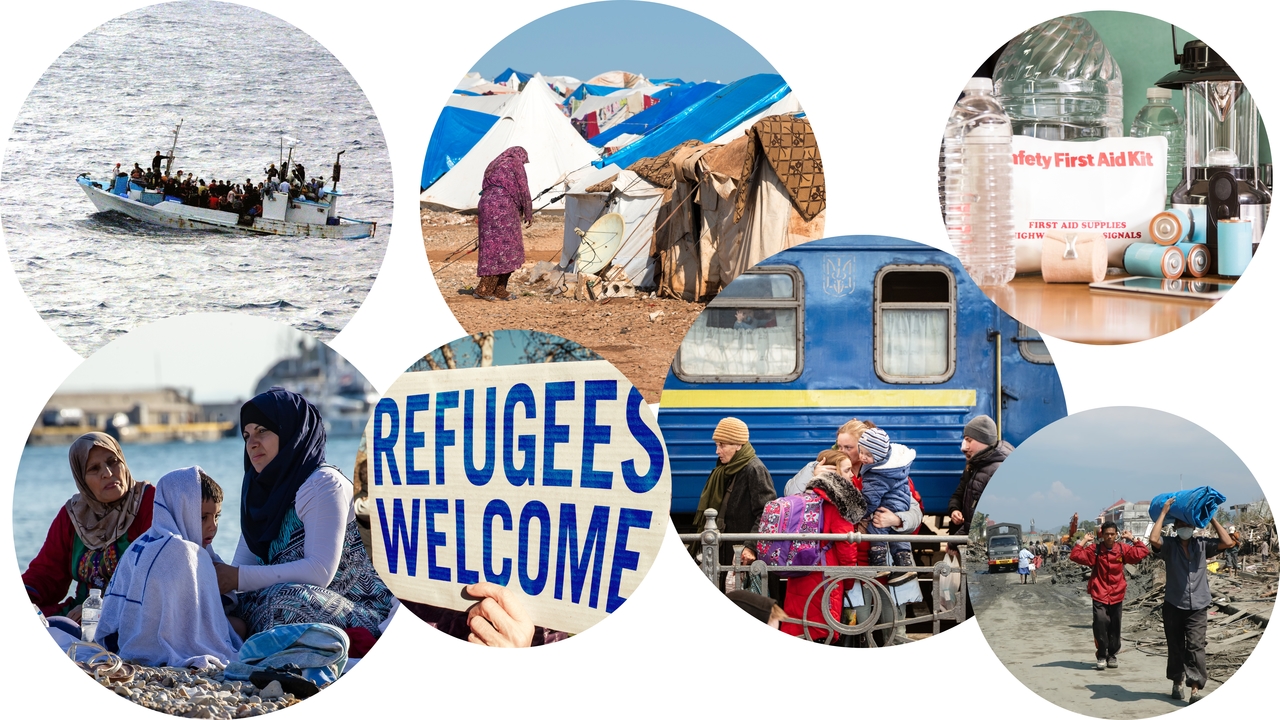 Instructional Goals covered in this module:
- Explore and justify the immediate public health needs and healthcare support of migrants and refugees fleeing war and conflict.
- Know and understand how armed conflicts affect the provision of medical aid and discuss strategies of peacebuilding through improving healthcare.
-
Students mustView
Read the first paragraph "1. Overview". (2 minutes)
UNHCR - 2022
-
Students mustView
Read the content under "Cooperation at global level" on page 32 and "Global cooperation on migration" on page 33. (4 minutes)
UNHCR - 2016
-
-
Students mustView
Read the content under "Definitions: What Exactly Is a Refugee, an Asylum Seeker, and a Migrant?". (3 minutes)
Amnesty International - 2016
-
Students mustView
Read the entire document. (5 minutes)
United Nations
-
Students mustView
Read the content under "What are the main health needs of refugees?". (2 minutes)
UNHCR - 2022
-
-
Students mustView
Read the content under the headings: ( 8 minutes)
- Refugees and migrants: common health problems.
- Migration and communicable diseases: no systematic association.
- Communicable diseases: interventions to prevent the spread.
- Interventions to prevent food and waterborne diseases.WHO - 2017
-
Students mustView
Read the content under "Introduction," "Current health status for the population inside Syria," and "Public health indicators of the Syrian population." (28 minutes)
BMC - Globalisation and Health - 2021
-
Students mustView
Read the following sections: (17 minutes)
- Introduction
- Individual-level themes
- Organization-level themesHealth Equity Journal - 2021
-
Students mustView
Read the entire article. (6 minutes)
NIH - 2020
-
Students mustView
Read the contents under "International frameworks on migration and health" and "Main text" to "Policies in a regional and global context," "Framing," and "Conclusion." (28 minutes)
BMC - 2018
-
Students mustView
Read the content under: (25 minutes)
- Introduction
- Recommendation
- LOOKING AHEAD: OPPORTUNITIES FOR REDUCING INTERNAL DISPLACEMENT AND MEETING LOCAL DEVELOPMENT PRIORITIESCouncil of Europe - 2019
-
Students mustView
Read "Part 3" and "Part 4" on pages 27- 41. (40 minutes)
Ganhri.org - 2019
-
Students mustView
Read from "ROLES AND RESPONSIBILITIES OF INTERNATIONAL ORGANIZATIONS AND NON-STATE ACTORS" to the end of the document. (25 minutes)
WHO - 2019
-
Students mustViewStart discussions: 1
General Instructions:
In this learning activity, you will discuss the impact of war on Syrian refugees.
Step 1: Review
Review the required learning material for this module.
Step 2: Respond
Prepare a 500-600 word written piece discussing the war's impact on Syrian refugees. Using supporting data to back up your arguments, you will ensure your response addresses the following key points:
- What challenges do Syrian refugees face in accessing health and public health services?
- How is the Syrian Civil War affecting children's health and development, i.e., nutritional deficiencies among refugees, malnutrition, etc.?
- How is it impacting general population health?
- Where are Syrian refugees migrating, and how are host countries supporting the health needs of the refugees?
- How has the COVID-19 pandemic impacted Syrian refugees?
- What is the role of international organizations and NGOs in protecting the rights of Syrian refugees?
Step 3: Share
To share your work, click the “Add a new discussion topic” button under this post and paste your work into the “Message” box. Make sure to reference others’ intellectual property when necessary. All references should follow 7th Edition APA formatting. For further instructions, see the resource on the Himmelfarb Health Sciences Library: APA citation resource (N.B. references are excluded from word counts).
Step 4: Interact
To complete the activity, you will need to reply to at least two posts made by your peers in a respectful and professional manner. Be sure your post engages your peers' ideas by including a reflection on their comments, sharing ideas on other potential difficulties and parties involved, or asking thought-provoking questions. If a peer comments on your posting, please reply. To post a reply, click “Reply” on a particular discussion, write your feedback and then click “Post to forum.”
OPTIONAL Step 5: Interact (10 minutes)
If you would like to, you can reply to your peers' posts in a respectful and professional manner. Ensure that your post engages your peers' ideas by including a reflection on their comments, sharing ideas of other potential difficulties and parties involved, or asking thought-provoking questions. If a peer comments on your posting, please reply. To post a reply, click “Reply” on a particular discussion, write your feedback and then click on “Post to forum.”
-
Students mustView
Read "Introduction," "Results," and "Discussion." (33 minutes)
Wiley Online Library - 2022
-
Students mustView
Read the entire document. (5 minutes)
The Lancet - 2022
-
Students mustView
Read the content under "A PUBLIC HEALTH PERSPECTIVE ON THE PREVENTION OF WAR" and "PUBLIC HEALTH SKILLS RELEVANT TO PREVENTING WARS." (14 minutes)
NCBI - 2014
-
Quiz: Module 3
To access the quiz, click on the name of the quiz provided above. On the following screen, click the attempt quiz button to view the case studies and respond to the questions.
TO PASS THIS QUIZ YOU MUST OBTAIN A SCORE OF 80%.