

Section: Module 4: Reproductive Endocrinology, Infertility and Related Topics | Obstetrics and Gynecologic Clerkship for Medical Students | NextGenU.org
-
 Competency covered in this module:
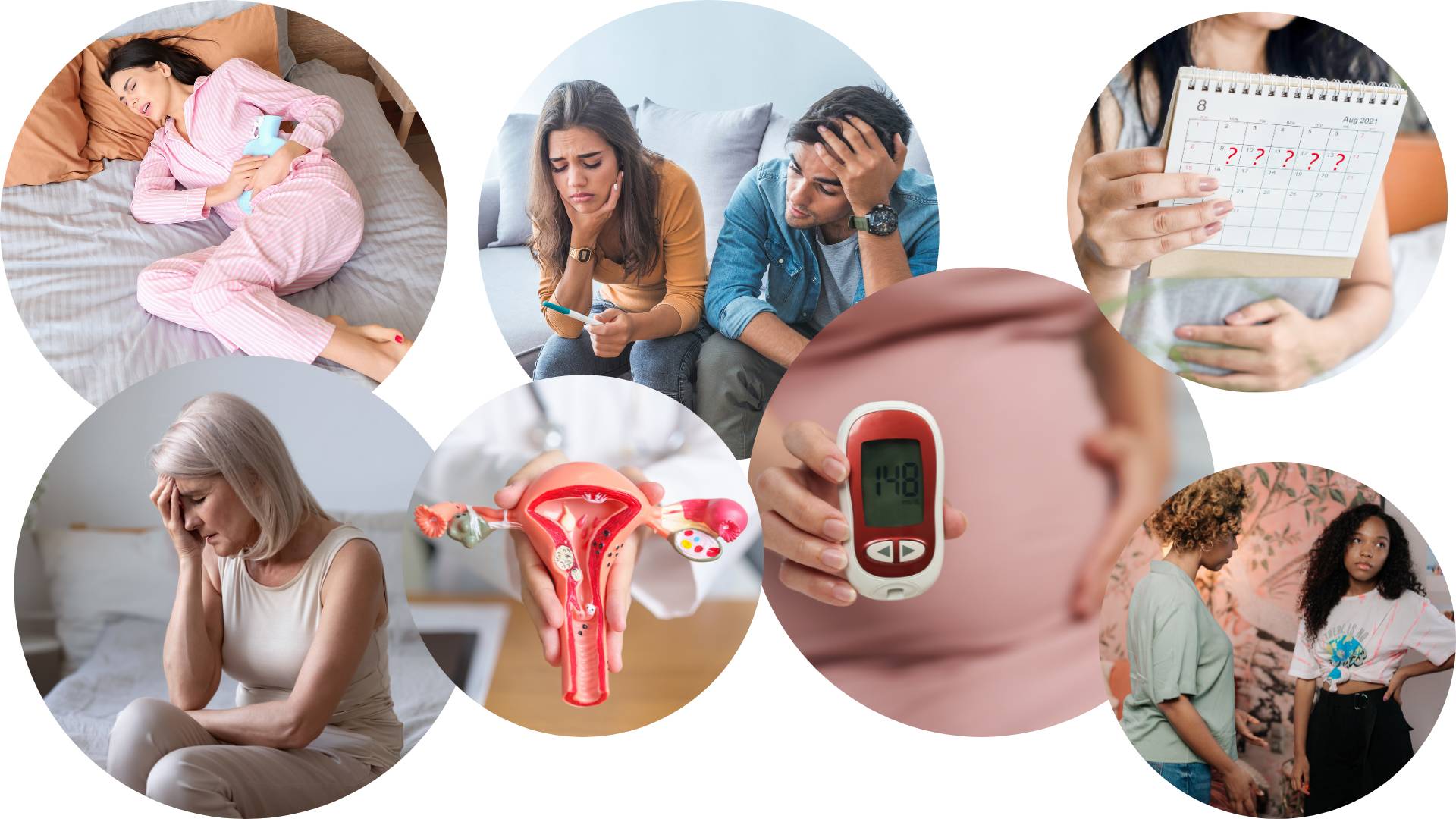
 - Welcome to Module 4 of the OB/GYN content for medical students! In this module, we will cover a range of topics related to reproductive health. You will learn about amenorrhea, hirsutism, abnormal uterine bleeding, dysmenorrhea, menopause, infertility, premenstrual syndrome (PMS) and premenstrual dysphoric disorder (PMDD), as well as gestational trophoblastic neoplasia (GTN). Throughout these lessons, we will explore the pathophysiology, etiologies, evaluation, and management options for these conditions while considering value-based care, social and environmental factors, patient safety, and health disparities. By the end of this module, you will have a comprehensive understanding of these important reproductive health topics.
-
-
-
Students mustView
Read the entire article. (4 minutes)
NHI
-
Students mustView
Read the entire article. (38 minutes)
NHI - 2014
-
Students mustView
Read the entire article. (11 minutes)
Elsevier - 2023
-
Students mustView
Read the entire article. (22 minutes)
GLOWM - 2022
-
Students mustView
Read the entire article. (19 minutes)
NIH - 2021
-
-
Students mustView
Read the entire article and analyze the images. (14 minutes)
GLOWM - 2023
-
Students mustView
Read the entire article. (23 minutes)
NIH - 2023
-
-
Students mustView
Read the under headlines: (9 minutes)
- What is a normal menstrual cycle?
- When is bleeding abnormal?
- What is the difference between chronic and acute abnormal uterine bleeding?
- At what ages is abnormal bleeding more common?
- What causes abnormal bleeding?
- How is abnormal bleeding diagnosed?
- What tests and exams may be needed to diagnose abnormal bleeding?
- What medications are used to help control abnormal bleeding?American College of Obstetricians and Gynecologists - 2021
-
Students mustView
Watch the entire video. (9 minutes)
APGO - 2016
-
Students mustView
Read the entire article. (23 minutes)
American Academy of Family Physicians. - 2023
-
Students mustViewStart discussions: 1
Introduction:
This case aims to enhance the understanding of the physiology and pathology of the menstrual cycle and to develop skills in the diagnosis and management of abnormal uterine bleeding.
Case Profile:
A 47-year-old G2P0020 woman, LMP 22 days ago, is experiencing heavy menstrual bleeding. Her cycles were regularly occurring every 29-31 days and lasting 6 days, with manageable cramps relieved by Ibuprofen until 6 months ago. Lately, her menses occur every 24-33 days, lasting 7-10 days, associated with cramps not eased by Ibuprofen, clot passage, and she is using about two boxes of pads per cycle. She fears losing her job if the bleeding doesn't improve. She denies dizziness but feels weak and fatigued. She reports no change in weight over the past year. There are no known family histories of bleeding disorders or reproductive cancers. She uses condoms for contraception, takes no daily medications, and has no other known medical conditions. She is married and works as a factory worker.
On a physical exam, her weight is 155 pounds, her height is 5 feet, 7 inches, and her BP is 130/85, P 98. She looks pale. A pelvic exam shows a normal vulva, vagina, and cervix; a normal-sized, non-tender, mobile uterus; and a non-tender adnexa without palpable masses.
Activity Questions:
What defines a normal menstrual cycle?
Hint: Reflect on the average cycle length, bleeding duration, volume, and composition.
Describe the normal endocrinological and physiological events of the menstrual cycle.
Hint: Consider the different phases of the menstrual cycle and the hormonal changes that occur within.
How is abnormal uterine bleeding defined?
Hint: Think about the variations in cycle length, volume, or duration that would define abnormal bleeding.
What could be the potential causes of this patient's bleeding?
Hint: Use the PALM-COEIN classification to explore the possible etiologies.
What are the potential etiologies of ovulatory dysfunction?
Hint: Consider conditions that can cause hormonal imbalances leading to ovulatory dysfunction.
Explain the mechanism of anovulatory bleeding.
Hint: Discuss the role of progesterone in menstrual cycle regulation.
How can you determine if this patient is having ovulatory cycles?
Hint: Think about the patient's history, laboratory tests, and physical signs that might indicate ovulatory cycles.
What are the appropriate lab tests to order for this patient?
Hint: Consider the basic tests needed to assess her condition.
What further tests would you order based on the following results: Hgb: 9.2, HCT: 28%, HCG: negative, TSH and Prolactin: normal, Endometrial biopsy: normal secretory endometrium, Pelvic ultrasound: normal-sized uterus with heterogeneous myometrium, endometrial lining 1.5 cm and irregular - consistent with an endometrial polyp, normal ovaries.
Hint: Think about the additional diagnostic procedures needed to confirm the suspected diagnosis.
Describe potential treatment options for this patient.
Hint: Consider both medical and surgical treatment options relevant to the patient's condition and possible diagnosis.
What are important considerations when counseling the patient and helping her choose the best option?
Hint: Reflect on the patient's fertility desires, the effectiveness and permanence of treatment options, operative risks, and the time to expect menopause.
Share: To share your work, click the "Add a new discussion topic" button under this post and paste your work into the "Message" box. Remember to reference others' intellectual property when necessary. All references should follow the 7th Edition APA formatting. For further instructions, see the resource on the Himmelfarb Health Sciences Library: APA citation resource (Note: references are excluded from word counts).
Interact: To complete the activity, you must reply to at least two posts made by your peers in a respectful and professional manner. Make sure your post engages your peers' ideas by including a reflection on their comments, sharing ideas about other potential difficulties and involved parties, or asking thought-provoking questions. If a peer comments on your post, please reply. To post a reply, click "Reply" on a particular discussion, write your feedback, and then click "Post to forum." -
Students mustView
Read the entire article. (9 minutes)
TeachMeObGyn - 2022
-
-
Students mustView
Read the entire article. (6 minutes)
WikiDoc - 2020
-
Students mustView
Read the under headline "Complications". (3 minutes)
Icahn School of Medicine at Mount Sinai - 2023
-
Students mustView
Read the entire article. (35 minutes)
Elsevier B.V. or its licensors or contributors. ScienceDirect - 2023
-
-
-
-
-
Students mustView
Read the entire article. (25 minutes)
Korean Journal of Family Medicine - 2022
-
Students mustView
Watch the entire video. (6 minutes)
APGO - 2016
-
-
Students mustView
Read the entire article. (9 minutes)
The North American Menopause Society. - 2014
-
-
Students mustView
Read the entire article. (126 minutes)
NIH - 2020
-
Students mustViewStart discussions: 1
Introduction:
The postmenopausal period constitutes a significant part of women's lives. Understanding the physical and emotional changes brought on by menopause is central to practicing gynecology. This case aims to enhance our understanding of menopause, its symptoms, potential complications, and management strategies. It emphasizes the importance of patient counseling and preventive measures in managing menopause-related health issues.
Case Profile:
A 52-year-old G3P3 woman, whose last menstrual period was 5 months ago, visits the clinic with complaints of hot flashes, mood swings, and sleep disturbances. She experiences hot flashes 2-3 times per day and frequently at night. She's having difficulty sleeping, which has led to extreme fatigue. Since she was 15, her periods have been regular until 2 years ago, when they started to become irregular, occurring every 2-3 months. She is sexually active and has recently noted some pain during intercourse. The patient rarely exercises, smokes 1.5 packs of cigarettes daily, and drinks alcohol occasionally. She recently started taking a soy supplement. She has no pertinent gynecological, medical, or surgical history. Her family history reveals her mother had a hip fracture at age 65 and a sister with breast cancer and hyperlipidemia. On examination, her vital signs are normal. She is 5’5” tall and weighs 125 lbs. During the pelvic examination, decreased vaginal rugae and a pale, small cervix are noted. On a bimanual exam, there are no masses or tenderness.
Activity Questions:
What are the symptoms of perimenopause and menopause?
Hint: Consider symptoms based on hypoestrogenism.
How is menopause diagnosed?
Hint: Think about the clinical features and the duration of amenorrhea.
What are this patient’s risk factors for osteoporosis?
Hint: Consider her lifestyle, family history, and other medical conditions that could contribute to osteoporosis.
How is atrophic vaginitis diagnosed and treated?
Hint: Discuss the clinical features, examination findings, and treatment options.
How would you counsel a patient regarding estrogen and alternative therapies?
Hint: Consider the risks and benefits of hormone therapy, contraindications, and alternative treatments.
What laboratory and diagnostic tests would you recommend for this patient?
Hint: Tailor your recommendations based on her symptoms, history, and preventive screening guidelines.
Share: To share your work, click the "Add a new discussion topic" button under this post and paste your work into the "Message" box. Remember to reference others' intellectual property when necessary. All references should follow the 7th Edition APA formatting. For further instructions, see the resource on the Himmelfarb Health Sciences Library: APA citation resource (Note: references are excluded from word counts).
Interact: To complete the activity, you must reply to at least two posts made by your peers in a respectful and professional manner. Make sure your post engages your peers' ideas by including a reflection on their comments, sharing ideas about other potential difficulties and involved parties, or asking thought-provoking questions. If a peer comments on your post, please reply. To post a reply, click "Reply" on a particular discussion, write your feedback, and then click "Post to forum." -
Students mustView
Watch the entire video. (9 minutes)
APGO - 2016
-
Students mustView
Read the entire content. (21 minutes)
ACOG - 2019
-
Students mustView
Read the entire content. (10 minutes)
Merck Manual - 2022
-
-
Students mustView
Read the entire content. (13 minutes)
AMA Journal of Ethics - 2023
-
Students mustViewStart discussions: 1
Introduction:
Understanding infertility- its causes and management- forms an essential part of gynecological practice. This case aims to understand the diagnosis, evaluation, and management options for infertility, including the psychosocial and ethical issues associated with it. The case aims to help you navigate the complex issue of infertility, its diagnosis, and management, including understanding the role of genetic screening and the ethical issues linked with infertility treatment.
Case Profile:
A 38-year-old woman and her 38-year-old male partner express concern about potential fertility issues. They've been married for 2 years. The woman has a 5-year-old daughter from a previous relationship. She was on birth control pills until about 2 years ago. Since discontinuing the pill, the couple has been trying to conceive, leading to considerable stress. The patient had no difficulties conceiving or delivering (vaginally) her daughter, who has cystic fibrosis. Recently, her menstrual cycles have become irregular, occurring every 5-7 weeks. She is a cashier by profession, and she runs 15-20 miles per week. She has no history of STIs, abnormal Pap smears, smoking, alcohol, or drug use. She has no history of surgery and has been taking a multivitamin with folic acid since she began trying to conceive.
Her partner is also in good health and reports no problems with erection, ejaculation, or pain during intercourse. He has had unprotected sex prior to this relationship but hasn't knowingly fathered a child. He has no known medical problems or past surgeries. The couple has vaginal intercourse 3-4 times per week when he is at home.
Activity Questions:
What is the definition of infertility?
Hint: Consider the duration of unprotected intercourse without conception in women under and over 35 years old.
What are the possible causes of infertility?
Hint: Consider male and female factors that could contribute to infertility.
What is the initial workup for infertile couples, and what additional tests would you order for this particular couple?
Hint: Consider general infertility investigations and specific tests based on the couple's history.
Given the results of the tests, what is the potential diagnosis for the couple's infertility?
Hint: Consider the possible causes based on her irregular menstrual cycles and his semen analysis.
What is the appropriate management for the etiology of this couple’s infertility?
Hint: Discuss the management approach considering her probable anovulation and his oligospermia.
Suppose the husband undergoes genetic testing for common cystic fibrosis mutations and is found to be a carrier. What are the options available to them to make a pregnancy less likely to result in a child with cystic fibrosis, and what are the ethical issues associated with these choices?
Hint: Consider IVF, donor sperm/eggs, preimplantation genetic diagnosis, and the ethical implications of each.
Share: To share your work, click the "Add a new discussion topic" button under this post and paste your work into the "Message" box. Remember to reference others' intellectual property when necessary. All references should follow the 7th Edition APA formatting. For further instructions, see the resource on the Himmelfarb Health Sciences Library: APA citation resource (Note: references are excluded from word counts).
Interact: To complete the activity, you must reply to at least two posts made by your peers in a respectful and professional manner. Make sure your post engages your peers' ideas by including a reflection on their comments, sharing ideas about other potential difficulties and involved parties, or asking thought-provoking questions. If a peer comments on your post, please reply. To post a reply, click "Reply" on a particular discussion, write your feedback, and then click "Post to forum." -
Students mustView
Watch the entire video. (4 minutes)
APGO - 2016
-
Students mustViewStart discussions: 1
Introduction:
Premenstrual Syndrome (PMS) and Premenstrual Dysphoric Disorder (PMDD) are common conditions that affect women of reproductive age, impacting their daily lives and mental well-being. This case aims to enhance the understanding of these conditions, from diagnosis to treatment strategies. This case aims to help you differentiate between PMS and PMDD using specific diagnostic criteria and understand the importance of using a multidisciplinary approach to manage these conditions, from simple lifestyle adjustments to pharmacological treatments. The importance of accurate diagnosis through prospective symptom rating is emphasized.
Case Profile:
A 36-year-old G3P3 married woman schedules a check-up after relocating to a new area. She's had regular periods, though they have recently become longer. She complains of abdominal bloating, breast tenderness, and frequent headaches. These symptoms seem to worsen about a week before her cycle and resolve a week after her cycle ends. She speculates that her symptoms may be cyclic but has never tracked them systematically.
She's currently not sexually active and takes no medications or supplements. All her pregnancies resulted in vaginal deliveries, and she experienced postpartum depression after her last two births. She describes her teenage years as "turbulent" and "emotional." She has had no past treatment for depression. She underwent a tonsillectomy as a child and has no other medical conditions or drug allergies.
Her family history includes depression in her mother. Her 41-year-old sister was recently diagnosed with ovarian cancer. In a systematic review, she describes occasional insomnia and excessive fatigue. She also reveals difficulty falling asleep due to overthinking. She recently moved with her children to a new city for work, while her husband stayed behind due to his job. This separation has been ongoing for about 5 months.
Activity Questions:
What diagnosis would you give this patient, and why?
Hint: Consider the cluster of symptoms and their timing in relation to her menstrual cycle.
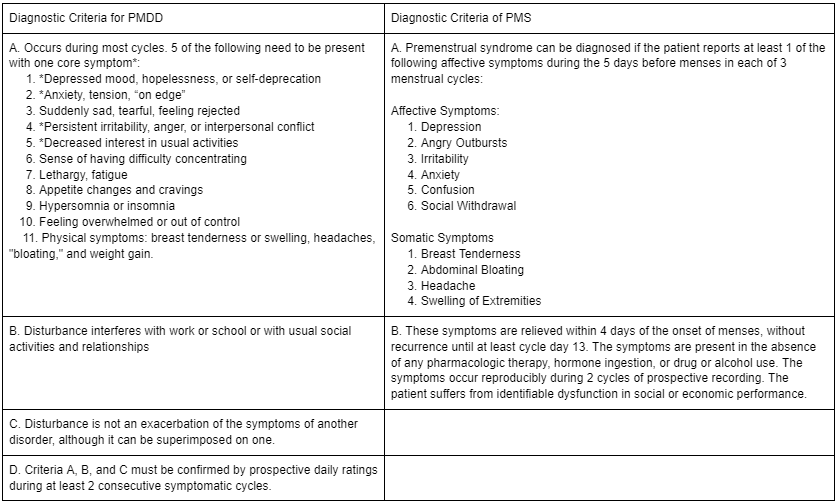
What tools are available for patients to assess their PMS/PMDD symptoms?
Hint: Think about the various questionnaires or diaries that can be used to track symptoms and their timing.
What are the treatment options for this patient?
Hint: Consider both non-pharmacological and pharmacological interventions, including lifestyle changes, dietary adjustments, and medications.
Share:
To share your work, click the "Add a new discussion topic" button under this post and paste your work into the "Message" box. Remember to reference others' intellectual property when necessary. All references should follow the 7th Edition APA formatting. For further instructions, see the resource on the Himmelfarb Health Sciences Library: APA citation resource (Note: references are excluded from word counts).
Interact:
To complete the activity, you must reply to at least two posts made by your peers in a respectful and professional manner. Make sure your post engages your peers' ideas by including a reflection on their comments, sharing ideas about other potential difficulties and involved parties, or asking thought-provoking questions. If a peer comments on your post, please reply. To post a reply, click "Reply" on a particular discussion, write your feedback, and then click "Post to forum."
-
Students mustView
Watch the entire video. (6 minutes)
APGO - 2016
-
Students mustView
Watch the entire video. (10 minutes)
APGO - 2019
-
Students mustView
Read the entire content. (30 minutes)
NHI - 2019
-
Students mustView
Read the entire content. (28 minutes)
NHI - 2018
-
Students mustViewStart discussions: 1
Introduction:
The management of unusual pregnancies, such as molar pregnancies, is an important aspect of gynecological practice. This case study aims to enhance the student's understanding of the diagnosis, management, and complications of molar pregnancies. This case emphasizes the diagnostic process for unusual pregnancies, such as molar pregnancies, and the importance of proper management, including post-treatment monitoring and patient counseling. It also highlights potential complications and their management.
Case Profile:
A 16-year-old primigravida arrives for routine prenatal care. She's 15 weeks pregnant, according to her last menstrual period. She's been experiencing mild nausea but otherwise feels healthy. Her pregnancy has been unremarkable so far. She receives support from her parents and the baby's father.
A physical examination shows an enlarged uterus, measuring about 22 cm from the pubic symphysis. Fetal heart tones are not detectable by Doppler. She denies any vaginal bleeding or passage of tissue. The vaginal examination is unremarkable.
Routine prenatal labs are unremarkable except for slightly elevated beta hCG levels at 120,000 mIU/ml and slightly low TSH, indicating mild hyperthyroidism. An ultrasound shows an enlarged uterus with multiple internal echoes and a "snowstorm" appearance. No fetus is visible. The ultrasound also reveals enlarged cystic ovaries bilaterally.
Activity Questions:
What is the differential diagnosis prior to receiving the ultrasound result?
Hint: Consider the possible causes of an enlarged uterus and high hCG levels.
What aspects of the ultrasound guide the diagnosis?
Hint: Focus on the specific ultrasound findings typical of molar pregnancy and the significance of the ovarian cysts.
What further evaluations are necessary for a definitive diagnosis?
Hint: Consider the tests needed to confirm the diagnosis and determine the presence of metastatic disease.
What is the epidemiology and clinical course of this condition?
Hint: Discuss the prevalence, risk factors, and potential complications of molar pregnancy.
What is your management plan?
Hint: Discuss the steps for managing a molar pregnancy, from initial treatment to follow-up.
Share:
To share your work, click the "Add a new discussion topic" button under this post and paste your work into the "Message" box. Remember to reference others' intellectual property when necessary. All references should follow the 7th Edition APA formatting. For further instructions, see the resource on the Himmelfarb Health Sciences Library: APA citation resource (Note: references are excluded from word counts).
Interact:
To complete the activity, you must reply to at least two posts made by your peers in a respectful and professional manner. Make sure your post engages your peers' ideas by including a reflection on their comments, sharing ideas about other potential difficulties and involved parties, or asking thought-provoking questions. If a peer comments on your post, please reply. To post a reply, click "Reply" on a particular discussion, write your feedback, and then click "Post to forum."