Section: Module 2: Support and Movement | Anatomy and Physiology | NextGenU.org
-
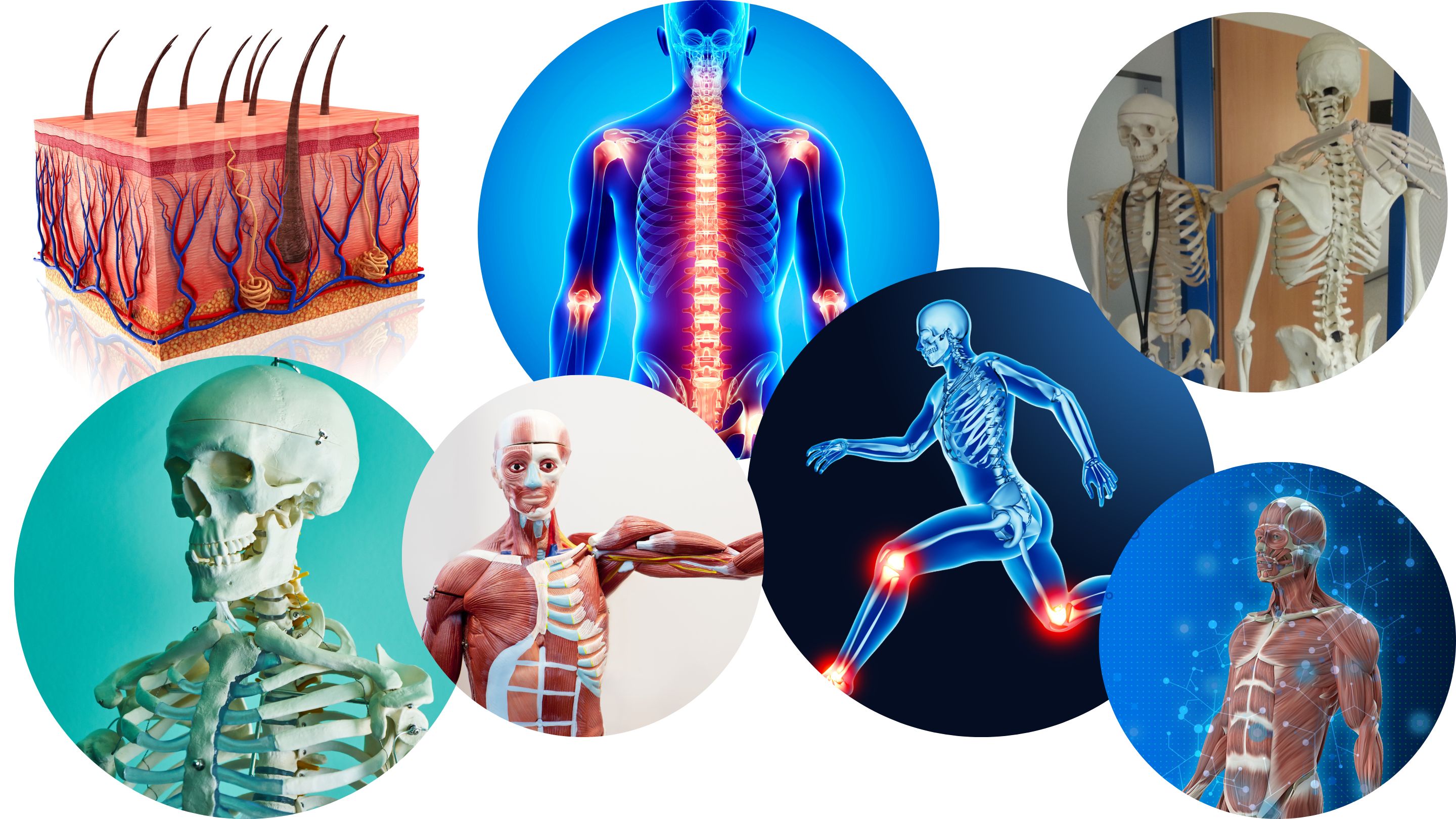
In this module, you will explore the skin, the largest organ of the body, and will examine the body’s skeletal and muscular systems, following a traditional sequence of topics. You will through specific systems of the body, and as it does so, you will maintain a focus on homeostasis as well as those diseases and conditions that can disrupt it.
-
Students mustMark as done
Read the entire page. (3 minutes)
Rice University - 2022
-
Students mustMark as done
Read the entire page. (47 minutes)
Rice University - 2022
-
Students mustMark as done
Read the entire page. (27 minutes)
Rice University - 2022
-
Students mustMark as done
Read the entire page. (21 minutes)
Rice University - 2022
-
Students mustMark as done
Read the entire page. (34 minutes)
Rice University - 2022
-
Students mustMark as done
Read the entire page. (2 minutes)
Rice University - 2022
-
Students mustMark as done
Read the entire page. (12 minutes)
Rice University - 2022
-
Students mustMark as done
Read the entire page. (8 minutes)
Rice University - 2022
-
Students mustMark as done
Read the entire page. (50 minutes)
Rice University - 2022
-
Students mustMark as done
Read the entire page. (31 minutes)
Rice University - 2022
-
Students mustMark as done
Read the entire page. (13 minutes)
Rice University - 2022
-
Students mustMark as done
Read the entire page. (23 minutes)
Rice University - 2022
-
Students mustMark as done
Read the entire page. (8 minutes)
Rice University - 2022
-
Students mustMark as done
Read the entire page. (6 minutes)
Rice University - 2022
-
Students mustMark as done
Read the entire page. (7 minutes)
Rice University - 2022
-
-
Students mustMark as done
Read the entire page. (54 minutes)
Rice University - 2022
-
Students mustMark as done
Read the entire page. (10 minutes)
Rice University - 2022
-
Students mustMark as done
Read the entire page. (15 minutes)
Rice University - 2022
-
Students mustMark as done
Read the entire page. (3 minutes)
Rice University - 2022
-
Students mustMark as done
Read the entire page. (19 minutes)
Rice University - 2022
-
Students mustMark as done
Read the entire page. (36 minutes)
Rice University - 2022
-
Students mustMark as done
Read the entire page. (29 minutes)
Rice University - 2022
-
Students mustMark as done
Read the entire page. (38 minutes)
Rice University - 2022
-
Students mustMark as done
Read the entire page. (19 minutes)
Rice University - 2022
-
Students mustMark as done
Read the entire page. (6 minutes)
Rice University - 2022
-
Students mustMark as done
Read the entire page. (13 minutes)
Rice University - 2022
-
Students mustMark as done
Read the entire page. (13 minutes)
Rice University - 2022
-
Students mustMark as done
Read the entire page. (11 minutes)
Rice University - 2022
-
Students mustMark as done
Read the entire page. (39 minutes)
Rice University - 2022
-
Students mustMark as done
Read the entire page. (29 minutes)
Rice University - 2022
-
Students mustMark as done
Read the entire page. (61 minutes)
Rice University - 2022
-
Students mustMark as done
Read the entire page. (5 minutes)
Rice University - 2022
-
Students mustMark as done
Read the entire page. (2 minutes)
Rice University - 2022
-
Students mustMark as done
Read the entire page. (6 minutes)
Rice University - 2022
-
Students mustMark as done
Read the entire page. (28 minutes)
Rice University - 2022
-
Students mustMark as done
Read the entire page. (35 minutes)
Rice University - 2022
-
Students mustMark as done
Read the entire page. (28 minutes)
Rice University - 2022
-
Students mustMark as done
Read the entire page. (8 minutes)
Rice University - 2022
-
Students mustMark as done
Read the entire page. (18 minutes)
Rice University - 2022
-
Students mustMark as done
Read the entire page. (8 minutes)
Rice University - 2022
-
Students mustMark as done
Read the entire page. (16 minutes)
Rice University - 2022
-
Students mustMark as done
Read the entire page. (10 minutes)
Rice University - 2022
-
Students mustMark as done
Read the entire page. (3 minutes)
Rice University - 2022
-
Students mustMark as done
Read the entire page. (23 minutes)
Rice University - 2022
-
Students mustMark as done
Read the entire page. (12 minutes)
Rice University - 2022
-
Students mustMark as done
Read the entire page. (39 minutes)
Rice University - 2022
-
Students mustMark as done
Read the entire page. (23 minutes)
Rice University - 2022
-
Students mustMark as done
Read the entire page. (35 minutes)
Rice University - 2022
-
Students mustMark as done
Read the entire page. (37 minutes)
Rice University - 2022
-
Students mustViewStart discussions: 1
General Instructions
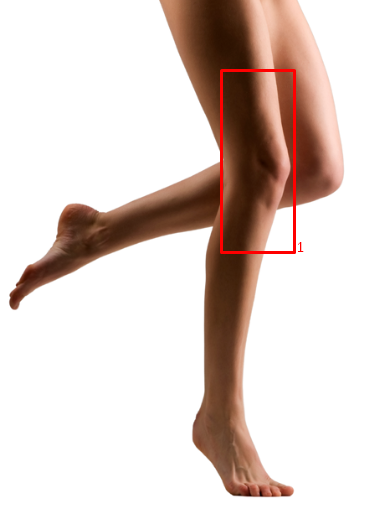
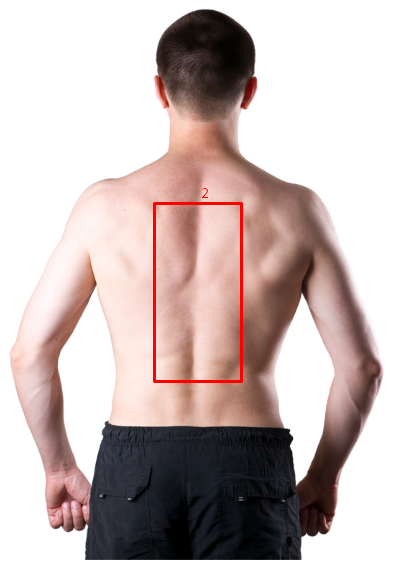
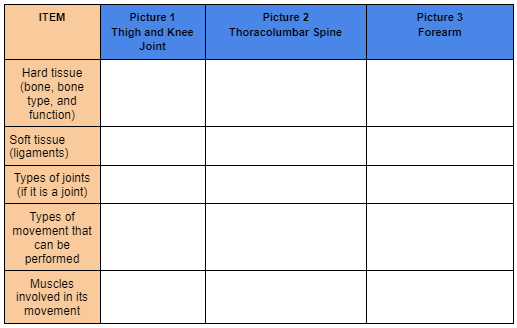
In this activity, you will have to analyze some images and fill in the characteristics of each one in the descriptive table. Pay attention to the items and describe them in detail with everything you have learned in the module.
Step 1 - Review
Look carefully at the images of the human body inside the red-edged squares:
Step 2 - Respond
Complete the table below.
Step 3: Share
To share your work, click the “Add a new discussion topic” button under this post and paste your work into the “Message” box. Make sure to reference others’ intellectual property when necessary. All references should follow 7th Edition APA formatting. For further instructions, see the resource on the Himmelfarb Health Sciences Library: APA citation resource (N.B. references are excluded from word counts).
Step 4: Interact
To complete the activity, you need to post a reply. Click “Reply” on the main discussion, and then click “Post to forum.”
OPTIONAL Step 5: Interact (10 minutes)
If you would like to, you can reply to your peers' posts in a respectful and professional manner. Ensure that your post engages your peers' ideas by including a reflection on their comments, sharing ideas of other potential difficulties and parties involved, or asking thought-provoking questions. If a peer comments on your posting, please reply. To post a reply, click “Reply” on a particular discussion, write your feedback and then click on “Post to forum.”
-
Students mustViewStart discussions: 1
General Instructions
In this activity, you will examine some images, read the case scenario presented below, and follow the instructions. Use appropriate terminology to write the explanation you will develop after your analysis.
Step 1 - Examine
Examine the images and read the scenario about Alan.
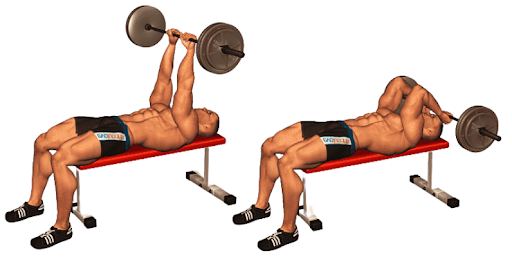
Alan is a 19-year-old young man who started training at the gym. He wants to build his triceps but does not know how. He recovered from a fractured humerus three months ago and wants to start building his pectorals and then move on to the triceps and biceps. His cousin, who is not an instructor, decided to help him by giving him the following instructions:
“Dear Alan,
I recommend the exercise in the image. It is called the French Press. Someone told me it is ideal for adequate muscle hypertrophy in the pectorals. Repeating the exercise several times (you can start with four series of 35 repetitions) would be best until you feel pain and fatigue in the arms and chest (the reason is that your muscle is working).
I do not recommend you hydrate because your muscle does not need water to develop. Muscle mass needs protein and steroids to build correctly. Perform this exercise with the most significant weight you can lift. If your arms shake, continue exercising, and do not stop! And do not worry, your head cannot suffer any damage from exercising like this. Consume a lot of protein, eggs, and flan for collagen. Do not forget to run often when leaving the gym and stretch the muscle only one hour after exercise, so you will get quick results for the summer.”
Step 2 - Respond
Evaluate the instructions given to Alan by his cousin and then write new instructions for him using 500 words and the knowledge gained thus far.
Consider the following points:
- What precautions should Alan take being a patient who suffered a humeral fracture?
- Which joints are related to the humerus, and which muscles and muscle attachments?
- What is the function of bones when lifting weights?
- Explain the movement in this exercise, i.e., which muscles contract and extend in the first image and which in the second image? Why do you feel muscle pain when you exercise? What happens to muscle fibers when they tear? What is muscle hypertrophy? How are muscle fibers reconstructed?
- Explain what would happen if the weight you are working with is too much. What would happen to your muscle? What damage could it suffer if it is overextended?
- Which elements and nutrients are important for muscle metabolism?
- Explain why hydration is important.
Step 3: Share
To share your work, click the “Add a new discussion topic” button under this post and paste your work into the “Message” box. Make sure to reference others’ intellectual property when necessary. All references should follow 7th Edition APA formatting. For further instructions, see the resource on the Himmelfarb Health Sciences Library: APA citation resource (N.B. references are excluded from word counts).
Step 4: Interact
To complete the activity, you need to post a reply. Click “Reply” on the main discussion, and then click “Post to forum.”
OPTIONAL Step 5: Interact (10 minutes)
If you would like to, you can reply to your peers' posts in a respectful and professional manner. Ensure that your post engages your peers' ideas by including a reflection on their comments, sharing ideas of other potential difficulties and parties involved, or asking thought-provoking questions. If a peer comments on your posting, please reply. To post a reply, click “Reply” on a particular discussion, write your feedback and then click on “Post to forum.”
-
Students mustViewReceive a gradeReceive a passing grade
To access the quiz, click on the name of the quiz provided above. On the following screen, click the "Preview quiz now" button to respond to the questions.