

Section: Module 3: Regulation, Integration, and Control | Anatomy and Physiology | NextGenU.org
-
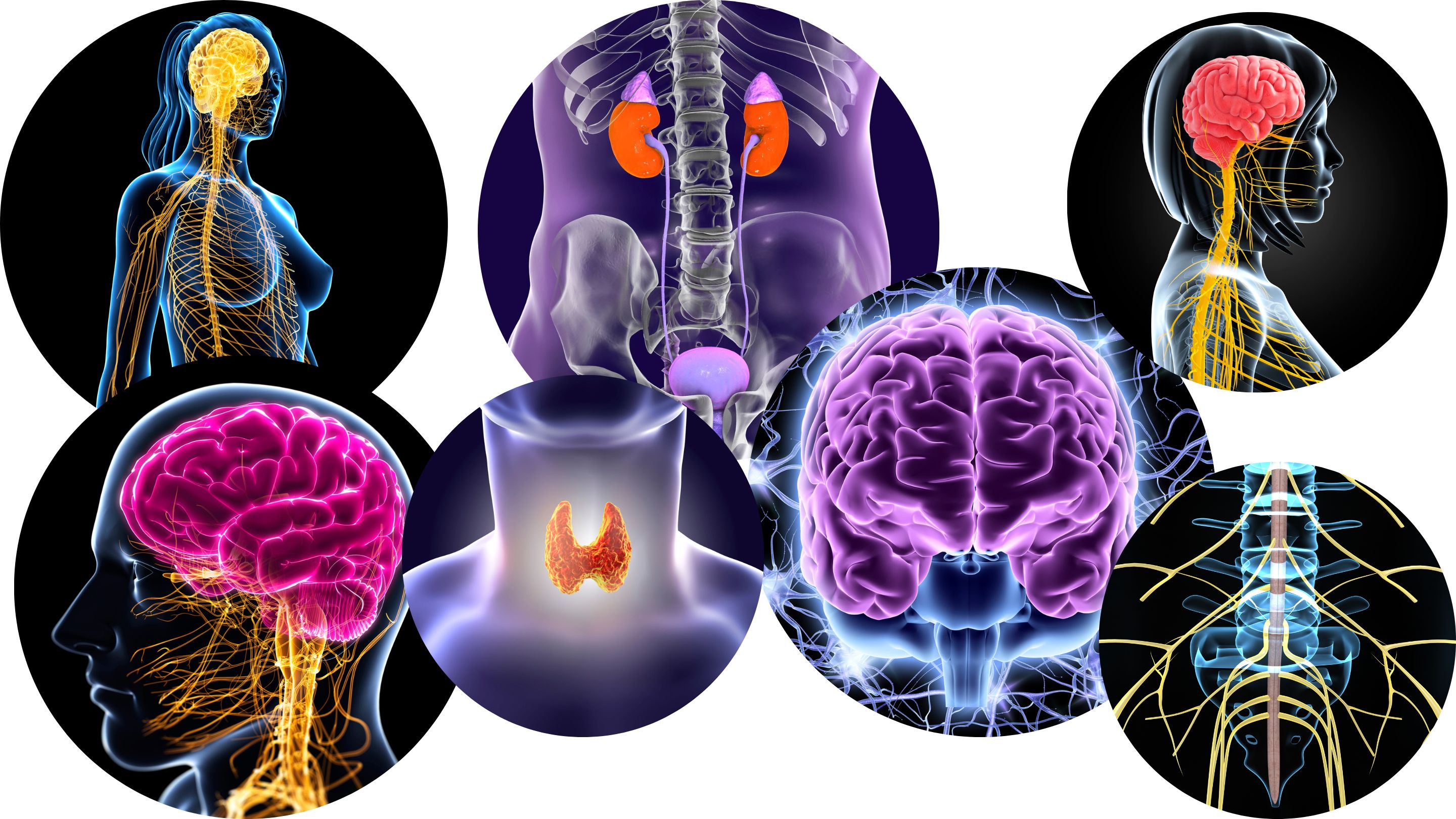
This module helps you to answer questions about nervous and endocrine system control and regulation. In a break with the traditional sequence of topics, the special senses are integrated into the chapter on the somatic nervous system. The chapter on the neurological examination will offer you a unique approach to understanding nervous system function using five simple but powerful diagnostic tests.
-
Students mustMark as done
Read the entire page. (4 minutes)
Rice University - 2022
-
Students mustMark as done
Read the entire page. (47 minutes)
Rice University - 2022
-
Students mustMark as done
Read the entire page. (47 minutes)
Rice University - 2022
-
Students mustMark as done
Read the entire page. (20 minutes)
Rice University - 2022
-
Students mustMark as done
Read the entire page. (56 minutes)
Rice University - 2022
-
Students mustMark as done
Read the entire page. (44 minutes)
Rice University - 2022
-
Students mustMark as done
Read the entire page. (3 minutes)
Rice University - 2022
-
Students mustMark as done
Read the entire page. (33 minutes)
Rice University - 2022
-
Students mustMark as done
Read the entire page. (64 minutes)
Rice University - 2022
-
Students mustMark as done
Read the entire page. (39 minutes)
Rice University - 2022
-
Students mustMark as done
Read the entire page. (41 minutes)
Rice University - 2022
-
Students mustMark as done
Read the entire page. (7 minutes)
Rice University - 2022
-
Students mustMark as done
Read the entire page. (106 minutes)
Rice University - 2022
-
Students mustMark as done
Read the entire page. (56 minutes)
Rice University - 2022
-
Students mustMark as done
Read the entire page. (44 minutes)
Rice University - 2022
-
Students mustMark as done
Read the entire page. (6 minutes)
Rice University - 2022
-
Students mustMark as done
Read the entire page. (42 minutes)
Rice University - 2022
-
Students mustMark as done
Read the entire page. (42 minutes)
Rice University - 2022
-
Students mustMark as done
Read the entire page. (17 minutes)
Rice University - 2022
-
Students mustMark as done
Read the entire page. (28 minutes)
Rice University - 2022
-
Students mustViewStart discussions: 1
General Instructions
In the following activity, we will present you with four actions carried out by the human body. You must explain what each one consists of by following the corresponding instructions and items provided.
Step 1 - Review
1st Scenario:
A woman is on her way to work. She walks, begins to accelerate her step, and realizes that, suddenly, she starts running to reach on time. At this time, her nervous system begins to generate an answer.
2nd Scenario:
Damage to specific regions of the cerebral cortex, such as through a stroke, can result in specific losses of function. A 65-year-old man suffers from high blood pressure. He stopped taking his medication, and the blood vessels in his brain collapsed, and he suffered a stroke. In the MRI, the doctor noticed two damaged regions in his brain, the Temporal and the Occipital.
3rd Scenario:
Following a motorcycle accident, the victim loses the ability to move the right leg but has normal control over the left one, suggesting a hemisection somewhere in the thoracic region of the spinal cord.
4th Scenario:
The cardiovascular center is responsible for regulating the heart and blood vessels through homeostatic mechanisms.
Step 2 - Respond
1st Scenario:
- 5 keywords that you will use in your explanation paragraph.
- List the organs generally involved to perform the actions described.
- Explain what answer was generated by the nervous system when the woman began running. Include an example of each type of tissue that is under the control of the nervous system. (maximum 100 words for the explanation)
2nd Scenario:
- 5 keywords that you will use in your explanation paragraph.
- List of the organs involved in the loss of functions action.
- Explain which functions would probably be lost by a stroke in the temporal lobe and which in the occipital lobe. (maximum 100 words for the explanation)
3rth Scenario:
- 3 keywords that you will use in your explanation paragraph.
- List of the organs involved in the loss of functions action.
- Explain what sensory deficits would be expected regarding touch versus pain. Explain your answer. (maximum 100 words for the explanation)
4th Scenario:
- 3 keywords that you will use in your explanation paragraph.
- List of the organs involved in the loss of functions.
- Explain what tone each component of the cardiovascular system is.
- What connections does the cardiovascular center invoke to keep these two systems in their resting tone? (maximum 100 words for the explanation)
Step 3: Share
To share your work, click the “Add a new discussion topic” button under this post and paste your work into the “Message” box. Make sure to reference others’ intellectual property when necessary. All references should follow 7th Edition APA formatting. For further instructions, see the resource on the Himmelfarb Health Sciences Library: APA citation resource (N.B. references are excluded from word counts).
Step 4: Interact
To complete the activity, you need to post a reply. Click “Reply” on the main discussion, and then click “Post to forum.”OPTIONAL Step 5: Interact (10 minutes)
If you would like to, you can reply to your peers' posts in a respectful and professional manner. Ensure that your post engages your peers' ideas by including a reflection on their comments, sharing ideas of other potential difficulties and parties involved, or asking thought-provoking questions. If a peer comments on your posting, please reply. To post a reply, click “Reply” on a particular discussion, write your feedback and then click on “Post to forum.”
-
Students mustMark as done
Read the entire page. (7 minutes)
Rice University - 2022
-
Students mustMark as done
Read the entire page. (23 minutes)
Rice University - 2022
-
Students mustMark as done
Read the entire page. (48 minutes)
Rice University - 2022
-
Students mustMark as done
Read the entire page. (56 minutes)
Rice University - 2022
-
Students mustMark as done
Read the entire page. (35 minutes)
Rice University - 2022
-
Students mustMark as done
Read the entire page. (27 minutes)
Rice University - 2022
-
Students mustViewStart discussions: 1
General Instructions
In the following activity, you will exemplify the complete neurological examination of a patient with certain characteristics. Take into account the areas to be evaluated so that you can create accurate instructions or questions for the person being evaluated.
Step 1 - Review
Ann is a 25-year-old woman who enters the office for a routine check-up. She was diagnosed with Wernicke's Aphasia, whose etiology was glioblastoma multiforme. A couple of years ago, after identifying the intra-axial tumor lesion in the left temporoinsular region using structural magnetic resonance imaging, the patient underwent a biopsy and tumor resection.
Structural magnetic resonance imaging study. A) T1 sequence with gasoline in coronal section showing intra-axial tumor lesion affecting the left temporoinsular region. B) Simple T1 sequence in sagittal section showing a tumor lesion in the left superior temporal gyrus with peritumoral hypointense images suggestive of edema affecting the left angular and supramarginal gyrus, as well as the temporal pole. C) and D) T2 sequence in axial slices showing a tumor lesion affecting the anterior temporal lobe and left insula, in addition to significant cortical and subcortical perilesional edema towards the posterosuperior region of the left temporal and parietal lobe.
Step 2 - Respond
Fulfill the following sections; ask questions or instructions with which you would evaluate the patient and in which you would find alterations.
A. The Mental Status Exam
- …
- …
- …
- …
- …
- …
- …
- …
- …
- …
- …
- …
- …
- …
- …
- …
- …
- …
- …
- …
Step 3: Share
To share your work, click the “Add a new discussion topic” button under this post and paste your work into the “Message” box. Make sure to reference others’ intellectual property when necessary. All references should follow 7th Edition APA formatting. For further instructions, see the resource on the Himmelfarb Health Sciences Library: APA citation resource (N.B. references are excluded from word counts).
Step 4: Interact
To complete the activity, you need to post a reply. Click “Reply” on the main discussion, and then click “Post to forum.”
OPTIONAL Step 5: Interact (10 minutes)
If you would like to, you can reply to your peers' posts in a respectful and professional manner. Ensure that your post engages your peers' ideas by including a reflection on their comments, sharing ideas of other potential difficulties and parties involved, or asking thought-provoking questions. If a peer comments on your posting, please reply. To post a reply, click “Reply” on a particular discussion, write your feedback and then click on “Post to forum.”
-
Students mustMark as done
Read the entire page. (2 minutes)
Rice University - 2022
-
Students mustMark as done
Read the entire page. (17 minutes)
Rice University - 2022
-
-
Students mustMark as done
Read the entire page. (39 minutes)
Rice University - 2022
-
Students mustMark as done
Read the entire page. (23 minutes)
Rice University - 2022
-
Students mustMark as done
Read the entire page. (11 minutes)
Rice University - 2022
-
Students mustMark as done
Read the entire page. (23 minutes)
Rice University - 2022
-
Students mustMark as done
Read the entire page. (4 minutes)
Rice University - 2022
-
Students mustMark as done
Read the entire page. (7 minutes)
Rice University - 2022
-
Students mustMark as done
Read the entire page. (25 minutes)
Rice University - 2022
-
Students mustMark as done
Read the entire page. (13 minutes)
Rice University - 2022
-
Students mustMark as done
Read the entire page. (6 minutes)
Rice University - 2022
-
Students mustViewStart discussions: 1
General Instructions
In the following activity, you must analyze and explain the different types of diseases related to the endocrine system.
Step 1 - Review
Pay attention to the following list and choose 4 glands to continue with the activity.
- The Pituitary Gland
- The Thyroid Gland
- The Parathyroid Glands
- The Adrenal Glands
- Gonadal and Placental Hormones
- The Endocrine Pancreas
Step 2 - Respond
Complete the following details of each of the 4 glands you have chosen.
1.
A. Gland name:
B. Location and structure:
C. Most important hormones produced/synthesized (write the functions of each one of them):
D. List of pathologies caused by the alteration of these hormones:2.
A. Gland name:
B. Location and structure:
C. Most important hormones produced/synthesized (write the functions of each one of them):
D. List of pathologies caused by the alteration of these hormones:3.
A. Gland name:
B. Location and structure:
C. Most important hormones produced/synthesized (write the functions of each one of them):
D. List of pathologies caused by the alteration of these hormones:4.
A. Gland name:
B. Location and structure:
C. Most important hormones produced/synthesized (write the functions of each one of them):
D. List of pathologies caused by the alteration of these hormones:Step 3: Share
To share your work, click the “Add a new discussion topic” button under this post and paste your work into the “Message” box. Make sure to reference others’ intellectual property when necessary. All references should follow 7th Edition APA formatting. For further instructions, see the resource on the Himmelfarb Health Sciences Library: APA citation resource (N.B. references are excluded from word counts).
Step 4: Interact
To complete the activity, you need to post a reply. Click “Reply” on the main discussion, and then click “Post to forum.”
OPTIONAL Step 5: Interact (10 minutes)
If you would like to, you can reply to your peers' posts in a respectful and professional manner. Ensure that your post engages your peers' ideas by including a reflection on their comments, sharing ideas of other potential difficulties and parties involved, or asking thought-provoking questions. If a peer comments on your posting, please reply. To post a reply, click “Reply” on a particular discussion, write your feedback and then click on “Post to forum.”
-
Students mustViewReceive a gradeReceive a passing grade
To access the quiz, click on the name of the quiz provided above. On the following screen, click the "Preview quiz now" button to respond to the questions.
