

You do not have permission to view discussions in this forum.
-
Introduction
Show More Show LessWelcome to the Pandemic Etiology, Preparedness, and Response course. This course aims to equip participants with the knowledge and skills to understand the causes of pandemics and to prepare and respond to future pandemics based on the lessons learned from previous pandemics and the ongoing COVID-19 pandemic. This course provides an opportunity for participants to be knowledgeable in pandemic preparedness and response, adopting a global health perspective.
-
Students mustStudent must submit this questionnaire to complete it
-
Students mustViewReceive a grade
Show More-


Welcome to the Pandemic Etiology, Preparedness, and Response course. This course aims to equip participants with the knowledge and skills to understand the causes of pandemics and to prepare and respond to future pandemics based on the lessons learned from previous pandemics and the ongoing COVID-19 pandemic. This course provides an opportunity for participants to be knowledgeable in pandemic preparedness and response, adopting a global health perspective.The Pandemic Etiology, Preparedness, and Response course, like all NextGenU.org courses, is competency-based, using competencies provided by faculty at Yale University, Planning and Incorporating Public Health Preparedness Into the Medical Curriculum, and CEPH It uses learning resources from organizations such as the Pan American Health Organization, U.S. Centers for Disease Control and Prevention (CDC), the U.S. National Institutes of Health, and the World Health Organization.
The Pandemic Etiology, Preparedness, and Response course was developed in collaboration with Yale University and was designed by Dr. Kaveh Khoshnood and; Dr. Amy Bei; with assistance from graduate students; Adam J. Moore, MPH; and Matthew Paige, MPH; and the NextGenU.org team; Hugo Rojas, MD, MSc, DiplEd; Margaret Niles, PhD, MEd, DipID; and Pablo Baldiviezo, MD, DiplEd.



For publications on NextGenU.org’s courses’ efficacy, see “A Novel Integration of Online and Flipped Classroom Instructional Models in Public Health Higher Education” (2014), BMC Medical Education, “Building Public Health Capacity through Online Global Learning,” (2018), Open Praxis, or on NextGenU.org’s publication page. Subscribe to our newsletter to be notified of future updates, new courses, and to be part of our community.
There are 8 modules to complete, which provide an introduction to:
- Module 1: Past, Present, & Future Pandemics
- Module 2: Pandemics in High- and Low-Income Countries
- Module 3: Origin and Progression of Viruses with Pandemic Potential
- Module 4: Testing and Surveillance
- Module 5: Transmission Dynamics Modeling
- Module 6: Vaccine Development and Delivery
- Module 7: Legal, Human Rights, & Ethical Issues
- Module 8: Effective Risk Communication
The completion time for this course is estimated at 91 hours, comprising 19 hours of learning resources, 39 hours for time to study content and assimilation, and 34 hours of participating in learning activities and quizzes, to assist the learners in the synthesis of learning materials. This course is equivalent to 2 credit hours.
The course requires the completion of all activities i.e., quizzes, peer activities, reflective essays, and discussion forums that are needed to complete the course. At the end of each module, there is a practice quiz of fifteen (15) multiple-choice questions. After you’ve completed each lesson, quiz, peer activity, and learning activity, you will have access to a final exam consisting of fifty (50) multiple-choice questions and a chance to evaluate this course. The final exam will be designed so that participants can have multiple opportunities to answer correctly until the required score of 70% or higher is obtained. Once you’ve passed that last test, you will be able to download a certificate of completion from NextGenU.org and our course’s co-sponsoring organizations (listed above). We keep all of your personal information confidential, never sell any of your information, and only use anonymized data for research purposes. Also, we are happy to report your testing information and share your work with anyone (your school, employer, etc.) at your request.
Engaging with this course:
You may browse this course for free to learn for your personal enrichment; there are no requirements. To register in this course, it is required that learners have obtained a college-level/bachelor's degree.
To obtain a certificate a learner must first register (see the register icon) and then successfully complete
- All reading requirements,
- All quizzes and pass with a score of 80% with unlimited attempts,
- All peer activities,
- All reflective essays,
- All discussion forums,
- The final exam with a minimum score of 80% and a maximum of 3 attempts, and
- The self and course evaluation forms.
To obtain credit:
- Complete all requirements listed above for the certificate, and
- Your learning institution or workplace should approve the partner-university-sponsored NextGenU.org course for educational credit, as they would for their learner taking a course anywhere.
NextGenU.org is happy to provide your institution with:
- A link to and description of the course training, so they can see all its components, including the co-sponsoring universities and other professional organization co-sponsors;
- Your grade on the final exam;
- Your work products (e.g., case study activities) and any other required or optional shared materials that you produce and authorize to share with them;
- Your evaluations -- course, and self-assessments;
- A copy of your certificate of completion, with the co-sponsoring universities and other organizations listed.
To obtain a degree, NextGenU.org co-sponsors degree programs with institutional partners. To obtain a full degree co-sponsored with NextGenU.org, registrants must be enrolled in a degree program as a student of a NextGenU.org institutional partner. If you think that your institution might be interested in offering a degree with NextGenU.org, contact us.
We hope that you will find this a rewarding learning experience, and we count on your assessment and feedback to help us improve this training for future students.
Here are the next steps to take the course and earn a certificate.
- Complete the registration form.
- Take the pre-test.
- Begin the course with Module 1: Past, Present, & Future Pandemics. In each lesson, read the description, complete all required readings and any required activities, as well as take the corresponding quizzes.
-
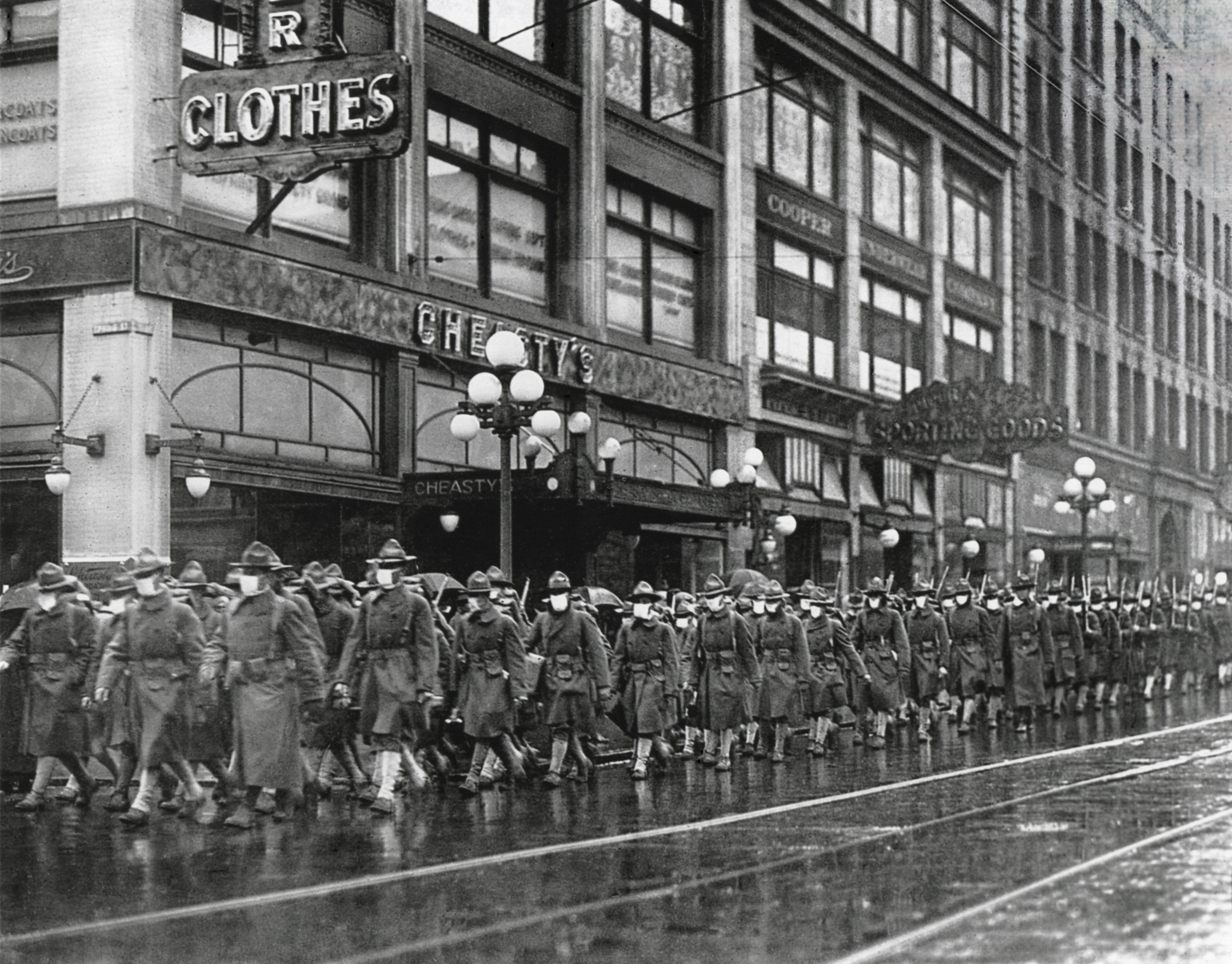
Instructional Goals covered in this module:
- Understand the concept of pandemics.
- Apply a syndemic framework to compare and contrast the COVID-19 Pandemic and 1918 Flu Pandemic in terms of spread, diagnosis, treatment, control, and impact on endemics.
- Examine how human behavior influences the emergence and spread of novel diseases using a One Health approach.
-
Students mustView
Read the content under the heading "Contagious & Infectious". (1 minute)
Merriam-Webster, Inc.
-
Students mustView
Read the entire page. (2 minutes)
Everyday Health
-
Students mustView
Read the entire page (Phases 1 to 6, Post peak period, and post pandemic period). (5 minutes)
WHO
-
Students mustView
Read the content under the headings "2. Syndemic theory," and "3. Evidence of the syndemic nature of the SARS-CoV-2 pandemic." (16 minutes)
Elsevier
-
Students mustView
Read the content under the headings "2.2: Influenza Pandemic: Environments and Behaviors," and "3.2: Coronavirus Pandemic: Environments and Behaviors." (20 minutes)
NCBI
-
Students mustView
Read the entire page. (4 minutes)
Princeton University
-
-
Students mustViewStart discussions: 1
In this activity, you will discuss the role of human behavior in the spread of infectious diseases.
Instructions
1. Reflect on the topic using initial readings in the course, previous knowledge, or other sources that have expanded your knowledge.
2. Prepare a 500 - 650 word paper to summarize your reflections. You should:
a. Discuss one past or present infectious disease pandemic/epidemic that occurred in a specific country.
b. Implement a One Health approach to explain how human behaviors influenced the spread of this infectious disease; and
c. Identify the different sectors and areas of expertise that should be involved in public health interventions to respond to the disease.N.B. You will use the country you selected for this activity as your country of focus throughout the remaining models. Choose wisely!
3. You must cite and reference at least two credible sources. All references should follow the 7th Edition APA formatting. For further instructions, see the resource on the Himmelfarb Health Sciences Library: APA citation resource (N.B. references are excluded from word counts).
4. The paper should be written in Times New Roman, point 12, and double spaced. Submit the paper along with a cover page and reference.
5. To submit your work, click on the “Add a new discussion topic” button under this post and paste your work in the “message” box.OPTIONAL Step 6: Interact (10 minutes)
If you would like to, you can reply to your peers' posts in a respectful and professional manner. Ensure that your post engages your peers' ideas by including a reflection on their comments, sharing ideas of other potential difficulties and parties involved, or asking thought-provoking questions. If a peer comments on your posting, please reply. To post a reply, click “Reply” on a particular discussion, write your feedback and then click on “Post to forum.”
-
Quiz: Module 1
To access the quiz, click on the name of the quiz provided above. On the following screen, click the attempt quiz button to view the case studies and respond to the questions.
TO PASS THIS QUIZ YOU MUST OBTAIN A SCORE OF 80%.
-
Read the entire page and watch the video. (7 minutes)
Gavi, The Vaccine Alliance
-
Read the content on pages 25-27. (8 minutes)
WHO - 2018
-
Watch the video from 37:10 to 41:45 (5 minutes)
UC San Diego-2020
-
Read the entire page. (5 minutes)
The Lancet-2021
-
Read the content under the section "21st Century Challenges in the Caribbean" on pages 13-14 and "Section III - Why Use One Health?" on pages 40-42.
U.W.I.-2017 -
Read the content on pages 22-28.
U.W.I.-2016 -
Read the content under the headings "Human and Animal Interface," "Human and Environment Interface," and "Importance of One Health approach for COVID-19." (12 minutes)
NCBI
-

Instructional Goals covered in this module:
- Explain the differences in the roles, responsibilities, relationships, and collaborations among governments, public health agencies, public health systems, and healthcare providers in high- and low-income countries.
- Integrate components of successful pandemic preparedness and response plans to improve upon existing strategies considering available resources, barriers, and constraints.
-
Students mustView
Read the content under the headings "The policy context of a major crisis" on pages 2-4 and "Strategic insights for policy and governance" on pages 17-18. (13 minutes)
OECD
-
Students mustView
Read all the slides. (5 minutes)
CDC
-
Students mustView
Read the content from the heading "Importance of Robust Public Health Structure" to the end of the article. (7 minutes)
Pan American Journal of Public Health-2020
-
Students mustView
Click on the profiles for Netherlands, Israel, and Taiwan, and read the content under the subheading "Role of government," including the diagrams showing the organization of the healthcare system.
(We strongly recommend reviewing other healthcare systems around the world too and read the full content to obtain a more holistic understanding of health systems internationally.) (7 minutes)The Commonwealth Fund
-
Students mustView
Read the all the content from the heading "Educate and Communicate" to the end of "Pandemic Planning." (8 minutes)
NCBI
-
Students mustView
Read the content under the heading "Introduction" on pages 1-2.
If you have time, it is recommended to read the rest of the document. It provides a detailed report of PAHO's collaborations with other institutions and organizations to respond to the COVID-19 pandemic in Latin America and the Caribbean. (4 minutes)PAHO-2021
-
Read the content under the heading "Introduction" and "Discussion" of the article. (12 minutes)
SpringerNature
-
Read the content under the heading "2. Health Sector Overview" on pages 1-3. (7 minutes)
World Bank
-
Read the entire webpage. (5 minutes)
WHO
-
Read the content under the heading "Roles of primary health care in health emergencies" and "Primary health care and health emergencies: opportunities for action" on pages 4-23. (36 minutes)
World Health Organization
-
Read the entire webpage. (11 minutes)
US National Library of Medicine
-
Read the content under the heading "4. Challenges for International Cooperative Responses to Pandemic Threats" and "5. Patterns of International Policy Responses to Infectious Disease Outbreaks and Pandemics". (12 minutes)
ResearchGate
-
Read the entire article (11 minutes)
BMJ-2021
-
Watch the entire video. (83 minutes)
The University of Queenland
-
Students mustView
Read the content under the heading "3. The Economics of Infectious Disease and Pandemics". (5 minutes)
ResearchGate
-
Students mustView
Read the content in the Introduction under the heading "Legal and Ethical Preparedness for an Influenza Pandemic." (2 minutes)
Journal of Medical Internet Research
-
Students mustView
Read the content under the headings "Background" and "Discussion." (21 minutes)
BMC
-
Students mustView
Read the content under the headings "Discussion", and "Conclusions." (7 minutes)
SpringerNature
-
Students mustView
Read all the content from the heading "Leadership and Governance" to the end of the article. (8 minutes)
The American Journal of Tropical Medicine and Hygiene
-
Students mustView
Read the entire article. (11 minutes)
European Commission
-
Students mustView
Read the content under the headings "Sub-Saharan Africa preparedness for COVID-19" and "Sub-Saharan Africa response to COVID-19" including "Table 1." (13 minutes)
NCBI
-
Students mustView
Read the content on pages 25-27. (8 minutes)
WHO-2018
-
Students mustView
Read the content from the heading "Adequately designed primary health care" up to "Conclusion." (22 minutes)
SpringerNature
-
Students mustViewStart discussions: 1
In this activity, you will identify and compare different regions which had a successful/unsuccessful response to current or past infectious disease pandemic/epidemic.
Instructions
1. Select and compare a current or past infectious disease pandemic/epidemic and identify one country which had a successful response and one country/region which had a failed/unsuccessful response. One of the countries must be the country you selected for module 1 activity.
2. In 1000 - 1200 words, write a reflective essay that:
Breaks down the major weaknesses of the failed response
-
- Explains which action items from the successful response can potentially be applied to improve the failed response
OR - Which action items are unsuitable/unfeasible for that country.
- Explains which action items from the successful response can potentially be applied to improve the failed response
3. You must cite and reference at least three credible sources. All references should follow the 7th Edition APA formatting. For further instructions, see the resource on the Himmelfarb Health Sciences Library: APA citation resource (N.B. references are excluded from word counts)
4.The paper should be written in Times New Roman, point 12, and double spaced. Submit the paper along with a cover page and reference.
5. To submit your work, click on the “Add a new discussion topic” button under this post and paste your work in the “message” box.
6. Evaluate and categorize the work from one of your peers based on items A - F of this rubric. Provide a rationale for the grade you have provided, as well as comments or suggestions for improvement. To post a reply, click “Reply” on a particular discussion, write your feedback and then click on “Post to forum.” You can use the list below as an example:
Item A is .…. because…. My suggestions for improvement are….
Item B is .…. because…. My suggestions for improvement are….
Item C is .…. because…. My suggestions for improvement are….
Item D is .…. because…. My suggestions for improvement are….
Item E is .…. because…. My suggestions for improvement are….
Item F is .…. because…. My suggestions for improvement are…. -
-
Quiz: Module 2
To access the quiz, click on the name of the quiz provided above. On the following screen, click the attempt quiz button to view the case studies and respond to the questions.
TO PASS THIS QUIZ YOU MUST OBTAIN A SCORE OF 80%.
-
Read the content under the heading "Challenges and Recommendations for SIDs." (15 minutes)
Pan American Journal of Public Health-2020
-
Read the entire article. (25 minutes)
SpringerNature
-
Read the entire article. (26 minutes)
Sage Journals
-
Read the entire article. (11 minutes)
SpringerNature
-
Read the entire webpage. (12 minutes)
Indian Journal of Community Medicine
-
Read the content under the headings "South Korea's Successful Three-Phased Response to COVID-19" and "Why the U.S. and U.K. Failed to Tackle the COVID-19 Pandemic?". (7 minutes)
ICU Management Journal Library
-
Read the entire webpage. (15 minutes)
The Lancet Journal
-
Read the content on pages 4-15. (20 minutes)
PAHO
-
Read the sections "Planning and Preparedness," "Response," and "Pandemic Specific Response Arrangements" on pages 9-17. (20 minutes)
London Resilience Partnership
-
Read the entire document up until the heading "National Governments' Responsibility to Protect their own People and Play their Part in Protecting Humankind by Implementing the International Health Regulations". (34 minutes)
The National Academies Press
-
Read the content under the heading "Towards a policy coherence roadmap for a sustainable and inclusive recovery". (60 minutes)
The Organisation for Economic Co-operation and Development
-

Instructional Goals covered in this module:
- Illustrate the similarities and differences in etiology, distribution, pathogenesis, and mutation of SARS-CoV-2 and other types of severe viruses.
-
Students mustView
Read the entire page. (4 minutes)
CDC
-
Students mustView
Read the content under the heading "Discussion." (7 minutes)
NCBI
-
Students mustView
Read from the beginning of the page up until the heading "WHO risk assessment" (9 minutes)
WHO-2020
-
Students mustView
Read the content and watch the video under the headings "What causes a virus to change to a new variant?" and "What impacts do the new variants of the COVID-19 virus have on vaccines?". (5 minutes)
WHO
-
Students mustView
Read the content under the heading "Findings" up until "Bacteria: Broad-Spectrum Antimicrobials Limit Pandemic Potential of Pathogens." (8 minutes)
NCBI
-
Students mustView
Read the entire page until the heading "Approved Treatments." (8 minutes)
CDC
-
Students mustView
Read the sections on the page: Abstract and Zoonotic Disease Emergence, and Human Animal Interface. (11 minutes)
-
Students mustView
Read the page. (4 minutes)
-
Students mustView
Read the content from the heading "Introduction" on page 1 up until the heading "Comparison with other pathogenic coronaviruses" on page 7. (30 minutes)
BMJ-2020
-
Students mustViewStart discussions: 1
In this activity, you will discuss the differences between the COVID-19 pandemic and previous pandemics.
Instructions
- Reflect on the topic using initial readings in the course, previous knowledge, or other sources that have expanded your knowledge.
- Prepare a 500 -650 word paper to summarize your reflections. You should:
- Indicate one major difference between the COVID-19 pandemic and previous pandemics. Examples of differences include but are not limited to:
- Pathogenesis
- Distribution
- Mutation
- Societal impact
- Explain how this difference has contributed to the severity of the COVID-19 pandemic as compared to previous pandemics, using examples.
- You must cite and reference at least two credible sources. All references should follow the 7th Edition APA formatting. For further instructions, see the resource on the Himmelfarb Health Sciences Library: APA citation resource (N.B. references are excluded from word counts).
- The paper should be written in Times New Roman, point 12, and double spaced. Submit the paper along with a cover page and reference.
- To submit your work, click on the “Add a new discussion topic” button under this post and paste your work in the “message” box.
-
OPTIONAL: Interact (10 minutes)
If you would like to, you can reply to your peers' posts in a respectful and professional manner. Ensure that your post engages your peers' ideas by including a reflection on their comments, sharing ideas of other potential difficulties and parties involved, or asking thought-provoking questions. If a peer comments on your posting, please reply. To post a reply, click “Reply” on a particular discussion, write your feedback and then click on “Post to forum.”
-
Quiz: Module 3
To access the quiz, click on the name of the quiz provided above. On the following screen, click the attempt quiz button to view the case studies and respond to the questions.
TO PASS THIS QUIZ YOU MUST OBTAIN A SCORE OF 80%.
-
Watch the video from 21:35 to 24:25 and 30:25 to 37:05. (10 minutes)
UC San Diego-2020
-
Read the entire article. (23 minutes)
James M. Hughes, Section Editor and Mary E. Wilson
-
Read the content under the headings "Introduction" and "Discussion". (8 minutes)
Journal of Medical Internet Research
-
Read the first 2 introductory paragraphs and the content under the heading "Discussion." (12 minutes)
CDC
-
Read the content under the heading "Discussion." (7 minutes)
NCBI
-

Instructional Goals covered in this module:
Determine the suitability of different types of testing assays for pandemic screening programs based on the availability of resources and biological, procedural, logistical, financial, ethical, cultural, and analytical constraints. - Evaluate different types of epidemiologic surveillance methods (routine, active, syndromic) and strategies (contact tracing, case reporting, etc.) for strengths and weaknesses in the warning, prevention, and control of infectious diseases at different levels of society (individual, local, national, international).
-
-
Students mustView
Read the content under the heading "Critical Areas for Consideration" up until the subheading "Role of Government and Public-Private Entities in Expanding POC Testing" on pages 7 - 12. (18 minutes)
The National Academies of Sciences, Engineering and Medicine
-
Students mustView
Read the content under the heading "Challenges to diagnostic preparedness." (16 minutes)
US National Library of Medicine
-
Students mustView
Read the content under the heading "I. Introduction", "II. Process", "III. Context: The Politics of Surveillance", "IV. Inequalities in Health", "V. Challenges in Governance", and ""VI. Data Protection. (40 minutes)
The Social Science Research Council
-
Students mustView
Read the entire article. (37 minutes)
Bioethics
-
Students mustView
Read the content under the heading "Introduction", "Stochastic model for controlled testing", "Results", and "Discussion". (30 minutes)
Scientific Reports
-
Students mustView
Read the entire webpage. (13 minutes)
The BMJ
-
Students mustView
Read the entire document. (12 minutes)
Center for Disease Control and Prevention
-
Students mustViewStart discussions: 1
In this activity, you will discuss components of an infectious disease screening strategy that will be appropriate for a particular group of individuals.
Instructions
- Reflect on the topic using initial readings in the course, previous knowledge, or other sources that have expanded your knowledge.
- Prepare a 500 - 650 word paper to summarize your reflections. Based on the country you selected in module 1 activity, you should:
- Indicate three components of an infectious disease screening strategy that will be appropriate for a particular group of individuals — ensuring to consider test availability in the country you have selected.
- Provide explanations to support your proposals.
- You must cite and reference at least two credible sources. All references should follow the 7th Edition APA formatting. For further instructions, see the resource on the Himmelfarb Health Sciences Library: APA citation resource (N.B. references are excluded from word counts).
- The paper should be written in Times New Roman, point 12, and double spaced. Submit the paper along with a cover page and reference.
- To submit your work, click on the “Add a new discussion topic” button under this post and paste your work in the “message” box.
- OPTIONAL: Interact (10 minutes)
If you would like to, you can reply to your peers' posts in a respectful and professional manner. Ensure that your post engages your peers' ideas by including a reflection on their comments, sharing ideas of other potential difficulties and parties involved, or asking thought-provoking questions. If a peer comments on your posting, please reply. To post a reply, click “Reply” on a particular discussion, write your feedback and then click on “Post to forum.”
-
Watch the video from 9:00 to 11:15. (3 minutes)
UC San Diego
-
Students mustView
Watch the video under the heading "Webinar" from time 7:15 to 14:00. (7 minutes)
Center for Disease Control and Prevention
-
Students mustView
Read the content under the heading "Introduction", "The Use of Surveillance Systems", "Opportunities to Enhance the Effectiveness of Surveillance Systems", and "Conclusions". (29 minutes)
Annual Review of Public Health
-
Students mustView
Read the content under the heading "Essential surveillance for COVID-19" and Table 1. Type of Surveillance and Surveillance Sites for COVID-19 on pages 2-4. (10 minutes)
World Health Organization
-
Students mustView
Read the entire webpage. (8 minutes)
Center for Disease Control and Prevention
-
Students mustView
Read the content under the heading "Introduction", "Results", and "Conclusion". (33 minutes)
Journal of Infection and Public Health
-
Quiz: Module 4
To access the quiz, click on the name of the quiz provided above. On the following screen, click the attempt quiz button to view the case studies and respond to the questions.
TO PASS THIS QUIZ YOU MUST OBTAIN A SCORE OF 80%.
-

Instructional Goals covered in this module:
Discuss the benefits, limitations, and challenges of applying infectious disease modeling to answer public health questions about disease transmission and control processes for pandemic preparedness and response.
-
Students mustView
Read the content under the heading "What makes modeling efforts successful: past examples." (16 minutes)
The Lancet
-
Students mustView
Read the content under the heading "The role of modeling in current pandemic response policy." (6 minutes)
Public Library of Science
-
Students mustView
Watch the entire video. (4 minutes)
WHO
-
Students mustView
Read the entire article. (12 minutes)
JAMA Network
-
Students mustView
Read the content under the heading "Models in Pandemics." (23 minutes)
British Medical Journal
-
Students mustViewRead the content under the headings "1. Introduction," "2. Current role and potential opportunities for modeling in public health decision-making," and "Linking model results to public health policy around infectious diseases. (11 minutes)
NCBI -
Students mustViewStart discussions: 1
In this activity, you will evaluate the use of model-based approaches to improve pandemic preparedness and response.
Instructions
-
Reflect on the topic using initial readings in the course, previous knowledge, or other sources that have expanded your knowledge.
-
Prepare a 500 - 650 word paper to summarize your reflections. You should:
-
-
Evaluate whether the use of model-based approaches has contributed significantly to improving pandemic preparedness and response efforts based on two real-life scenarios.
-
-
You must cite and reference at least two credible sources. All references should follow the 7th Edition APA formatting. For further instructions, see the resource on the Himmelfarb Health Sciences Library: APA citation resource (N.B. references are excluded from word counts).
-
The paper should be written in Times New Roman, point 12, and double spaced. Submit the paper along with a cover page and reference.
-
To submit your work, click on the “Add a new discussion topic” button under this post and paste your work in the “message” box.
-
OPTIONAL: Interact (10 minutes)
If you would like to, you can reply to your peers' posts in a respectful and professional manner. Ensure that your post engages your peers' ideas by including a reflection on their comments, sharing ideas of other potential difficulties and parties involved, or asking thought-provoking questions. If a peer comments on your posting, please reply. To post a reply, click “Reply” on a particular discussion, write your feedback and then click on “Post to forum."
-
-
Quiz: Module 5
To access the quiz, click on the name of the quiz provided above. On the following screen, click the attempt quiz button to view the case studies and respond to the questions.
TO PASS THIS QUIZ YOU MUST OBTAIN A SCORE OF 80%.
-
This model was developed by modelers at the Imperial College of London. If you have time, you may explore the model by adjusting different parameters and observing how the predicted outcomes vary to enhance your understanding of how mathematical models can be used during pandemics.
ExploSYS GmbH
-
Instructional Goals covered in this module:
- Explain the mechanism of action and effects of different COVID-19 vaccines and how they are tested for safety, efficacy, and effectiveness.
- Evaluate the public health issues that arise when vaccines are rapidly developed to respond to pandemic situations.
-
Students mustMark as done
Read the entire page. (6 minutes)
WHO
-
Students mustMark as done
Read the entire webpage. (6 minutes)
U.S. Department of Health and Human Services
-
Students mustMark as done
Click on the headings "How does a vaccine work?" "How do vaccines protect individuals and communities?" "Who can get vaccinated?" and "What is in a vaccine?". (6 minutes)
WHO
-
Students mustMark as done
Read the entire webpage. (3 minutes)
Gavi Vaccine Alliance
-
Students mustMark as done
Click on the headings "How are vaccines developed and tested?" and "How does WHO help ensure vaccine safety?". (3 minutes)
WHO
-
Students mustMark as done
Read the content under the heading "6. Study designs" on pages 18-22. (18 minutes)
World Health Organization
-
Students mustMark as done
Read the content from the heading "How safe are the COVID-19 vaccines?" on Slide 9 until the end of Slide 15.
WHO - 2020
-
Students mustMark as done
Read the content under the heading "Abstract" and "Discussion". (8 minutes)
PLOS Biology
-
Students mustMark as done
Read the introductory content and the content under the headings "Results" and "Discussion." (12 minutes)
Oxford Academic
-
Students mustMark as done
Read the content from "Table 4. Key considerations to implement best practice for mass vaccination campaigns" on page 6 to the end of page 7. (9 minutes)
WHO
-
Students mustView
Read the content from the heading ¨Introduction¨ including Table 1. Values Framework, ¨Why a Values Framework?¨, ¨Orientation to the Framework¨ and ¨From Values to Priority Groups¨ on pages 3, 4,5, 8, and 9. (16 minutes)
WHO
-
Students mustViewStart discussions: 1
In this activity, you will discuss the balance of ethical concerns and rapid vaccine development.
Instructions- Select one of the following threads regarding the balance of ethical concerns and rapid vaccine development:
- In a pandemic, rapid vaccine development is essential and outweighs any potential ethical concerns that may arise.
- There are equal levels of risks and benefits to vaccines that are rapidly developed during a pandemic.
- Vaccines can be developed rapidly but should not be approved for public use until extensive testing has been performed on all age groups and categories of individuals to eliminate potential safety concerns.
- The ethical concerns and safety and efficacy issues associated with rapidly developed vaccines outweigh potential benefits in a pandemic.
- Vaccines should not go into development until some time after the pandemic has begun in order to be effective against mutated strains of the virus.
- Prepare an argument in support of or against the statement presented in your selected threads, using scientific evidence to support your stance.
- You must cite and reference at least two credible sources. All references should follow the 7th Edition APA formatting. For further instructions, see the resource on the Himmelfarb Health Sciences Library: APA citation resource (N.B. references are excluded from word counts).
- The paper should be written in Times New Roman, point 12, and double spaced. Submit the paper along with a cover page and reference.
- To submit your work, click on the “Add a new discussion topic” button under this post and paste your work in the “message” box.
-
OPTIONAL: Interact (10 minutes)
If you would like to, you can reply to your peers' posts in a respectful and professional manner. Ensure that your post engages your peers' ideas by including a reflection on their comments, sharing ideas of other potential difficulties and parties involved, or asking thought-provoking questions. If a peer comments on your posting, please reply. To post a reply, click “Reply” on a particular discussion, write your feedback and then click on “Post to forum.”
-
Click on different countries in the table titled "Trials & Approvals by Country" to learn which vaccines have been approved for use in different countries globally.
McGill University
-
Students mustView
Read the content under the heading "Section 3B: Scope" up until the heading "Section 3E: Models of Vaccine Hesitancy: Vaccine Hesitancy Determinants" on pages 8-11. (7 minutes)
The SAGE Vaccine Hesitancy Working Group
-
Students mustView
Read the entire document. (12 minutes)
The SAGE Vaccine Hesitancy Working Group
-
Students mustView
Read the content on pages 10-18. (15 minutes)
PAHO-2020
-
Students mustView
Read the entire presentation. (6 minutes)
WHO
-
Students mustViewStart discussions: 1
In this activity, you will identify and discuss public health strategies and vaccination.
Instructions- Reflect on the topic using initial readings in the course, previous knowledge, or other sources that have expanded your knowledge.
- Prepare a 500 -650 word paper to summarize your reflections. You should:
- Identify public health strategies that can potentially be implemented to increase the uptake of vaccines for a particular pandemic/epidemic in a specific country/region.
- Discuss these strategies in terms of potential ethical concerns, effectiveness, and public reaction.
- You must cite and reference at least two credible sources. All references should follow the 7th Edition APA formatting. For further instructions, see the resource on the Himmelfarb Health Sciences Library: APA citation resource (N.B. references are excluded from word counts).
- The paper should be written in Times New Roman, point 12, and double spaced. Submit the paper along with a cover page and reference.
- To submit your work, click on the “Add a new discussion topic” button under this post and paste your work in the “message” box.
-
OPTIONAL: Interact (10 minutes)
If you would like to, you can reply to your peers' posts in a respectful and professional manner. Ensure that your post engages your peers' ideas by including a reflection on their comments, sharing ideas of other potential difficulties and parties involved, or asking thought-provoking questions. If a peer comments on your posting, please reply. To post a reply, click “Reply” on a particular discussion, write your feedback and then click on “Post to forum.”
-
Quiz: Module 6
To access the quiz, click on the name of the quiz provided above. On the following screen, click the attempt quiz button to view the case studies and respond to the questions.
TO PASS THIS QUIZ YOU MUST OBTAIN A SCORE OF 80%.
-
Read the Flow Diagram (6 minutes)
WHO-2021 -
Read the content under the headings “Is all the information published in social media true?”, “Where can I find accurate information on vaccines?”, “What are anti-vaccination movements?” “What are the main doubts raised by anti-vaccination groups and what are the facts?” “How can risk aversion be overcome?”, “What are the facts about the development of the COVID-19 vaccines?” and “Why trust in the safety of the vaccines? (18 minutes)
PAHO-2021 -
Read the entire article. (31 minutes)
US National Library of Medicine
-
Instructional Goals covered in this module:
- Discuss the local and international impacts of COVID-19 on human rights, rule of law, freedom of expression, and media freedom.
- Analyze the ethical issues and tensions faced by governments, healthcare systems, and physicians that must be considered during a pandemic, and the responses to these issues.
-
Students mustView
Read the paragraph under the heading "They put people at the centre and produce better outcomes" on page 2, the box titled "Spotlight: Human Rights at the Frontline in the Fight Against COVID-19" on page 4, and the content under the heading "Six key human rights messages" on pages 7-17. (30 minutes)
United Nations
-
Students mustView
Read the content under the headings "Impact of coronavirus on media freedom" on pages 2-3 and "Wider implications of media freedom restrictions" on page 5. (5 minutes)
European Parliament
-
Students mustViewStart discussions: 1
In this activity, you will evaluate the legal impacts of epidemics/pandemics on a particular country/region.
Instructions- Reflect on the topic using initial readings in the course, previous knowledge, or other sources that have expanded your knowledge.
- Prepare a 500 - 650 word paper to summarize your reflections. You should:
- Evaluate the legal impacts of one or more epidemics/pandemics in a particular country/region on different groups of individuals.
- Consider the effect of the epidemic/pandemic on human rights, rule of law, and freedom of expression, indicating which groups were impacted and the extent/severity of the impact.
- You must cite and reference at least two credible sources. All references should follow the 7th Edition APA formatting. For further instructions, see the resource on the Himmelfarb Health Sciences Library: APA citation resource (N.B. references are excluded from word counts).
- The paper should be written in Times New Roman, point 12, and double spaced. Submit the paper along with a cover page and reference.
- To submit your work, click on the “Add a new discussion topic” button under this post and paste your work in the “message” box.
-
OPTIONAL: Interact (10 minutes)
If you would like to, you can reply to your peers' posts in a respectful and professional manner. Ensure that your post engages your peers' ideas by including a reflection on their comments, sharing ideas of other potential difficulties and parties involved, or asking thought-provoking questions. If a peer comments on your posting, please reply. To post a reply, click “Reply” on a particular discussion, write your feedback and then click on “Post to forum.”
-
Read the entire webpage. (8 minutes)
United Nations
-
Read the entire document. (32 minutes)
European Parliament
-
Students mustView
Read the entire article. (33 minutes)
Springer Nature
-
Students mustView
Read the content under the headings "7. Obligations related to medical interventions for the diagnosis, treatment, and prevention of infectious disease" on pages 28-29 and "9. Emergency Use of Unproven Interventions Outside of Research" on pages 35-37. (12 minutes)
WHO
-
Students mustView
Read the entire article. (8 minutes)
Elsevier
-
Students mustView
Read the content from under the heading "Research" on pages 4-7. (8 minutes)
PAHO
-
Students mustView
Read the content under the headings "Abstract" and "Responsibility of governments: balancing individual rights and the collective good." (10 minutes)
Scandinavian Journal of Public Health
-
Students mustView
Read from the heading "3. What is the basis for deciding who should have priority access to scarce resources?" to the end of the page. (10 minutes)
WHO
-
Quiz: Module 7
To access the quiz, click on the name of the quiz provided above. On the following screen, click the attempt quiz button to view the case studies and respond to the questions.
TO PASS THIS QUIZ YOU MUST OBTAIN A SCORE OF 80%.
-
Read the entire article. (24 minutes)
NCBI
-
Read the entire document. (4 minutes)
PAHO
-
Read the content from the heading "II. Use of existing research repositories for public health activities" until the heading " V. Conclusion." (17 minutes)
Oxford Academy
-
Read the content under the heading "Ethical Values for Rationing Health Resources in a Pandemic", "Who Gets Health Resources in a Covid-19 Pandemic?", "Implementing Rationing Policies", and "Conclusions". (15 minutes)
The England Journal of Medicine
-
Read the content under the heading "Introduction", "Results", and "Conclusions". (20 minutes)
US National Library of Medicine
-
Instructional Goals covered in this module:
- Use appropriate communication strategies and styles for different audiences to effectively communicate public health information, promote awareness, counter misinformation, and advocate for policies and programs during a pandemic.
-
Students mustView
Read the content under the headings "I. Key Concepts of Risk Communication" on pages 1-2 and "II. Overall Communication Goals for a COVID-19 Outbreak" on page 3. (7 minutes)
PAHO/WHO
-
Students mustView
Read the entire article. (22 minutes)
Organisation for Economic Co-operation and Development
-
Students mustView
Read the content under the headings "Abstract" and "Pandemic communications: foundations and recommendations." (31 minutes)
Humanities & Social Sciences Communications
-
Students mustView
Read the content on pages 45-56. (23 minutes)
PAHO
-
Students mustViewStart discussions: 1
Flyer/Poster Outline
In this activity, you will create a poster with key points about a pandemic-related topic and countering misinformation for a specific audience.
Instructions- For your flyer/poster:
- Select 1 of the audiences below and create an attractive 1 page poster (8.5” x 11” in size) with relevant graphics that will be used to disseminate key points about a pandemic-related topic
- Elderly
- Adolescents
- Vulnerable Population
- Counter at least one misinformation surrounding the topic you have selected.
- Provide justification for the format and language used and a short rationale explaining how the techniques and strategies learned in the course were applied.
- You must cite and reference at least two credible sources on your poster. All references should follow the 7th Edition APA formatting. For further instructions, see the resource on the Himmelfarb Health Sciences Library: APA citation resource
- To submit your work, click on the “Add a new discussion topic” button under this post and paste your work in the “message” box. To share your flyer/poster, you can upload it to google drive, or any other service of your choice. (Paste the link here and make sure that it is visible for people with the link). If the recording was made in a language other than English, state the language in the file’s name.
- Evaluate and categorize the work from one of your peers based on items A - F of this rubric. Provide a rationale for the grade you have provided, as well as comments or suggestions for improvement. To post a reply, click “Reply” on a particular discussion, write your feedback and then click on “Post to forum.” You can use the list below as an example:
Item A is .…. because…. My suggestions for improvement are….
Item B is .…. because…. My suggestions for improvement are….
Item C is .…. because…. My suggestions for improvement are….
Item D is .…. because…. My suggestions for improvement are….
Item E is .…. because…. My suggestions for improvement are….
Item F is .…. because…. My suggestions for improvement are…. -
This resource provides a list of activities that should be performed in developing an effective risk communication strategy for a public health crisis. If you have time, please review the steps outlined in this list to understand the components of a national risk communication plan. (13 minutes)
PAHO/WHO
-
Students mustView
Read the entire article. (15 minutes)
Taylor & Francis Online
-
Students mustView
Read the content under the headings "Advocacy to increase vaccine acceptance" and "Conclusion." (3 minutes)
Taylor & Francis Online
-
-
Students mustView
Read the content under the heading "7.5 Steps for effective humanitarian health advocacy." (21 minutes)
WHO
-
Quiz: Module 8
To access the quiz, click on the name of the quiz provided above. On the following screen, click the attempt quiz button to view the case studies and respond to the questions.
TO PASS THIS QUIZ YOU MUST OBTAIN A SCORE OF 80%.
-
This page provides an overview of a campaign in Barbados to advocate for mental health and well-being during a health crisis such as the COVID-19 pandemic, and destigmatize mental health services. If you have time, please review this summary. (3 minutes)
PAHO
-
Instructional Goals covered in this module:
- Outline strategic solutions to achieve health equity and reduce the burden of disease on specific vulnerable populations during a pandemic.
-
Students mustView
Watch the video from minutes 21:20 to 27:30 and from 37:00 to 44:20. (14 minutes)
Center for Advanced Studies - South Eastern Europe
-
Students mustView
Read the entire webpage. (19 minutes)
The BMJ
-
Students mustView
Read the content under the heading "Introduction", "Age, Morbidity, and Biology", and Social Contact, Living Arrangements, Socioeconomic Status, and Age". (12 minutes)
Public Policy & Aging Report
-
Students mustView
Read the content under the heading "Introduction", "Findings", and "Discussion". (28 minutes)
Global Health Promotion
-
Students mustView
Read the content under the heading "Health Effects and the Socioeconomic Impact of COVID-19 and its Containment Measures" on pages 7-12. (12 minutes)
World Health Organization
-
Students mustView
Read the entire article. (11 minutes)
AJPM
-
Students mustView
Read the content under the heading "Abstract," "Introduction," and "Conclusion." (11 minutes)
World Journal of Psychiatry
-
Students mustView
Read the content under the heading "Vulnerable Population." (4 minutes)
International Journal of Caring Sciences
-
Students mustView
Read the content under the heading "Challenges for health systems and for access to healthcare for women, children, and adolescents." on pages 6 to 9. (11 minutes)
UNICEF
-
Students mustView
Read the content from the heading "Ethnic Disparities" up until the heading "Limitations." (22 minutes)
World Journal of Psychiatry
-
Students mustViewStart discussions: 1
In this activity, you will assess countries that experience inequitable access to healthcare services during a pandemic/epidemic and the effectiveness of response efforts that were implemented?
Instructions- Based on the country you have selected in module 1 activity, In 1000 - 1200 words, write a reflective essay that:
- Indicates which populations in that country experienced inequitable access to healthcare services during a particular pandemic/epidemic. i.e, People with substance use, mental health disorders, or both.
- Assesses the impact of the effectiveness of response efforts that were implemented?
- You must cite and reference at least three credible sources. All references should follow the 7th Edition APA formatting. For further instructions, see the resource on the Himmelfarb Health Sciences Library: APA citation resource (N.B. references are excluded from word counts).
- The paper should be written in Times New Roman, point 12, and double spaced. Submit the paper along with a cover page and reference.
- To submit your work, click on the “Add a new discussion topic” button under this post and paste your work into the “message” box.
- Evaluate and categorize the work from one of your peers based on items A - F of this rubric. Provide a rationale for the grade you have provided, as well as comments or suggestions for improvement. To post a reply, click “Reply” on a particular discussion, write your feedback and then click on “Post to forum.” You can use the list below as an example:
Item A is .…. because…. My suggestions for improvement are….
Item B is .…. because…. My suggestions for improvement are….
Item C is .…. because…. My suggestions for improvement are….
Item D is .…. because…. My suggestions for improvement are….
Item E is .…. because…. My suggestions for improvement are….
Item F is .…. because…. My suggestions for improvement are…. -
Students mustView
Watch the entire video. (4 minutes)
Sustainability Science Education
-
Students mustView
Read the content in "Chapter 1: Understanding Systems Thinking" on pages 1-5. (14 minutes)
Himmelfarb Health Sciences Library: The George Washington University
-
Students mustViewStart discussions: 1
In this activity you will apply a system thinking approach to determine a population's level of risk during a pandemic.
Instructions1. Select one of the three populations presented below and create a 15 minutes powerpoint presentation that applies a system thinking approach to determine the population’s level of risk during pandemics, indicating the contributing factors’ risks.
- People with substance use problems
- Refugees and displaced populations
- Incarcerated persons
- LGBTQ community
2. Use the systems thinking approach to develop strategic solutions to address the issues identified and mitigate the burden of disease on this population.
3. You must cite and reference at least three credible sources. All references should follow the 7th Edition APA formatting. For further instructions, see the resource on the Himmelfarb Health Sciences Library: APA citation resource (N.B. references are excluded from word counts).
4. To submit your work, click on the “Add a new discussion topic” button under this post and paste your work in the “message” box.
5. Evaluate and categorize the work from one of your peers based on items A - F of this rubric. Provide a rationale for the grade you have provided, as well as comments or suggestions for improvement. To post a reply, click “Reply” on a particular discussion, write your feedback and then click on “Post to forum.” You can use the list below as an example:
Item A is .…. because…. My suggestions for improvement are….
Item B is .…. because…. My suggestions for improvement are….
Item C is .…. because…. My suggestions for improvement are….
Item D is .…. because…. My suggestions for improvement are….
Item E is .…. because…. My suggestions for improvement are….
Item F is .…. because…. My suggestions for improvement are…. -
Quiz: Module 9
To access the quiz, click on the name of the quiz provided above. On the following screen, click the attempt quiz button to view the case studies and respond to the questions.
TO PASS THIS QUIZ YOU MUST OBTAIN A SCORE OF 80%.
-
Read the content under the headings "How Systems Approaches can Help" and "Conclusions." (12 minutes)
NCBI
-
Read the content under the heading "Systems thinking and complexity," "Systems thinking and public health," and "Systems thinking and public health ethics" up until the subheading "What public health ethics can do for systems thinking." (26 minutes)
SpringerNature
-
This resource provides step-by-step examples of applying a systems thinking approach to four (4) different healthcare-related problems in "Chapter 9: Putting It All Together: Case Scenarios" on pages 90-104. You may review one or more of the case studies to help you understand how to implement systems thinking in addressing issues. (Maximum Time: 47 minutes)
Himmelfarb Health Sciences Library: The George Washington University
-

To take the final exam, you must complete all quizzes and complete all the required activities. The final exam consists of 50 questions, and you will have 55 minutes to complete it. When the time is over, you will have two minutes to submit your attempt before it expires, and your progress is discarded. You will not be able to answer additional questions in the grace period.
To access the exam, click on the name of the exam provided above. On the following screen, click the Attempt Quiz button to respond to the questions.
-
Final Exam Quiz
-
-
 In this section, you can provide feedback about this course to help us make NextGenU.org better. Once evaluations are completed, you will be able to download your certificate of completion.
-
Course Evaluation Questionnaire
-
Self Evaluation Questionnaire
-
-
-
Students mustMark as done
-
Students mustMark as done
-
Students mustMark as done
-
-