

Section: Module 4: Hypothesis Testing | Biostatistics | NextGenU.org
-
Competencies covered in this module:

- Describe preferred methodological alternatives to commonly used statistical methods when assumptions are not met.
- Apply common statistical methods for inference.
- Apply descriptive and inferential methodologies according to the type of study design for answering a particular research question.
-
Module 4: Lesson 1: Principles of Hypothesis Testing
Student Learning Objectives:
Upon completion of this lesson, you will be able to:
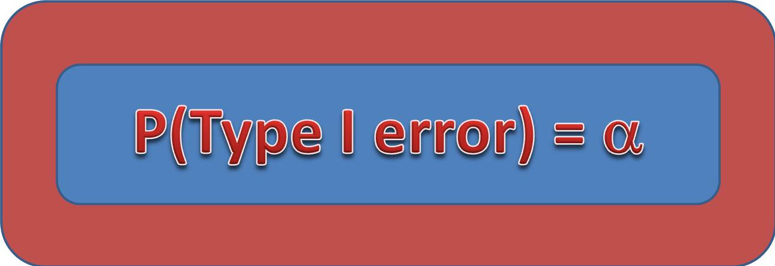
- Reinforce understanding of probability distributions in the context of hypothesis testing, especially in drawing conclusions and types of errors.
- Distinguish types of explanatory and response variables.
- Understand the relationship between confidence intervals and hypothesis testing.
Approximate time required to complete the readings (at 144 words/minute) and assignments for this module: 1 hour.
Required Learning Resources and Activities
-
Students mustView
- Read the web page, as well as the content of sections S.3.1 to S.3.3. Access sections S.3.1, "Hypothesis Testing (Critical value approach)", S.3.2, "Hypothesis Testing (P-Value Approach)", and S.3.3, "Hypothesis Testing: Examples" by clicking on the titled links found on the left side of the web page.
- Reinforce understanding of probability distributions in the context of hypothesis testing, especially in drawing conclusions and types of errors.
-
Students mustView
- Read the web page. Then, on the left-hand side of the web page, click on the link titled "Standard" found under the heading "4. Type I and Type II Errors". Read the content of that web page.
- Reinforce understanding of probability distributions in the context of hypothesis testing, especially in drawing conclusions and types of errors.
-
Students mustView
- Read the entire web page.
- Distinguish types of explanatory and response variables.
-
Students mustView
- Read the entire web page.
- Distinguish types of explanatory and response variables.
-
Students mustView
- Read the entire web page.
- Understand the relationship between confidence interval and hypothesis testing.
-
Quiz: Module 4: Lesson 1
To access the quiz, click on the name of the quiz provided above. On the following screen, click the "Preview quiz now" button to respond to the questions.
TO PASS THIS QUIZ, YOU MUST OBTAIN A SCORE OF 80%
-
- Read from the beginning of the article to the beginning of the section titled “Question 1. Is there a difference between groups or data sets that are unpaired (parallel or independent)?”.
-
Module 4: Lesson 2: Applications of Hypothesis Testing
Student Learning Objectives:
Upon completion of this lesson, you will be able to:
- Understand and apply hypothesis tests for a single mean and a single proportion as well as for two means (independent and paired/matched samples), and understand the chi-squared test and ANOVA.
- Understand inference, estimation, and the basics of hypothesis testing.
- Understand implications of multiple testing and Bonferroni correction.
- Understand and be able to correctly interpret p-values.
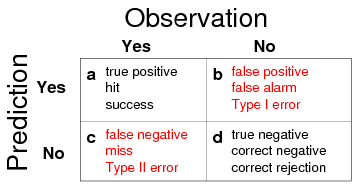
- Understand the importance and implications of Type I and Type II errors.
Approximate time required to complete the readings (at 144 words/minute) and assignments for this module: 5 hours.
Required Learning Resources and Activities
-
Students mustView
- Download the PDF version of the text by clicking on the appropriate link. Then, in Chapter 9, "Hypothesis Testing with One Sample", read the introductory page as well as sections 9.1 to 9.5 (pages 505–530).
- Understand and apply hypothesis tests for a single mean and a single proportion as well as for two means (independent and paired/matched samples), and understand chi-squared test and ANOVA.
-
Students mustView
- Download the PDF version of the text by clicking on the appropriate link. Then, in Chapter 10, "Hypothesis Testing with Two Samples", read sections 10.1 and 10.2 (pages 568–579). Work through the exercises to strengthen your understanding.
- Understand and apply hypothesis tests for a single mean and a single proportion as well as for two means (independent and paired/matched samples), and understand chi-squared test and ANOVA.
-
Students mustView
- Download the PDF version of the text by clicking on the appropriate link. Then, in Chapter 10, "Hypothesis Testing with Two Samples", read section 10.3 to the end of Chapter 10 (pages 579–590). Work through the exercises to strengthen your understanding.
- Understand and apply hypothesis tests for a single mean and a single proportion as well as for two means (independent and paired/matched samples), and understand chi-squared test and ANOVA.
-
Students mustView
- Read the entire web page.
- Understand and apply hypothesis tests for a single mean and a single proportion as well as for two means (independent and paired/matched samples), and understand chi-squared test and ANOVA.
-
Students mustView
- Read the web page, as well as the entire content of sections 10.1 (Introduction to Analysis of Variance), 10.2 (A Statistical Test for One-Way ANOVA), 10.2.1 (ANOVA Assumptions), 10.2.2 (The ANOVA Table), 10.3 (Multiple Comparisons), 10.4 (Two-Way ANOVA), and 10.5 (Summary). Access each section in Chapter 10 by clicking on the titled links found on the left side of the web page under the heading "Lesson 10: Introduction to ANOVA".
- Understand and apply hypothesis tests for a single mean and a single proportion as well as for two means (independent and paired/matched samples), and understand chi-squared test and ANOVA.
-
Students mustView
- Read pages 6.1-1–6.1-14 and 6.1-31–6.1-34.
- Understand inference, estimation, and the basics of hypothesis testing.
-
Students mustView
- Read pages 6.2-1–6.2-7 and 6.2-11–6.2-14.
- Understand inference, estimation, and the basics of hypothesis testing.
-
Students mustView
- Read the entire article.
- Understand implications of multiple testing and Bonferroni correction.
-
Students mustView
- Read the entire article.
- Understand and be able to correctly interpret p-values.
-
Students mustView
- Read the entire article.
- Understand the importance and implications of Type I and Type II errors.
-
Quiz: Module 4: Lesson 2
To access the quiz, click on the name of the quiz provided above. On the following screen, click the "Preview quiz now" button to respond to the questions.
TO PASS THIS QUIZ, YOU MUST OBTAIN A SCORE OF 80%
-
Module 4: Lesson 3: Power and Sample Size
Student Learning Objectives:
Upon completion of this lesson, you will be able to:
- Understand factors that affect study power and sample size requirements, and how they impact study design.
Approximate time required to complete the readings (at 144 words/minute) and assignments for this module: 2 hours.
Required Learning Resources and Activities
-
-
Students mustView
- Read the entire article.
- Understand factors that affect study power and sample size requirements, and how they impact study design.
-
Quiz: Module 4: Lesson 3
To access the quiz, click on the name of the quiz provided above. On the following screen, click the "Preview quiz now" button to respond to the questions.
TO PASS THIS QUIZ, YOU MUST OBTAIN A SCORE OF 80%
-
- Read the entire article.
-
- Read the entire article.
-
- Read the entire article.
-
Module 4: Lesson 4: Nonparametric Tests
Student Learning Objectives:
Upon completion of this lesson, you will be able to:
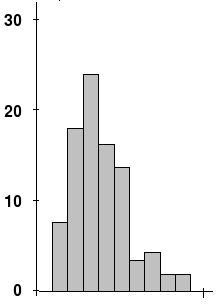
- Summarize and describe non-parametric tests and understand the conditions under which they are applied.
- Be able (1) to apply appropriate hypothesis tests to variable types in order to explore relationships and (2) to draw conclusions based on such hypothesis testing and to interpret p-values.
Approximate time required to complete the readings (at 144 words/minute) and assignments for this module: 1 hour.
Required Learning Resources and Activities
-
Students mustView
- Read the web page. Then, click on pages 2 through 8 and read the content of each page.
- Summarize and describe nonparametric tests and understand the conditions under which they are applied.
-
Students mustView
- Read the entire article.
- Summarize and describe non-parametric tests and understand the conditions under which they are applied.
-
Students mustView
- Read the entire article.
- Summarize and describe nonparametric tests and understand the conditions under which they are applied.
-
Quiz: Module 4: Lesson 4
To access the quiz, click on the name of the quiz provided above. On the following screen, click the "Preview quiz now" button to respond to the questions.
TO PASS THIS QUIZ, YOU MUST OBTAIN A SCORE OF 80%
-
- Scroll down and read the section "Power of Study". This section outlines "How to Choose an Appropriate Statistical Test" as well as "Common problems faced by researchers in any trial and how to address them". The rest of this article is considered optional reading.
-
- Read the web page.
-
Step 1: Read this paragraph about cancer screening tests.
Cancer screening is an important part of secondary prevention in public health. If a patient receives a positive result on a relatively low-cost screening test, he/she may need further, more specific, or invasive testing to confirm a diagnosis. Public health programs need to balance many factors in choosing appropriate screening tests.
Step 2: Based on the following paragraph: “A regional cancer agency found out that, in the past, about 10% of women with a positive result on a mammogram may need further tests. The agency conducts a survey to find out if this number has changed in the current year. The survey is conducted on 200 women, among which 21 went on to get further testing.” Conduct a full hypothesis test at α=0.05 and construct a 95% CI. Assume the sample is randomly selected and observations are independent. Write a paragraph explaining your methods and summarizing your findings.
Step 3: Include your results in a document along with a paragraph explaining your methods and summarizing your findings. Make sure to include the software or additional tools you used.
Step 4: Before you submit, analyze your work using the following questions:
- Have I clearly explained my methods and summarized my findings in the paragraph?
- Is the process I followed to solve the problems clearly detailed, indicating that I have worked through them independently?
- How could I improve the process to solve the questions of step two?
- Are there any additional tools or resources that could aid me in solving this type of problem in the future?
Step 5: Submit your assignment to the designated course platform area by clicking “add a new discussion topic” below and completing the fields. Make sure to upload the document that contains your work, do NOT paste your work in the Description box.
OPTIONAL Step 6: Interact (10 minutes)
If you would like to, you can reply to your peers' posts in a respectful and professional manner. Ensure that your post engages your peers' ideas by including a reflection on their comments, sharing ideas of other potential difficulties and parties involved, or asking thought-provoking questions. If a peer comments on your posting, please reply. To post a reply, click “Reply” on a particular discussion, write your feedback and then click on “Post to forum.”
-
Step 1: Read the information about illegal drugs (heroin) and their negative effect on pulse rate.
Illegal drugs can be dangerous for many reasons, one of which is their ability to modify physiological signs such as pulse rate. We want to know whether heroin users’ pulse rates are affected by the drug. The typical average adult resting pulse rate is 80 bpm (beats per minute). By comparison, a group of 30 heroin users had a mean pulse rate of 65±10 bpm half an hour after consuming the drug.
Step 2: Conduct a full hypothesis test at α=0.05 and construct a 95% CI. Assume the sample is randomly selected and observations are independent. Write a paragraph explaining your methods and summarizing your findings.
Step 3: Include your results in a document along with a paragraph explaining your methods and summarizing your findings. Make sure to include the software or additional tools you used.
Step 4: Submit your assignment for peer review by clicking “add a new discussion topic” below and completing the fields. Make sure to upload the document that contains your work, do NOT paste your work in the Description box.
Step 5: Review the work of your peer by asking yourself the questions listed below and comment on his post stating that their post meets these requirements.
- Did my peer write a paragraph explaining his/her methods and summarizing his/her findings?
- Did my peer explain the process he followed in a way that it is clear he solved the problems by himself/herself?
- How could my peer improve the process to solve the questions of step two?
- What tools can I suggest to my peers to solve this kind of problem?
OPTIONAL Step 6: Interact (10 minutes)
If you would like to, you can reply to your peers' posts in a respectful and professional manner. Ensure that your post engages your peers' ideas by including a reflection on their comments, sharing ideas of other potential difficulties and parties involved, or asking thought-provoking questions. If a peer comments on your posting, please reply. To post a reply, click “Reply” on a particular discussion, write your feedback and then click on “Post to forum.”
-
Step 1: Read the following text about the effect of birth weight on depression among women.
A recent psychiatric study observed a higher incidence of depression among women whose birth weight was less than 6.6 pounds than in women whose birth weight was over 6.6 pounds. Based on a p-value of 0.0248, the researchers concluded there was evidence that low birth weight may be a risk factor for susceptibility to depression.
Step 2: Write a paragraph explaining what the reported p-value means in this context.
Step 3: In reviewing your work, consider the following points to ensure your assignment meets the necessary criteria before submission:
- Have I written a paragraph that clearly explains what the reported p-value means in the context of the psychiatric study?
- Are my explanations accurate, sufficient, and articulated in a way that can be easily understood?
- In what ways might I enhance the clarity, conciseness, or informative value of my writing assignment?
After completing your self-assessment, revise your document as needed to reflect these considerations. Once you are satisfied with your work, submit the final version to the designated area of the course platform.
Step 4: Submit your assignment to the designated course platform area by clicking “add a new discussion topic” below and completing the fields. Make sure to upload the document that contains your work, do NOT paste your work in the Description box.
OPTIONAL Step 5: Interact (10 minutes)
If you would like to, you can reply to your peers' posts in a respectful and professional manner. Ensure that your post engages your peers' ideas by including a reflection on their comments, sharing ideas of other potential difficulties and parties involved, or asking thought-provoking questions. If a peer comments on your posting, please reply. To post a reply, click “Reply” on a particular discussion, write your feedback and then click on “Post to forum.”
-
Step 1: Read the text about Alzheimer tests.
Testing for Alzheimer’s disease can be a long and expensive process. Recently, a group of researchers devised a 7-minute test to serve as a quick screening test for the disease and to be used in the general population of senior citizens. A patient who tested positive should then go through the more expensive battery of tests. The authors reported a false positive rate of 4% and a false negative rate of 8%.
Step 2: In the three activities below you have to apply appropriate hypothesis tests, identify types of hypotheses, and interpret the results.
- Put this in the context of a hypothesis test.
- What are the null and the alternative hypotheses?
- What would a Type I error mean in context? What would a Type II error mean in context?
Step 3: Include your results in a document along with a paragraph explaining your methods and summarizing your findings.
Step 4: Use the provided self-reflection questions to review your own work. Consider the following and make any necessary revisions before finalizing your submission:
- Have I successfully answered the three questions regarding hypothesis testing, types of hypotheses, and the implications of Type I and Type II errors in context?
- Is my explanatory process clear and detailed enough to demonstrate independent problem-solving and understanding of the concepts?
- In what ways might I refine my approach to these types of problems for greater clarity or efficiency?
Step 5: Submit your assignment to the designated course platform area by clicking “add a new discussion topic” below and completing the fields. Make sure to upload the document that contains your work, do NOT paste your work in the Description box.
OPTIONAL Step 6: Interact (10 minutes)
If you would like to, you can reply to your peers' posts in a respectful and professional manner. Ensure that your post engages your peers' ideas by including a reflection on their comments, sharing ideas of other potential difficulties and parties involved, or asking thought-provoking questions. If a peer comments on your posting, please reply. To post a reply, click “Reply” on a particular discussion, write your feedback and then click on “Post to forum.”
-
Answer key. Probability and Sampling Distributions File56.3 KB