

Section: Module 2: First Stages (Steps 1 to 4) | Outbreak Investigation | NextGenU.org
-
Competency covered in this module:
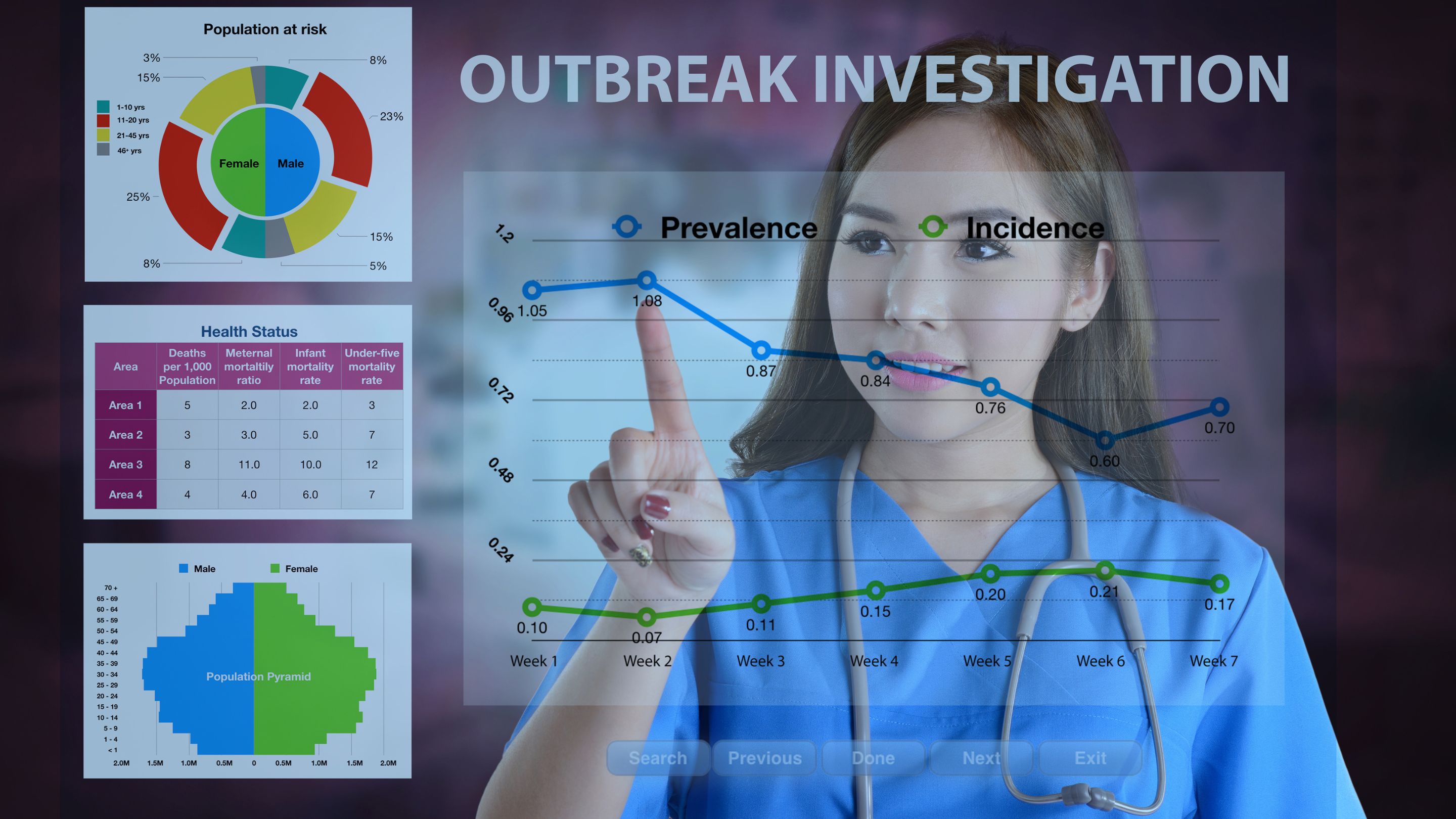
- Be familiar with the steps of an outbreak investigation.
Collaborate with local health officials, healthcare providers, and others to conduct outbreak investigations and epidemiologic studies.
Before the response operation, identify which triggers will require key decisions during outbreak response.
Identify as rapidly as possible the (possibly novel) agents responsible for a disease outbreak and their epidemiological characteristics.
Conduct outbreak investigations to identify pathogens and other agents, characterize affected population groups, and sources of exposure. Describe an outbreak in terms of person, place, and time in order to generate hypothesis about its cause or risk factors. Document pathogen and likely sources and transmission pathways so as to inform evidence-based measures to control the outbreak.-
Students mustMark as done
The Field Epidemiology Manual Wiki from the European Centre for Disease Prevention and Control (ECDC).
Read the entire section on The outbreak management team.
-
Students mustView
This brief resource explains the scientific and operational preparations that must be carried out to start an Outbreak Investigation.
-
Students mustMark as done
Read the entire resource to understand how regulations an laws relate to outbreak responses.
-
Students mustViewStart discussions: 1
During COVID-19 outbreak, several mobility restriction politics have been applied all around the globe, discuss how epidemiological reports were related to mobility restriction politics in your region/country.
Step 1: Analyze how mobility restriction politics in your region/country relate to epidemiological reports during COVID-19 outbreak, if your country/region did not apply mobility restrictions, you may use this resource and choose the mobility restriction politics from other country.
Step 2: Write a 150 words paragraph with your discussion.
Step 3: To post your response click on the button at the bottom of the screen labeled 'Add a new discussion topic.'
Step 4: You will also need to comment on at least one other post made by your peers in a respectful and professional manner. If a peer comments on your posting, please reply back. Tp post a reply, click on the particular discussion, then click on 'reply'.
-
Students mustMark as done
This interactive case study is divided into 12 sections that allow you to apply your knowledge of outbreak investigation. As you go through the course, you have the opportunity to complete the entire case study. To benign, click on the button, start the course and then click con proceed. Then, some text will appear on your screen, read the text carefully, and when you are ready, click proceed to solve a question that you need to answer correctly to continue. This process will repeat until you reach the final window of the activity. Once you have completed the activity then you can engage with the rest of the course.
-
Students mustViewReceive a gradeReceive a passing grade
To access the quiz, click on the name of the quiz provided above. On the following screen, click the Attempt Quiz button to view the case studies and respond to the questions.
TO PASS THIS QUIZ YOU MUST OBTAIN A SCORE OF 80%.
-
Students mustView
This brief resource explains how outbreaks are recognized, and the role of surveillance in outbreak detection.
-
Students mustMark as done
This article refers to when clusters require investigation and how are pseudo-outbreaks recognized.
Read the sections Approach to an Outbreak and Pseudo-outbreaks
-
Students mustMark as done
This interactive case study is divided into 12 sections that allow you to apply your knowledge of outbreak investigation. As you go through the course, you have the opportunity to complete the entire case study. To benign, click on the button, start the course and then click con proceed. Then, some text will appear on your screen, read the text carefully, and when you are ready, click proceed to solve a question that you need to answer correctly to continue. This process will repeat until you reach the final window of the activity. Once you have completed the activity then you can engage with the rest of the course.
-
Students mustViewReceive a gradeReceive a passing grade
To access the quiz, click on the name of the quiz provided above. On the following screen, click the attempt quiz button to view the case studies and respond to the questions.
TO PASS THIS QUIZ YOU MUST OBTAIN A SCORE OF 80%.
-
Students mustView
This brief resource explains how to use clinical and laboratory features to confirm the diagnosis.
-
Students mustMark as done
This interactive case study is divided into 12 sections that allow you to apply your knowledge of outbreak investigation. As you go through the course, you have the opportunity to complete the entire case study. To benign, click on the button, start the course and then click con proceed. Then, some text will appear on your screen, read the text carefully, and when you are ready, click proceed to solve a question that you need to answer correctly to continue. This process will repeat until you reach the final window of the activity. Once you have completed the activity then you can engage with the rest of the course.
-
Students mustViewReceive a gradeReceive a passing grade
To access the quiz, click on the name of the quiz provided above. On the following screen, click the attempt quiz button to view the case studies and respond to the questions.
TO PASS THIS QUIZ YOU MUST OBTAIN A SCORE OF 80%.
-
Students mustViewThis brief resource explains the criteria to create an adequate case definition that includes clinical criteria, time, person and place.
-
Students mustMark as done
This interactive case study is divided into 12 sections that allow you to apply your knowledge of outbreak investigation. As you go through the course, you have the opportunity to complete the entire case study. To benign, click on the button, start the course and then click con proceed. Then, some text will appear on your screen, read the text carefully, and when you are ready, click proceed to solve a question that you need to answer correctly to continue. This process will repeat until you reach the final window of the activity. Once you have completed the activity then you can engage with the rest of the course.
-
Students mustViewReceive a gradeReceive a passing grade
To access the quiz, click on the name of the quiz provided above. On the following screen, click the attempt quiz button to view the case studies and respond to the questions.
TO PASS THIS QUIZ YOU MUST OBTAIN A SCORE OF 80%.