
-
Introduction
-
Students mustStudent must submit this questionnaire to complete it
-
Students mustView
Show More-


DISCLAIMER: This content is designed to enhance the study of nursing. This content is generic and is not designed to take into account the specific objectives, needs, and/or circumstances of any particular region or country. To become a nurse, learners must successfully complete a program of study approved by the government or state-regulatory agency in their place of residence. We cannot guarantee that the successful completion of these materials will enable you to practice in your place of residence. Make sure that you are in compliance with the scope of practice of your regulatory body before attempting to put into use or practice any of the knowledge gained.Course Overview
Welcome to Mathematics for Nursing Practice. This course provides an essential foundation in arithmetic, measurement, and applied problem-solving skills used in nursing and healthcare. Learners will strengthen their understanding of core mathematical concepts, from basic operations and fractions to ratios, proportions, and dosage-related calculations, that support safe and accurate clinical decision-making.
Because this is a mathematics-focused course requiring applied problem-solving and practice, it is strongly recommended that the course be facilitated by a lecturer, teacher, or nurse educator. Guided instruction can help reinforce concepts, support learner understanding, and ensure accurate application of mathematical principles in clinical contexts.
The course emphasizes the practical application of mathematical reasoning in nursing contexts, including interpreting medication orders, calculating solution concentrations, performing unit conversions, and applying significant figures in measurements. Through interactive lessons, real-world examples, and guided exercises, learners will gain the confidence and competence needed to perform precise calculations that protect patient safety and enhance care quality.
By the end of this course, learners will be able to connect mathematical principles to nursing tasks, apply calculation methods to clinical scenarios, and build a strong quantitative foundation for future coursework in pharmacology and clinical nursing practice.

Note about Mathematics in Nursing
Mathematics is a vital component of safe nursing practice. Nurses use mathematical reasoning daily, whether calculating infusion rates, determining medication dosages, interpreting lab results, or converting between metric and customary systems. While technology assists in many of these calculations, a nurse’s ability to verify and interpret numerical results remains a critical safeguard against medication and treatment errors.
This course is designed for nursing students and healthcare support professionals seeking to strengthen their math proficiency in preparation for clinical practice. It bridges general arithmetic skills with the specialized quantitative thinking required in healthcare environments.
Course Development
The Mathematics for Nursing Practice course was developed in partnership with Nurses International (N.I.) and NextGenU.org (NGU). Content was created by experienced nurse educators and mathematicians using open-access, evidence-informed resources from OpenStax, Pressbooks, and peer-reviewed educational materials in nursing and allied health sciences.
The course is hosted on the Moodle Learning Management System (LMS), offering a flexible, interactive, and self-paced learning experience suitable for nursing students, healthcare aides, and other allied health trainees.
The course was written and reviewed by the Nurses International faculty in collaboration with the NextGenU.org design team.
Core Writers and Reviewers:
Marco Aurelio Hernandez, BSc, MSc, PhD; Kathleen Capone MS, RN, CNE, EdD.Course Structure
The course includes 6 modules, each containing multiple lessons designed to build competency progressively.
Module 1: Arithmetic Review
Module 2: Significant Digits, Percents, and Ratios
Module 3: Measurements
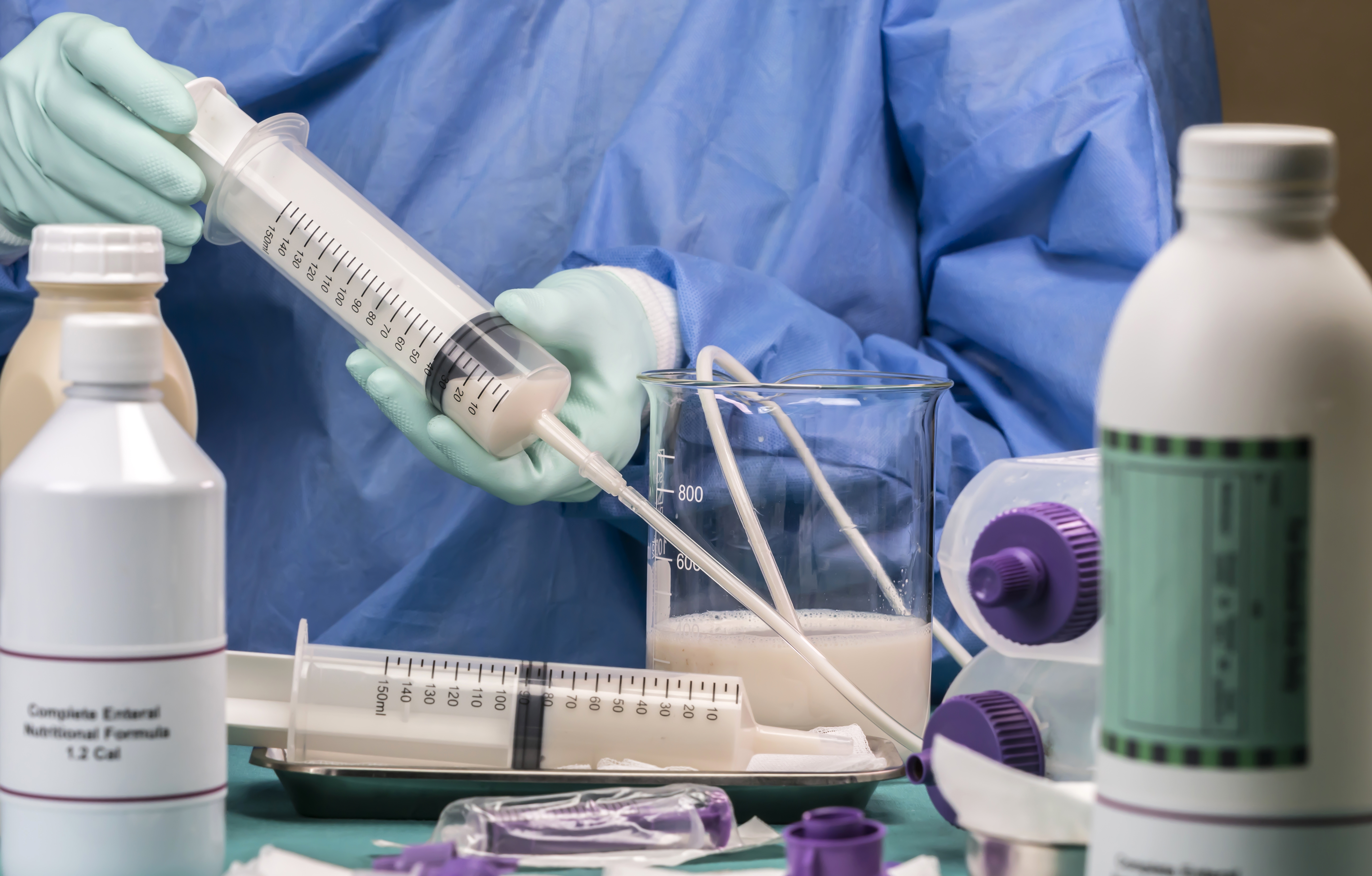
Module 4: Solutions, Dilution Methods, and Calculations
Module 5: Concentration Measures
Module 6: Further Calculations with Solutions
Each module includes:
-
Structured lessons with assigned readings
-
Learner self-assessment quizzes
-
Step-by-step example problems and practice exercises
-
Exams
Comprehensive worksheets, along with detailed solutions, are available in the Teacher Resources folder to support facilitated instruction, learner assessment, and classroom use.
Assessment
To successfully complete this course, learners must:
-
Achieve a minimum score of 80% on quizzes and unit exams.
-
Complete all assigned activities, problem sets, and case-based exercises before advancing.
Estimated completion time: 10 hours
At the end of the course, a comprehensive final exam (50 multiple-choice questions) will assess mastery of key concepts.
A passing score of 80% is required, with up to two attempts permitted.Upon successful completion, learners will receive a downloadable certificate verifying competency in foundational mathematics for nursing practice.
To obtain a certificate, learners must complete:
-
All assigned readings and quizzes (≥80%)
-
All activities and unit exams (≥80%)
-
The final exam (≥80%, max 2 attempts)
-
All required self-evaluation and course evaluation forms
Prerequisites
No prerequisites are required.
This course is designed for learners entering nursing or healthcare programs who wish to strengthen their math skills for safe and effective practice.Information for Institutions
NextGenU.org is happy to provide your institution with:
-
A link to and a description of the course training
-
Your grade on the final exam
-
Your work products (e.g., case study activities) and any other shared materials you authorize
-
Your evaluations: course and self-assessments
-
A copy of your certificate of completion
For Nurse Educators
The course teacher resources include a study guide that includes a syllabus, recommended teaching strategies, and a skills directory. Nurse educators may contact info@nursesinternational.org with queries/permission to access faculty resources for this course.
Technical Support
For any technical difficulties or course access questions, please contact support@nextgenu.org for assistance.
Disclaimer
This content is designed to enhance your study; we cannot guarantee that the successful completion of these materials will enable you to work in your place of residence, as regulations vary by location. If you plan to practice using your new knowledge, to ensure safety and compliance with your local laws, you must complete a program of study approved by the government and relevant local regulatory agencies in your place of practice.
NextGenU.org does not directly confer academic degrees or guarantee that learning institutions will accept NextGenU.org coursework for credit.
-
-
 Topics:
- Positive and Negative Numbers
- Addition of Positive Numbers
- Addition of Negative Numbers
- Addition of Both Positive and Negative Numbers
- Subtraction of Two or More Positive Numbers
- Subtraction of Two or More Negative Numbers
- Subtraction of Positive and Negative Numbers
- Multiplication or Division of Positive Numbers
- Multiplication or Division of Negative Numbers
- Rules Concerning Order of Operations
- Fractions and Operations on Fractions
- Introduction to Decimals, Place Value, and Rounding
- Adding and Subtracting Decimals
- Multiplying and Dividing Decimals
- Exponents
- Rules of Exponents
- Scientific Notation
-
Students mustView
Read Chapter 1.1: Integers, and do as many of the given examples as needed. (23 minutes)
-
Quiz Module 1 Lesson 1
-
Students mustView
Read Chapter 1.3: Order of Operations, and do as many of the given examples as needed. (10 minutes)
-
Quiz Module 1 Lesson 2
Calculate and enter the answer for the following equations. (Enter the appropriate number answer for each equation. Remember to use the “-” before the negative numbers.)
-
Students mustView
Read Chapter 2.3: Adding and Subtraction Fractions, and do as many of the given examples as needed. (20 minutes)
-
Students mustView
Read Chapter 2.4: Multiplying and Dividing Fractions, and do as many of the given examples as needed. (14 minutes)
-
Students mustMark as done
Module 1: Lesson 4: Decimals Review
Student Learning Outcomes:
Upon completion of this lesson, you will be able to:
- Work with decimals using place value concept
- Round decimal numbers following the rules of rounding
- Add and Subtract Decimals
- Multiply and Divide Decimals
Approximate time required for the readings for this lesson (at 144 words/minute): 23 minutes.
Required Learning Resources and Activities
-
Students mustView
Read Chapter 3.1: Introduction to Decimals, Place Value, and Reading, and do as many of the given examples as needed. (8 minutes)
-
Students mustView
Read Chapter 3.3: Adding and Subtracting of Decimals, and do as many of the given examples as needed. (7 minutes)
-
Students mustView
Read Chapter 3.4: Multiplying and Dividing of Decimals, and do as many of the given examples as needed. (8 minutes)
-
Quiz Module 1 Lesson 4
-
Students mustMark as done
Module 1: Lesson 5: Exponents and Scientific Notation
Student Learning Outcomes:
Upon completion of this lesson, you will be able to:
- Use exponents and interpret exponential notation
- Evaluate exponential expressions using the rules of exponents
- Write numbers in scientific notation
- Convert between standard and scientific notation
- Add, subtract, multiply, and divide numbers in scientific notation
Approximate time required for the readings for this lesson (at 144 words/minute): 53 minutes.
Required Learning Resources and Activities
-
Students mustView
Read Chapter 6.2: Whole Numbers Exponents, and do as many of the given examples as needed. (10 minutes)
-
Students mustView
Read Chapter 3.8: Exponents, and do as many of the given examples as needed. (20 minutes)
-
Students mustView
Read Chapter 3.9: Scientific Notation, and do as many of the given examples as needed. (23 minutes)
-
-
-
-
Module 1 Quiz
-
 Topics:
- Significant Digits
- Introduction to Percents
- Solving Basic Percent Problems
- Percent Increase, Percent Decrease
- Introduction to Ratio and Rates
- Proportion
-
Students mustView
Read the entire chapter and do the practice questions given. (20 minutes)
-
Quiz Module 2 Lesson 1
-
Students mustView
Read Chapter 3.5: Introduction to Percents, and do as many of the given examples as needed. (20 minutes)
-
Students mustView
Read Chapter 3.6.2: Solving Application problems with Percents, and do as many of the given examples as needed. (25 minutes)
-
Students mustView
Read Chapter 3.6.1: Solving basic problems with Percents, and do as many of the given examples as needed. (22 minutes)
-
Students mustView
Read Chapter 3.7: Percent Increase, Percent Decrease, and do as many of the given examples as needed
-
Quiz Module 2 Lesson 2
-
Students mustView
Read Chapter 3.8: Introduction to Ratio and Rates, and do as many of the given examples as needed. (20 minutes)
-
Students mustView
Read entire section and do the 10 questions at the end of the section. (15 minutes)
-
Module 2 Quiz
-
 Topics:
- Length in the United States Customary System
- Weight in the United States Customary System
- Mass in the United States Customary System
- Length in the Metric System
- Weight in the Metric System
- Mass in the Metric System
- Conversions of Units in the United States Customary System
- Conversions of Units in the Metric System
- Interconversions of units of measurement for length, weight, and mass between the two systems
- The Three Temperature Scales
- Freezing and Boiling points of water in Celsius, Fahrenheit, and Kelvin
- Conversions among the temperature Scales
-
Students mustView
Read Chapter 1.11: The Systems of Measurements, and do as many of the given examples as needed. (12 minutes)
-
Quiz Module 3 Lesson 1
-
Students mustView
Read Module: Temperature Basics, and do as many of the given examples as needed. (10 minutes)
-
Quiz Module 3 Lesson 2
-
Module 3 Quiz
-
 Topics:
- Solutions and the components of a solution
- Solutions, Colliods, and Suspensions
- Dilution Terminology
- Simple Dilutions
- Serial Dilutions
- Calculate dilution variations with simple and serial dilutions
-
Students mustView
Read Section A. (5 minutes)
-
-
Students mustView
Read Section B. (5 minutes)
-
Students mustView
-
-
-
Students mustView
Read Sections C and D. (8 minutes)
-
-
-
Module 4 Quiz
-
 Topics:
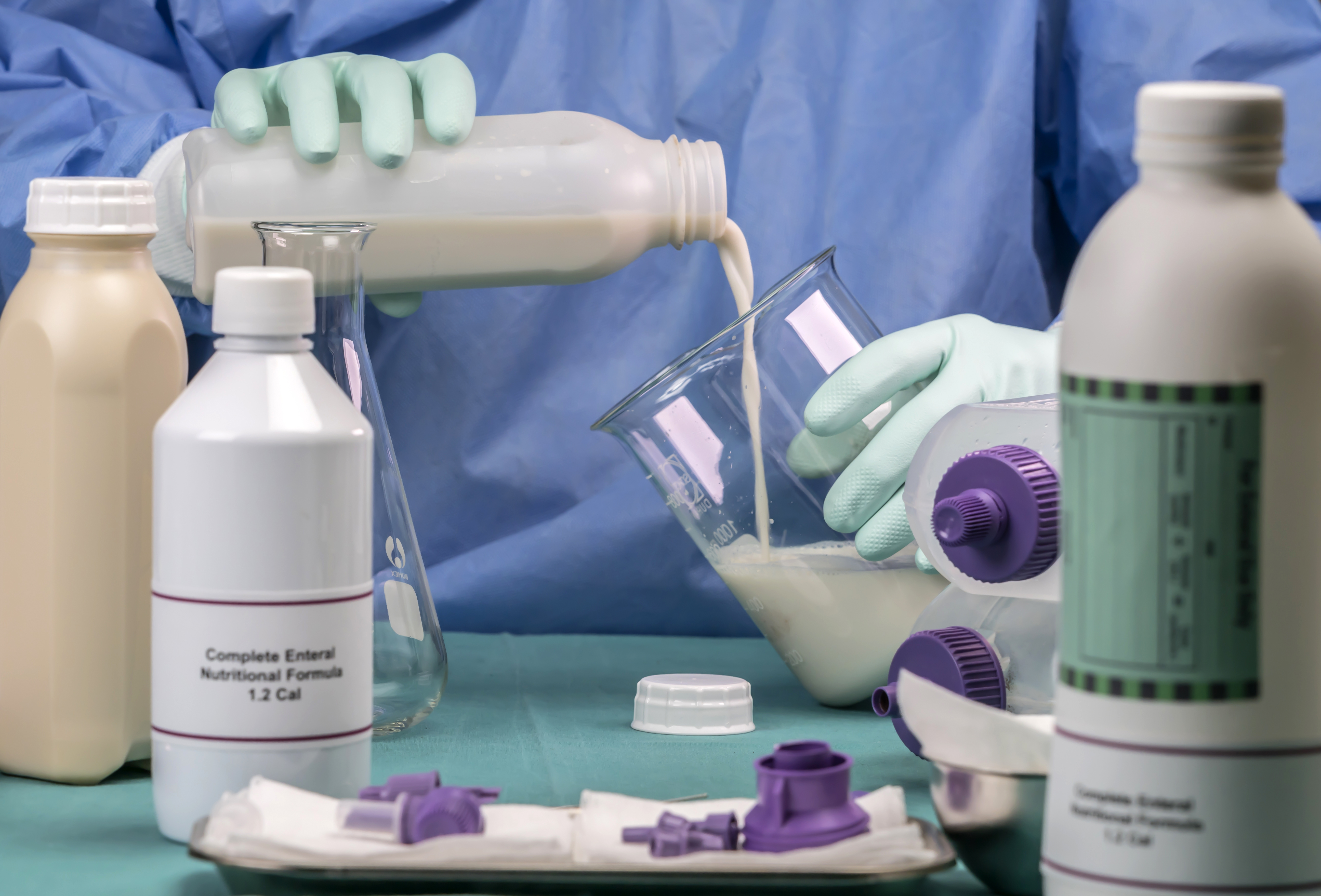
- Concentration - atomic weight, moles, molar mass
- Table of atomic weights of common elements
- Molarity
- Normality
- Molality
- The difference between Molarity and Molality
-
Students mustView
Read lesson 4.4 and follow all calculation examples. (20 minutes)
-
-
Students mustView
Read chapter 8.3 up to the end of the section on Molarity. (20 minutes)
-
Students mustViewRead chapter 7.3 -Omit section on Acid-Base titrations (the last section on page). (20 minutes)
-
Students mustView
Read chapter 16.10: Molality and watch the two included short videos. (20 minutes)
-
Students mustView
Watch the entire video. (6 minutes)
-
Module 5 Quiz
-
 Topics:
- Percent Concentration
- Percent Weight/Volume
- Percent Volume/Volume
- Percent Concentration Calculation
- Worked Problems in Percent Concentration
- Anhydrous and Hydrated Solutions
- Density Calculations
-
-
-
Students mustView
Read Chapter 2.4: Density and ts Applications. (5 minutes)
-
Module 6 Quiz
-
-
Practice Final Quiz
-
-

To take the final exam, you must complete all quizzes and complete all the required activities. To access the exam, click on the name of the exam provided below. On the following screen, click the attempt quiz button to respond to the questions.
-
Final Quiz 1
-
Final Quiz 2
-
-
 In this section, you can provide feedback about this course to help us make NextGenU.org better. Once evaluations are completed, you will be able to download your certificate of completion.
-
Course Evaluation Questionnaire
-
Self Evaluation Questionnaire
-
-
-
Students mustMark as done
-
Students mustMark as done
-
-
